Lamborghini Tops Italy’s Automotive Employer Rankings
Automobili Lamborghini now ranks among the top three employers in all of Italy and first in the country’s automotive sector, according to the Randstad Employer Brand 2022 award. The recognition, based on independent research by Randstad (described as the world’s leading human resources services provider), places the Sant’Agata Bolognese company alongside confectionery giant Ferrero and aerospace firm Thales Alenia Space. Lamborghini also collected its ninth consecutive “Top Employer Italy” certification, a streak stretching back to 2014.
For a readership that obsesses over lap times and naturally aspirated redlines, an HR award might seem like an odd headline. But consider what Lamborghini actually sells: hand-assembled machines where a single interior trim specialist’s bad day can mean a misaligned stitch on a cabin costing well north of $300,000. The people who build these cars are, in a very literal sense, the product. Lamborghini says it was ranked first specifically for career path visibility and scored among the best for reputation, remuneration and benefits, and workplace health and safety. Those categories determine whether the best composite technicians, paint specialists, and powertrain engineers in Emilia-Romagna choose to walk through Lamborghini’s doors or someone else’s.

The iconic Automobili Lamborghini headquarters stands proudly under a clear sky, flanked by national and brand flags.
What ‘Feelosophy’ Actually Means on the Factory Floor
The award coincides with the launch of what Lamborghini calls its Feelosophy project, a well-being program that goes well beyond the usual corporate gym membership. According to the company, the initiative builds on existing physical and mental health programs and now adds structured proposals around sustainable nutrition and sleep quality. If that sounds like wellness-retreat territory for a supercar factory, the logic is straightforward: assembling a Revuelto or stitching a Urus interior is physically demanding, precision-critical work. Fatigue and distraction are the enemies of the zero-defect craftsmanship Lamborghini’s buyers expect.
Umberto Tossini, Lamborghini’s Chief Human Capital Officer, framed the approach around well-being, continuous learning, and diversity as pillars for designing an attractive workplace. The company says it continued initiatives related to diversity, inclusion, and parental and salary equality throughout the year. Lamborghini currently employs over 1,900 people, a workforce that grew by 5.6% during 2021, a period when many manufacturers were still scrambling to stabilize operations post-pandemic.
The Feelosophy branding is, admittedly, a bit corporate. But the substance reflects a practical reality: Lamborghini’s production volumes remain tiny compared to mainstream manufacturers, which means each employee’s contribution to the finished product is proportionally enormous. A workforce of 1,900 building a few thousand cars a year creates a ratio where individual skill and motivation directly shape what rolls off the line.

Employees enjoy a refreshing outdoor yoga session in a serene green park. Image: Automobili Lamborghini.
Why Employer Prestige Translates to Better Supercars
The Randstad research surveyed 6,590 people in Italy between the ages of 18 and 64, covering students, employed workers, and the unemployed, across 150 potential employers. The three most important factors respondents cited when choosing an employer were a pleasant working atmosphere, work-life balance, and good pay. Lamborghini scored well across all of these, which reveals something important about the company’s competitive position in the Emilia-Romagna talent market.
That regional context is critical. Sant’Agata Bolognese sits in one of the densest concentrations of automotive and motorsport engineering talent on earth. Ferrari is roughly 30 kilometers away in Maranello. Ducati, Pagani, Dallara, and Maserati all operate within a short drive. The skilled labor pool is finite, and these companies compete for the same composite engineers, the same CNC machinists, the same leather craftspeople. Winning employer-brand recognition from an independent research body signals that Lamborghini can attract first-choice candidates rather than settling for whoever a rival passed over.
For buyers, this competition for talent plays out in subtle but real ways. The person who hand-paints your Ad Personam specification chose Lamborghini over the alternatives. The engineer calibrating your Revuelto‘s hybrid system picked this factory. That self-selection bias, reinforced by genuine workplace investment, filters into the finished product in ways no spec sheet captures.

A skilled technician meticulously applies a vibrant purple paint finish to a car panel in a state-of-the-art booth. Image: Automobili Lamborghini.
The Hands Behind the Horsepower
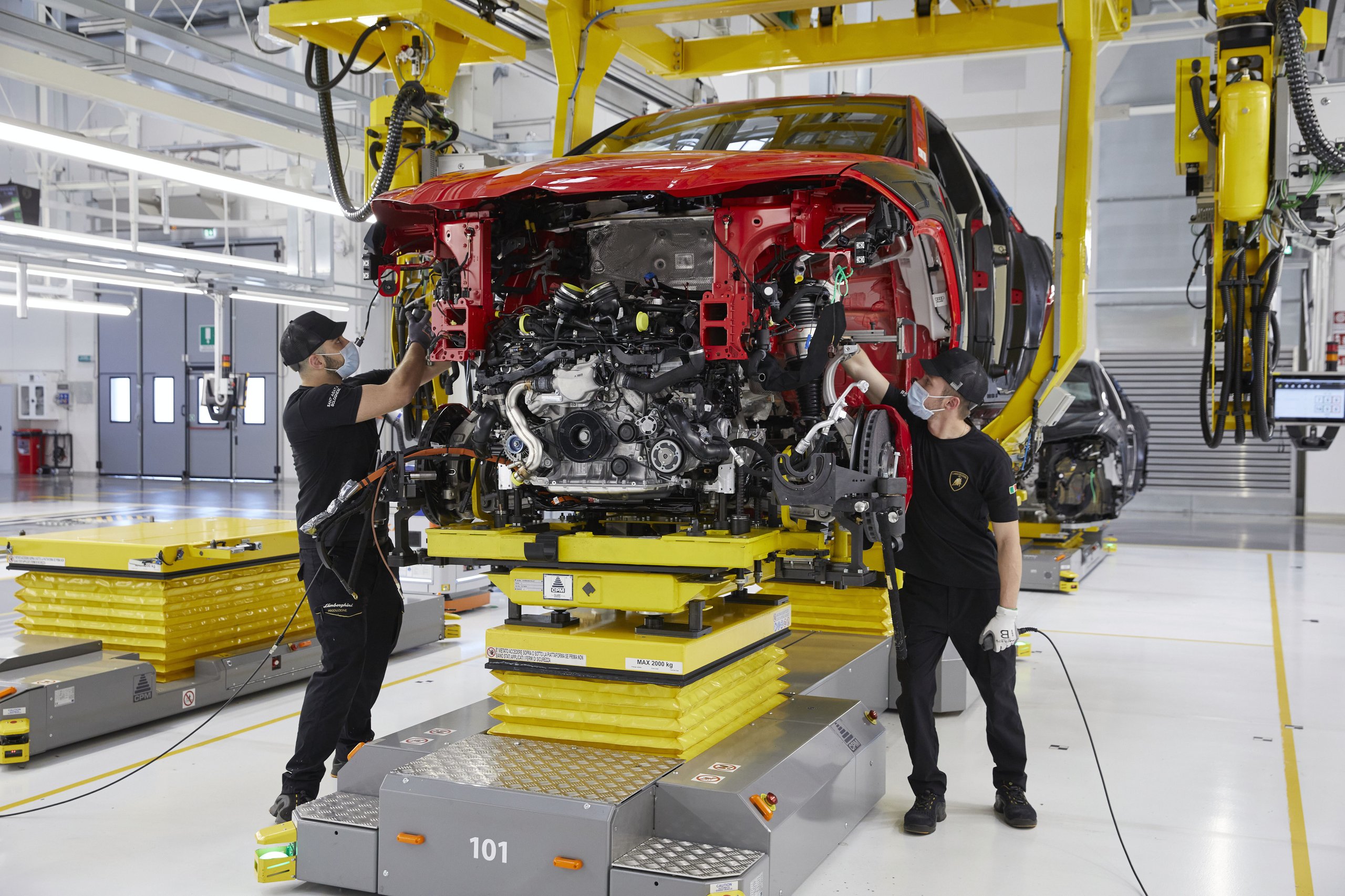
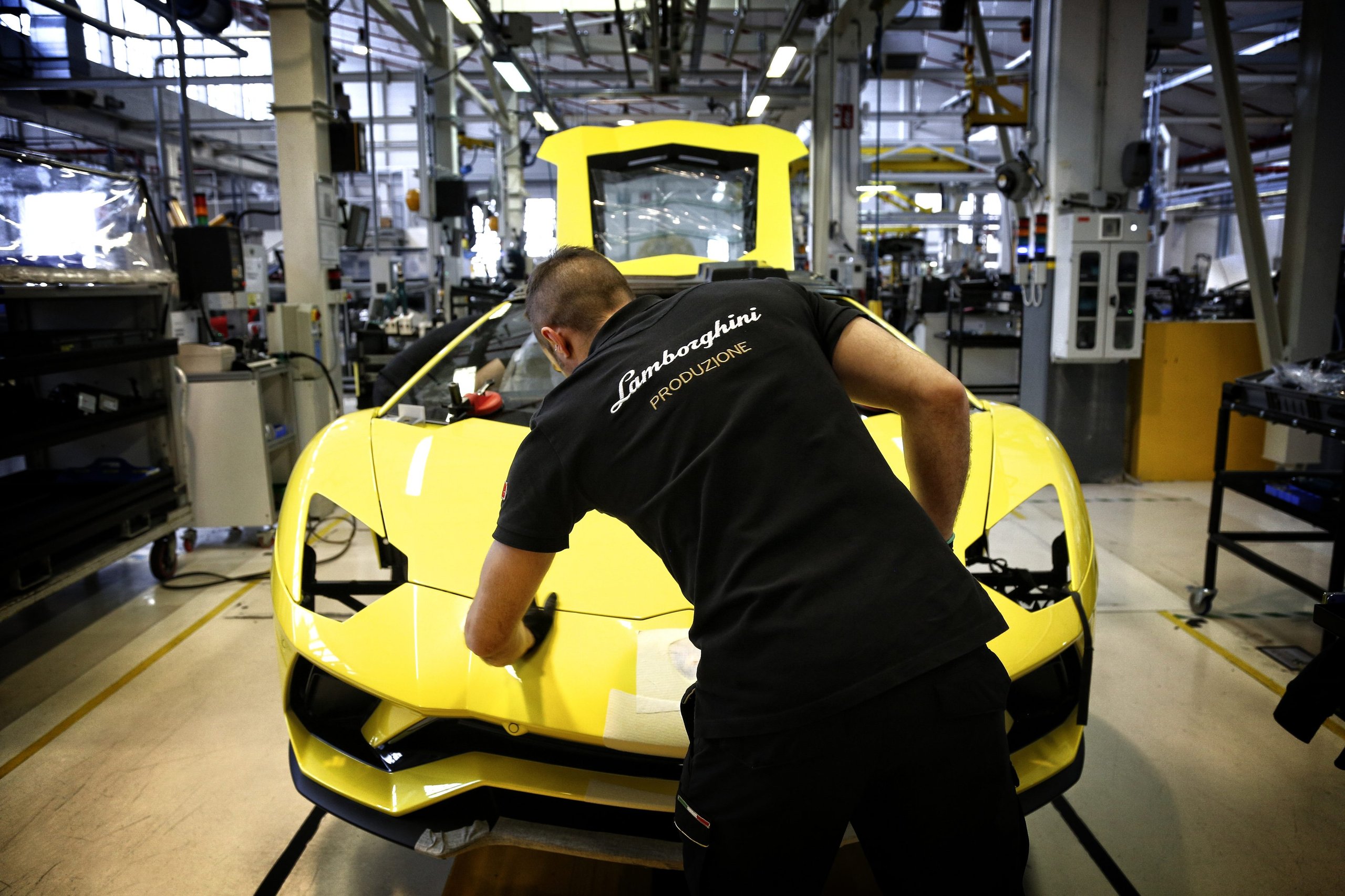
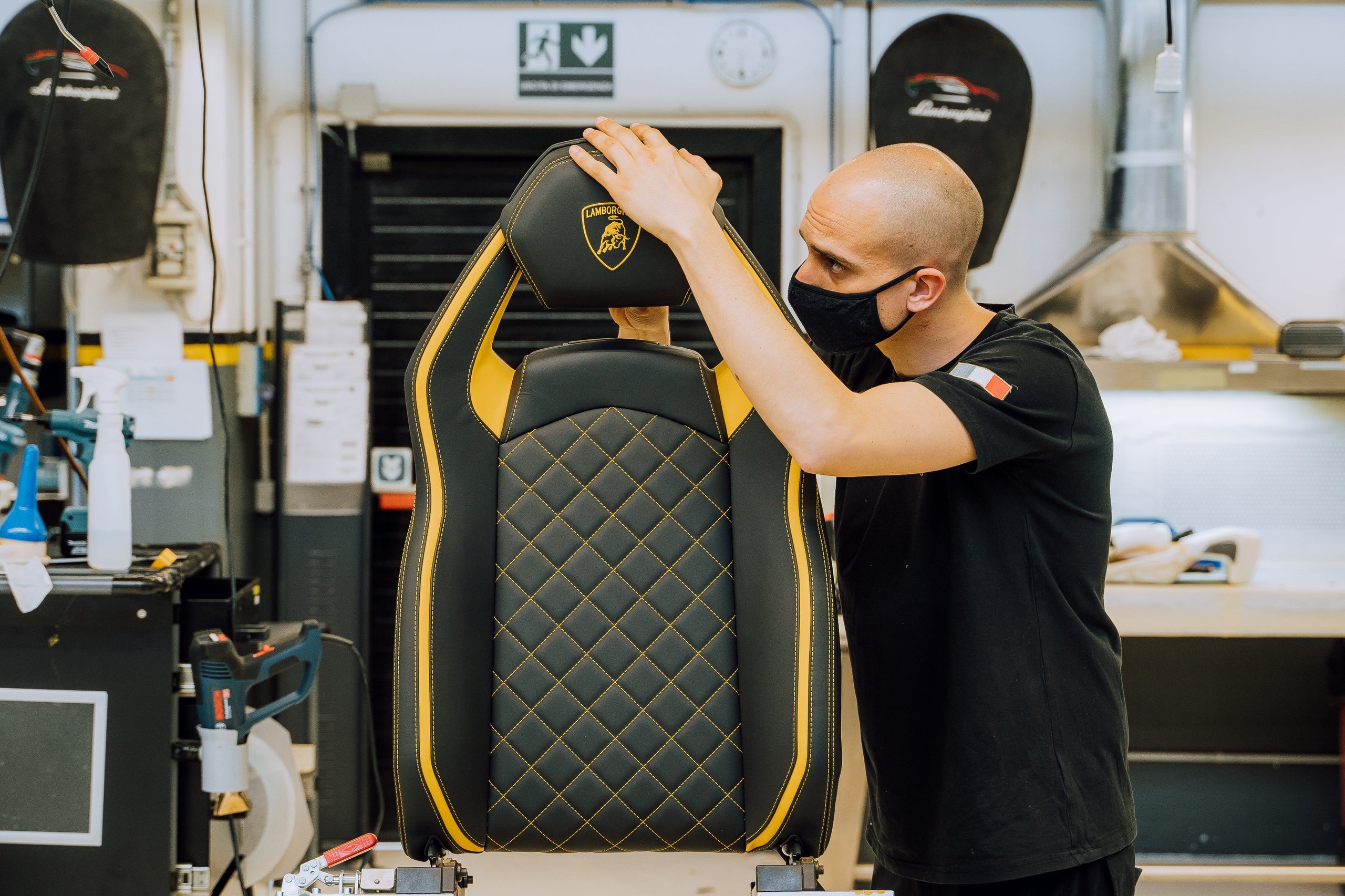
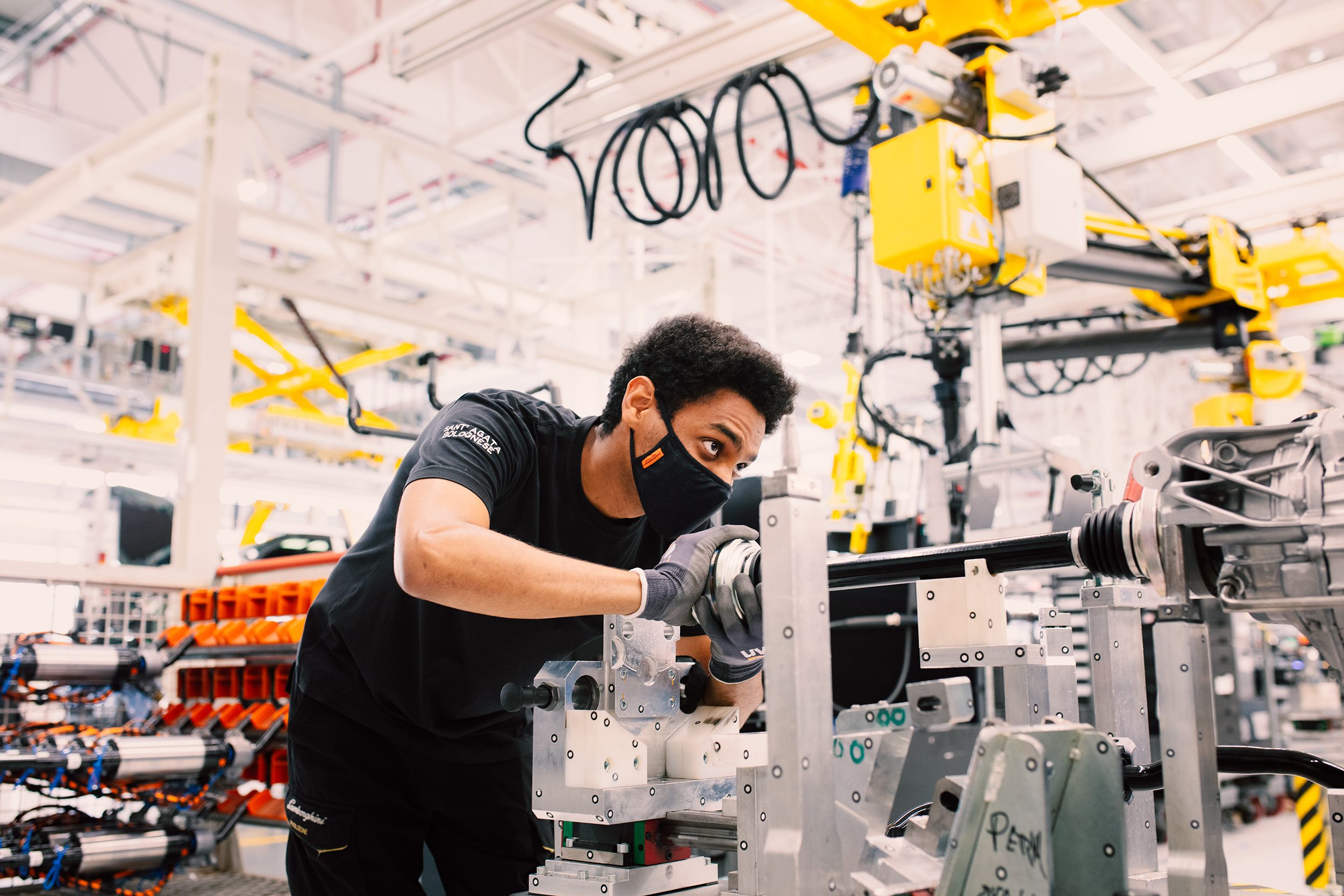
Walk through any Lamborghini factory image set and the human element is impossible to ignore. Workers inspect front bumpers on Huracán bodies with the kind of focused attention you see in watchmaking. Interior specialists stitch quilted leather seats bearing the Lamborghini crest on the headrest, adjusting fit by hand. Technicians in blue gloves examine large composite components mounted on robotic arms, where the marriage of advanced materials and human judgment determines structural integrity.
This is the connection between an employer-brand award and the car in your garage. Lamborghini’s production philosophy depends on skilled hands at every critical juncture. Automated processes handle what machines do best, but the finishing, the quality gates, the bespoke customization work that defines Ad Personam orders: all of that requires people who are experienced, motivated, and planning to stay. A ninth consecutive Top Employer certification suggests low turnover and institutional knowledge retention, both of which matter enormously when your assembly line produces vehicles that cost more than most houses.
Anyone who has specced a Lamborghini through Ad Personam knows the customization options are effectively limitless. That flexibility only works if the workforce can execute unusual requests with confidence. A paint-to-sample color, a one-off interior material, a bespoke stitching pattern: each demands craftspeople who understand the standards well enough to deviate from them without compromising quality.

A skilled Lamborghini artisan meticulously stitches yellow and black material on a sewing machine. Image: Automobili Lamborghini.
How Lamborghini’s Culture Stacks Up Against Its Rivals
Lamborghini does not exist in a vacuum, and neither does its employer brand. Ferrari, the perennial rival in both showrooms and recruiting offices, operates under a different corporate structure as a publicly traded company with its own well-documented workplace culture. Comparing the two directly on employee programs is difficult because Ferrari does not participate in the same Randstad ranking in a way that allows apples-to-apples scoring. What the Randstad result does confirm is that Lamborghini, as part of the Volkswagen Group’s Audi division, leverages the resources of a large corporate parent while maintaining the boutique identity and Italian manufacturing base that attract passionate employees.
This dual advantage is worth noting. Lamborghini can offer the career stability and benefits infrastructure of a major automotive group while preserving the small-factory intimacy and brand cachet that make working on supercars feel meaningfully different from assembling mainstream vehicles. Ferrari, as an independent public company, carries its own brand magnetism but faces different financial pressures around headcount and cost management. Lamborghini’s consistent Top Employer recognition suggests it has found a formula that balances both sides effectively.
For the broader luxury automotive sector, the trend toward investing in employer brand is accelerating. Skilled manufacturing talent, particularly in composites, electrification, and software, grows scarcer each year as traditional automotive engineering competes with aerospace and tech for graduates. The companies that win the talent war in Emilia-Romagna over the next decade will build the best cars.

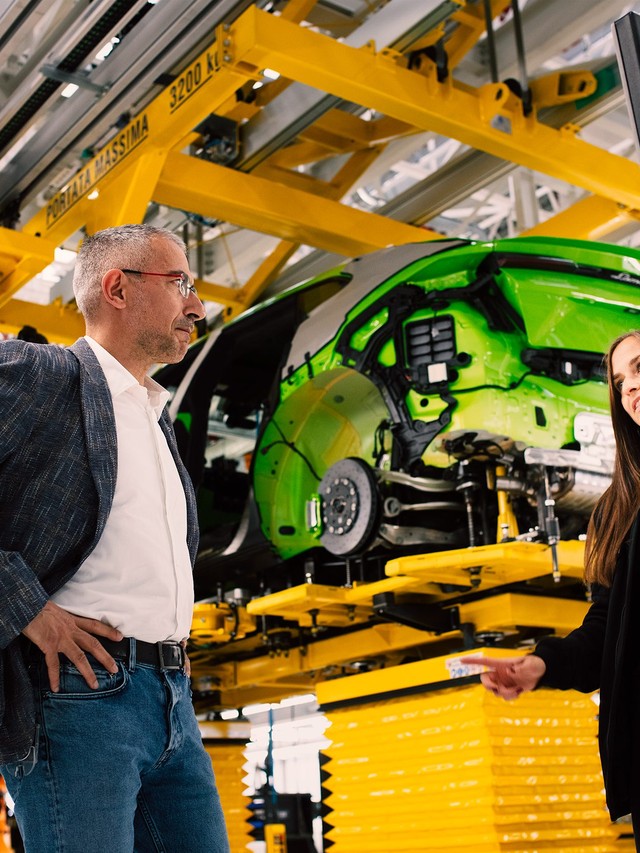
Engineers discuss progress on a vibrant green vehicle chassis within the advanced manufacturing facility. Image: Automobili Lamborghini.
What This Means for Lamborghini Buyers and Enthusiasts
An employer-brand award will never generate the same adrenaline as a new model reveal. For anyone who owns, orders, or aspires to own a Lamborghini, though, this recognition offers a different kind of reassurance. The people building your car chose to be there, rank their employer among the best in the country, and work within a system that invests in their well-being and career development. That translates into institutional pride, and institutional pride shows up in build quality.
The practical takeaway is straightforward: Lamborghini’s ability to attract and retain top-tier craftspeople in one of the world’s most competitive automotive talent markets is a form of quality assurance that no warranty card or CPO inspection can replicate. When you are spending Revuelto or Urus money, knowing that the factory culture supports the kind of meticulous, motivated work these cars demand is worth more than another press photo of a trophy on a shelf.
Lamborghini’s workforce grew 5.6% in 2021 to over 1,900 employees, a figure that reflects both the Urus production ramp and the company’s broader investment in electrified powertrain development. Whether that growth continues at the same pace remains unconfirmed, but the direction is clear: Sant’Agata Bolognese needs more skilled people, and it appears to be winning the argument for why they should come.

A technician meticulously inspects a composite component on a robotic arm in the advanced manufacturing facility. Image: Automobili Lamborghini.
Gallery