Record Revenue Meets Reality: The €3.2 Billion Story
Lamborghini delivered 10,747 cars worldwide in 2025, pushing revenue to a record €3.2 billion. The celebration comes with caveats: operating income totaled €768 million, but the company reported profitability of 24%, slightly down from the previous year.
US tariffs influenced operating income, though the impact was largely absorbed. For context, even a modest 10% tariff on a supercar would add significant costs to the structure. The real story isn’t in the raw numbers but in how Lamborghini managed to maintain profitability at all.
The company still exceeded the €3 billion threshold for the second consecutive year.

The 94% Solution: When Paint Jobs Save Profit Margins
Here’s what competitors missed in the earnings report: In 2025, 94% of delivered cars were personalised in at least one element. That’s not just customers choosing fancy paint colors. It’s a profit preservation strategy disguised as bespoke craftsmanship.
Think about the economics. A standard supercar already commands premium pricing, but add custom interior stitching, unique paint formulations, and carbon fiber packages, and suddenly you’re looking at tens of thousands in additional margin per vehicle. These aren’t commodity add-ons with competitive pricing pressure. When a customer specs unique paint matched to their yacht, Lamborghini sets the price.
The genius lies in the timing. As US tariffs ate into base margins, personalization revenue provided a buffer that traditional volume manufacturers can’t access. Lamborghini’s 94% uptake rate suggests they’ve made customization feel essential rather than optional. For buyers already spending supercar money, what’s another €30,000 to ensure nobody else has their exact spec?
This approach transforms every delivery into a higher-margin event, helping explain how the company maintained that profitability despite external pressures. The real product isn’t just the car anymore; it’s the experience of creating something unique.
The Electric U-Turn Nobody’s Discussing
The company’s press release mentions “extraordinary items related to the adaptation of the Direzione Cor Tauri strategy,” which were fully accounted for in the financial year. This suggests costs associated with adapting their electrification strategy.
Lamborghini mentions a recently announced fourth hybrid model. Lamborghini said its 2025 range was fully hybridised, comprising Revuelto, Urus SE and Temerario. This represents a fundamental strategy shift that competitors are downplaying. The company is betting that their customers want the electric torque boost of hybridization without abandoning the theater of combustion engines entirely.
For potential buyers, this signals several years of hybrid-focused development rather than the industry’s rush toward full electrification. Whether that’s prescient market reading or a costly miscalculation won’t be clear until rival brands start delivering their electric supercars. The immediate impact shows up in those “extraordinary items” affecting 2025’s bottom line, costs the company has already absorbed.

Three Hybrids, One Strategy: The Lineup Breakdown
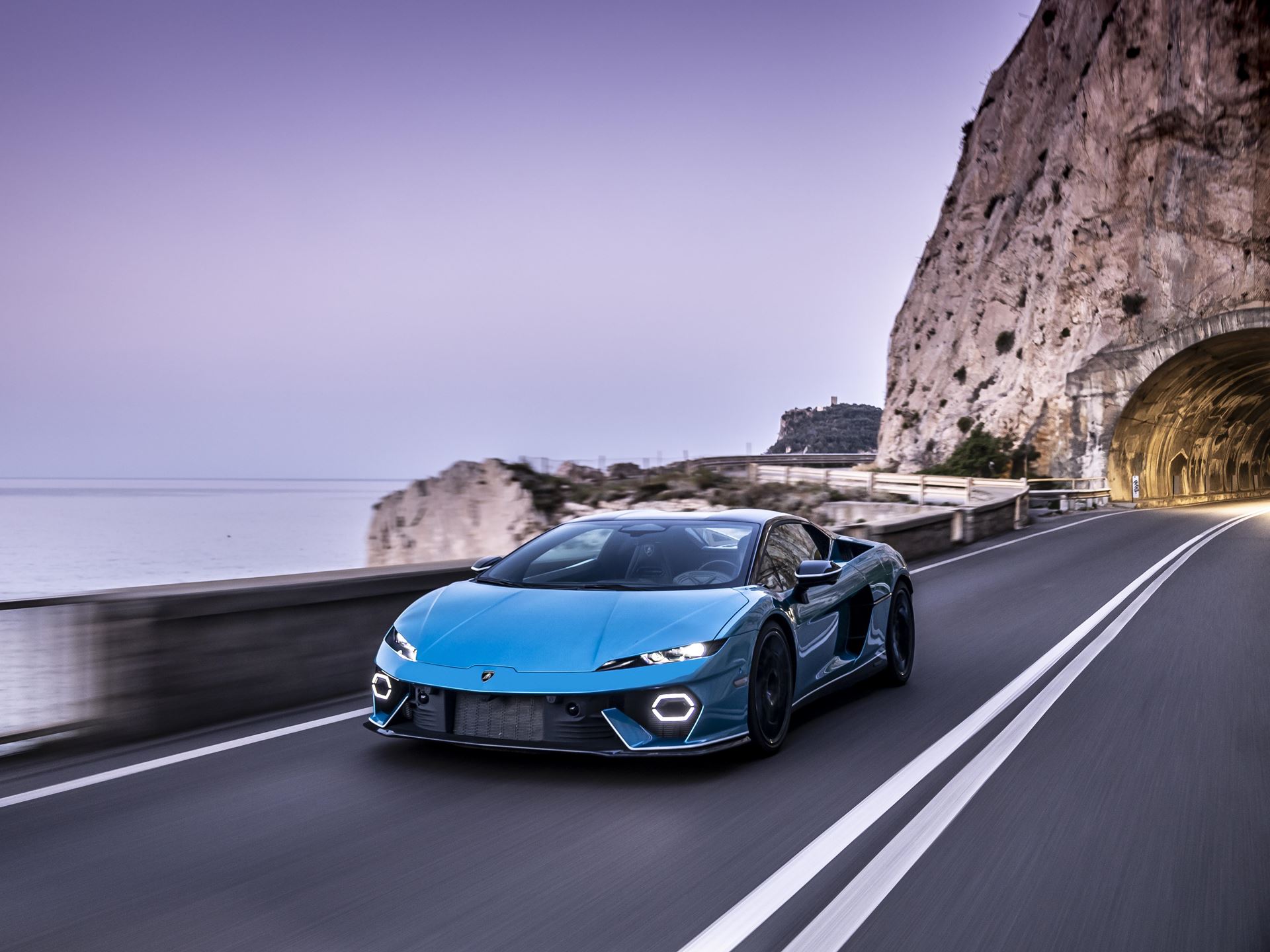
The fully hybridized range now comprises the Revuelto flagship, and the Urus SE. The Urus SE is part of Lamborghini’s fully hybridised range. Each serves a distinct profit center while sharing hybrid DNA.
Lamborghini states the Temerario’s engine reaches 10,000 rpm, a figure that matters more than it might seem. This isn’t just specification one-upmanship. Reaching 10,000 rpm in a production engine, especially with hybrid assistance managing low-end torque, suggests Lamborghini has figured out how to preserve the high-revving character that defines the brand while meeting emissions regulations.
The Revuelto anchors the top of the range. The Urus SE brings hybrid efficiency to the profitable SUV segment. The Temerario completes the hybrid lineup.
What’s notable is what’s missing: any mention of the pure combustion models that once defined the brand. The fully hybridised range represents a profound transformation. Customer deliveries of the Temerario began in early 2026, completing the hybrid transition.

The Luxury Math: Lamborghini vs The Competition
That profitability of 24% tells a story when placed in context. While specific competitor margins aren’t verified, Lamborghini’s profitability remains robust for the ultra-luxury segment. Operating income was influenced by negative exchange-rate fluctuations, and the overall impact of exogenous factors was largely absorbed.
For buyers, this translates to relative price stability in a market segment known for sudden jumps. The fourth hybrid model mentioned in the release could shake up this calculation, though details remain scarce.
The broader question facing Lamborghini and its rivals: how long can such margins survive in a world of increasing regulatory costs and trade barriers? The 2025 results suggest personalization and hybrid technology provide partial answers, but the long-term sustainability of these margins will depend on factors beyond any manufacturer’s control.
Gallery