Lamborghini’s One-Make Racer Becomes a Rolling Design Manifesto
When Lamborghini Squadra Corse pulled the covers off the Huracán Super Trofeo EVO2 at Le Castellet in May 2021, the car that emerged looked nothing like a routine mid-cycle refresh. Underneath sat familiar hardware: the 5.2-liter naturally aspirated V10 producing 620 HP, a sequential six-speed X-Trac gearbox, rear-wheel drive. Standard one-make racer fare, slated for competition across all three continental Super Trofeo series beginning in 2022.
The bodywork told a different story entirely. Head of Design Mitja Borkert described the EVO2 as representing “a futuristic aesthetic approach that partially anticipates the design elements of the next range of road cars.” That phrasing is unusually direct for a manufacturer that typically guards future styling under layers of camouflage and non-disclosure agreements. Lamborghini used a track-only race car to publicly debut design cues destined for its next generation of street-legal supercars. For enthusiasts trying to decode what comes after the current Huracán, the EVO2 was the closest thing to an authorized sketch of the future, and it arrived wearing a roll cage and a rear wing.
Countach Taillights, Hexagonal LEDs, and the Omega Lip: Reading the Design Tea Leaves
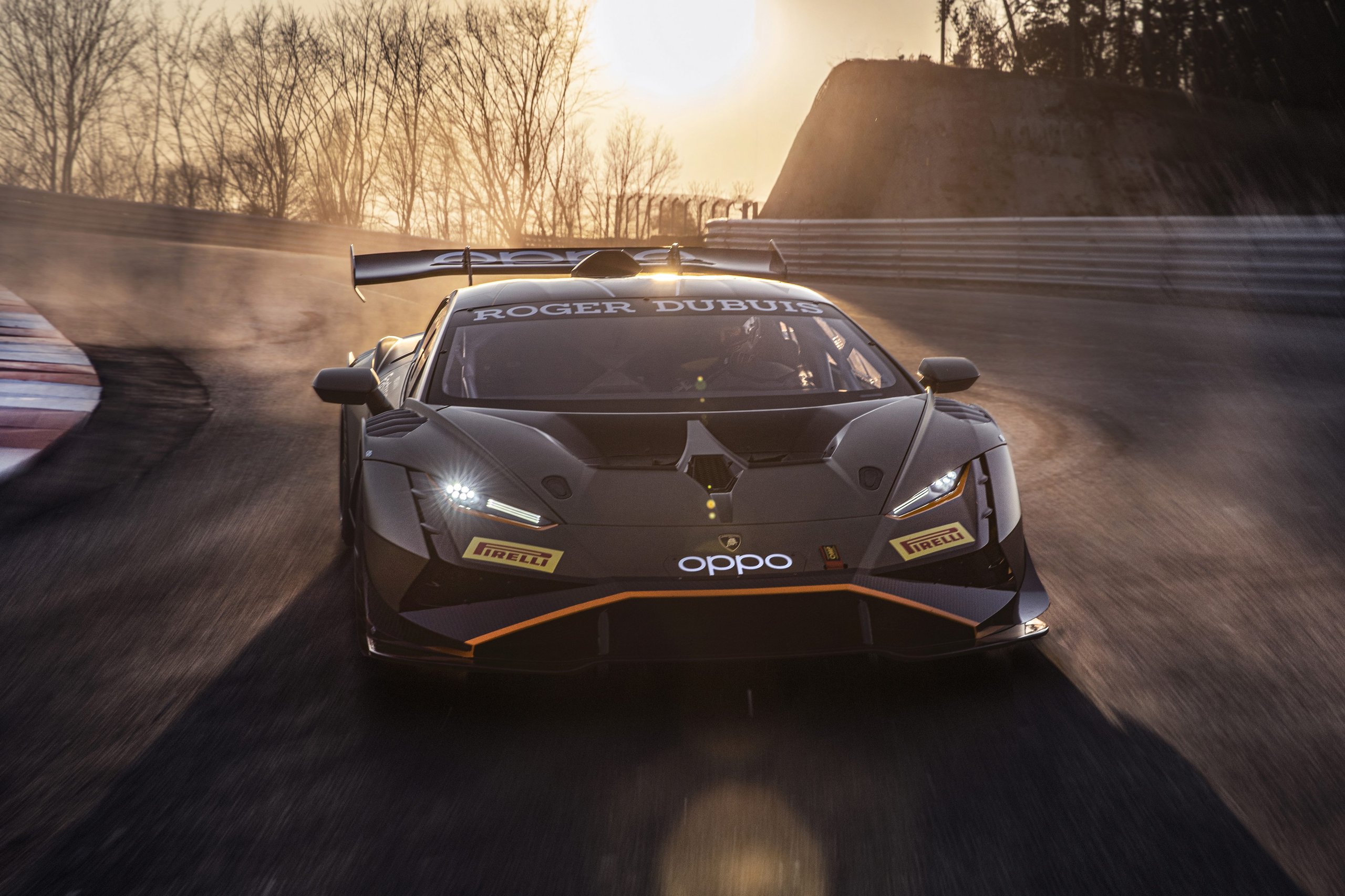
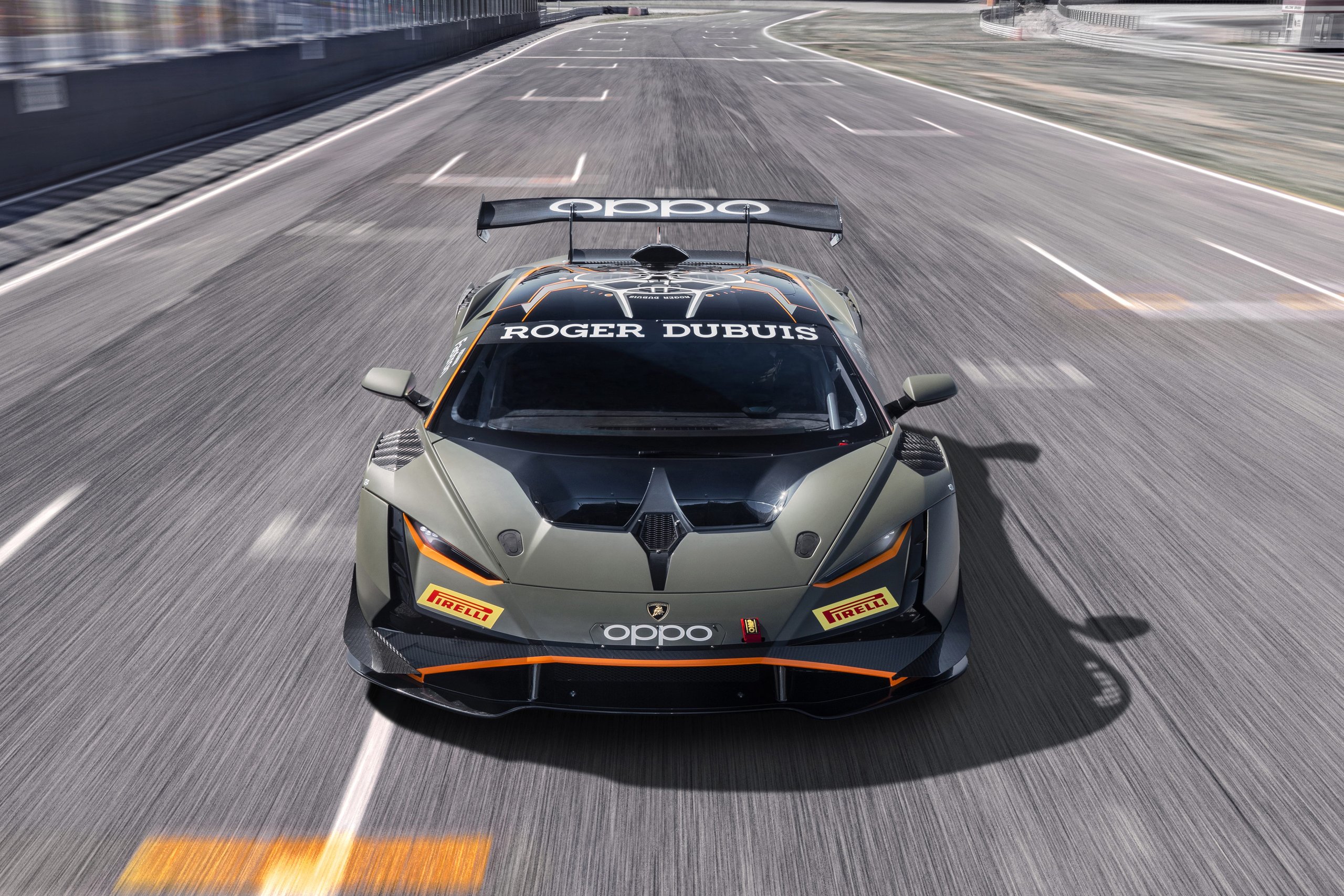
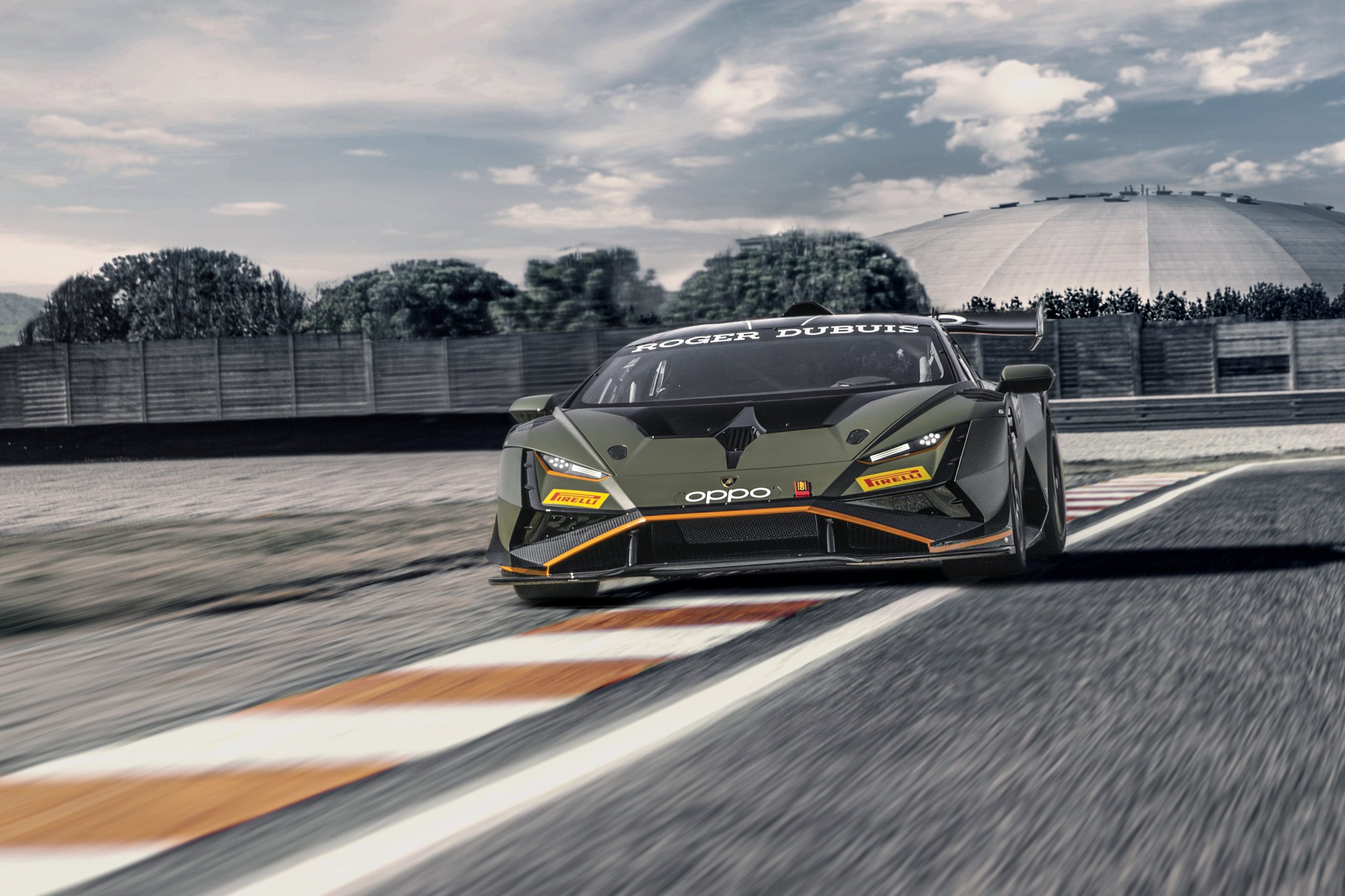
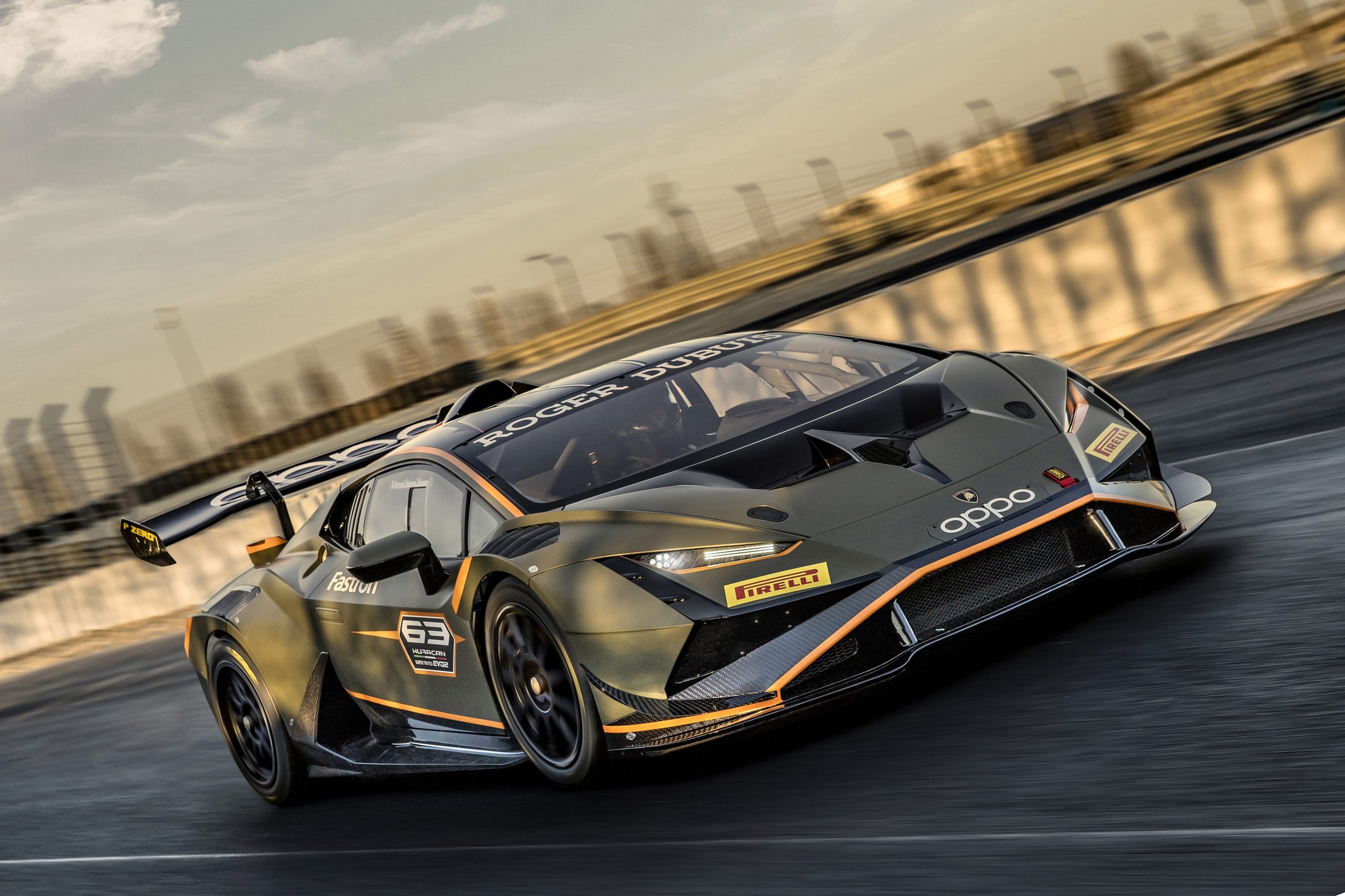
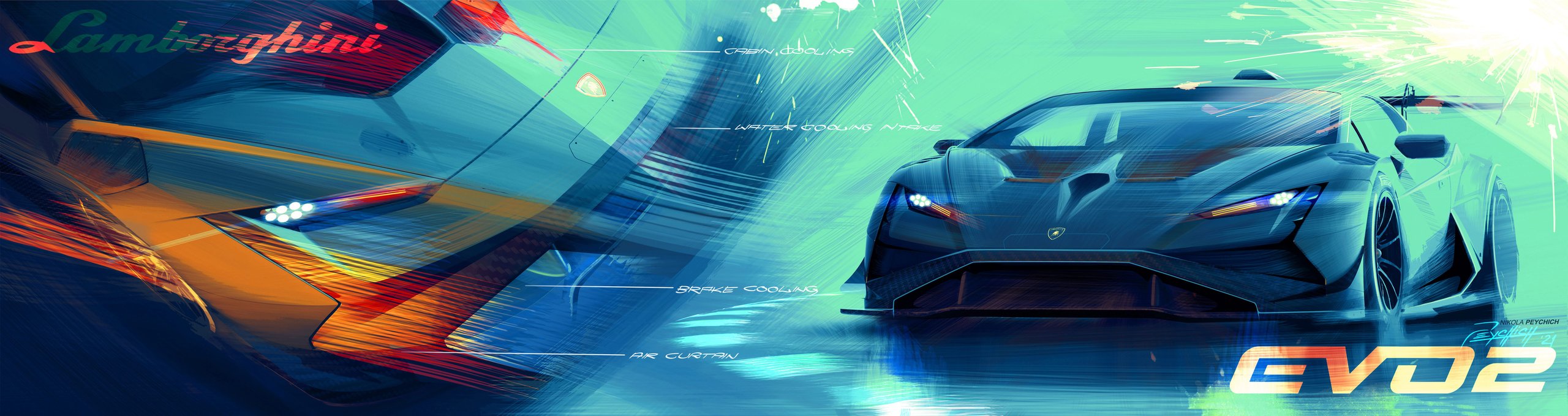
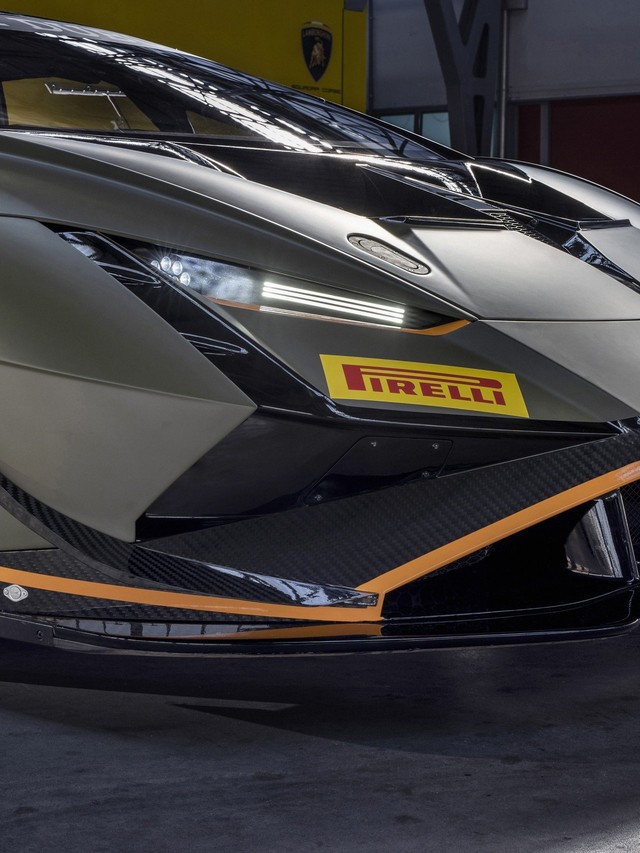
The front end received the most dramatic rework. New high-intensity full LED light clusters are built around a hexagonal motif, a shape that recurs throughout the car and reinforces the brand’s obsession with angular geometry. A pronounced “omega” lip spans the nose, connecting carbon-fiber fins and establishing a clear visual kinship with the Huracán STO road car. Outboard, new air curtain intakes channel airflow tight against the body sides to improve both downforce and aerodynamic stability.
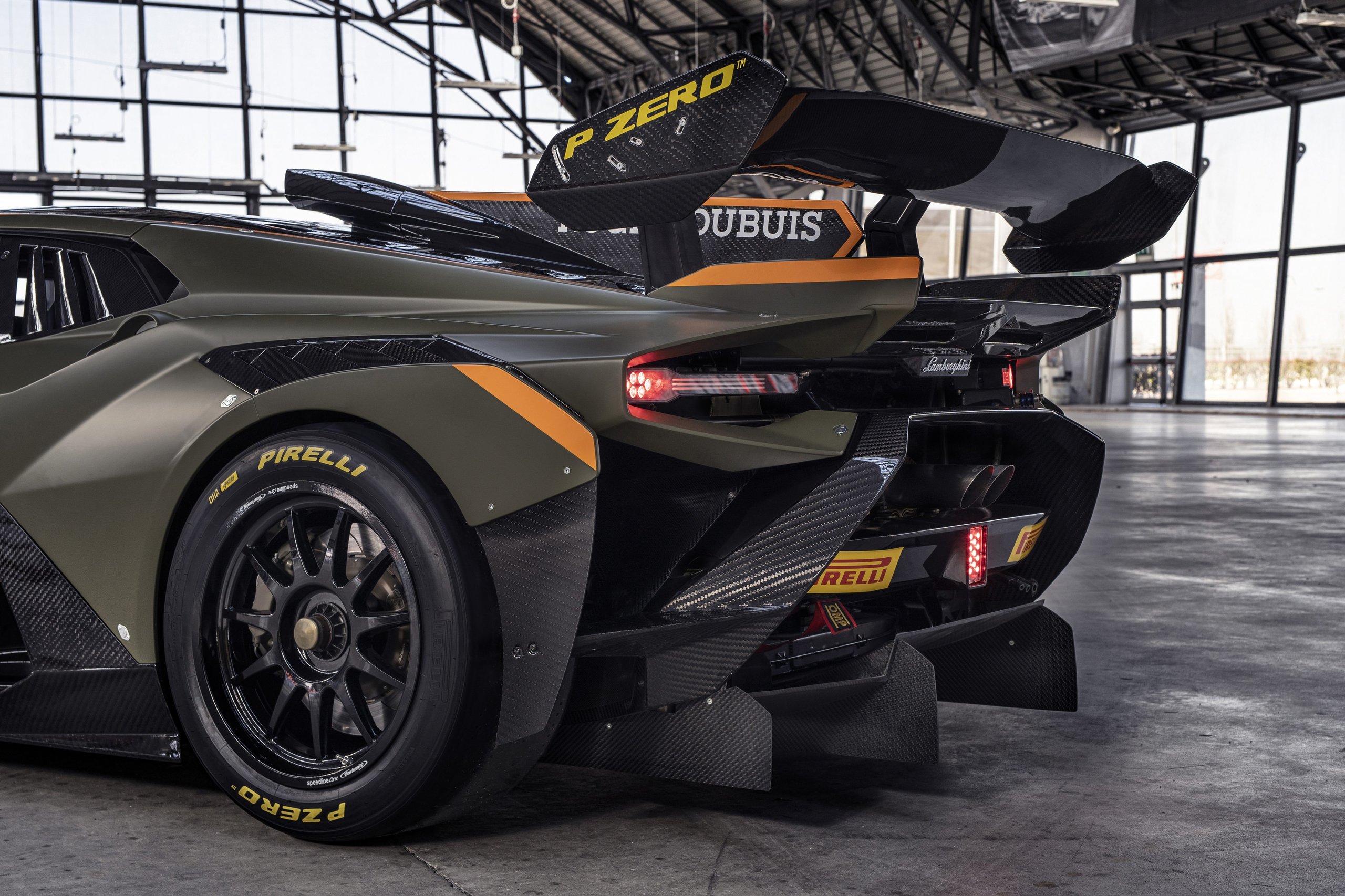
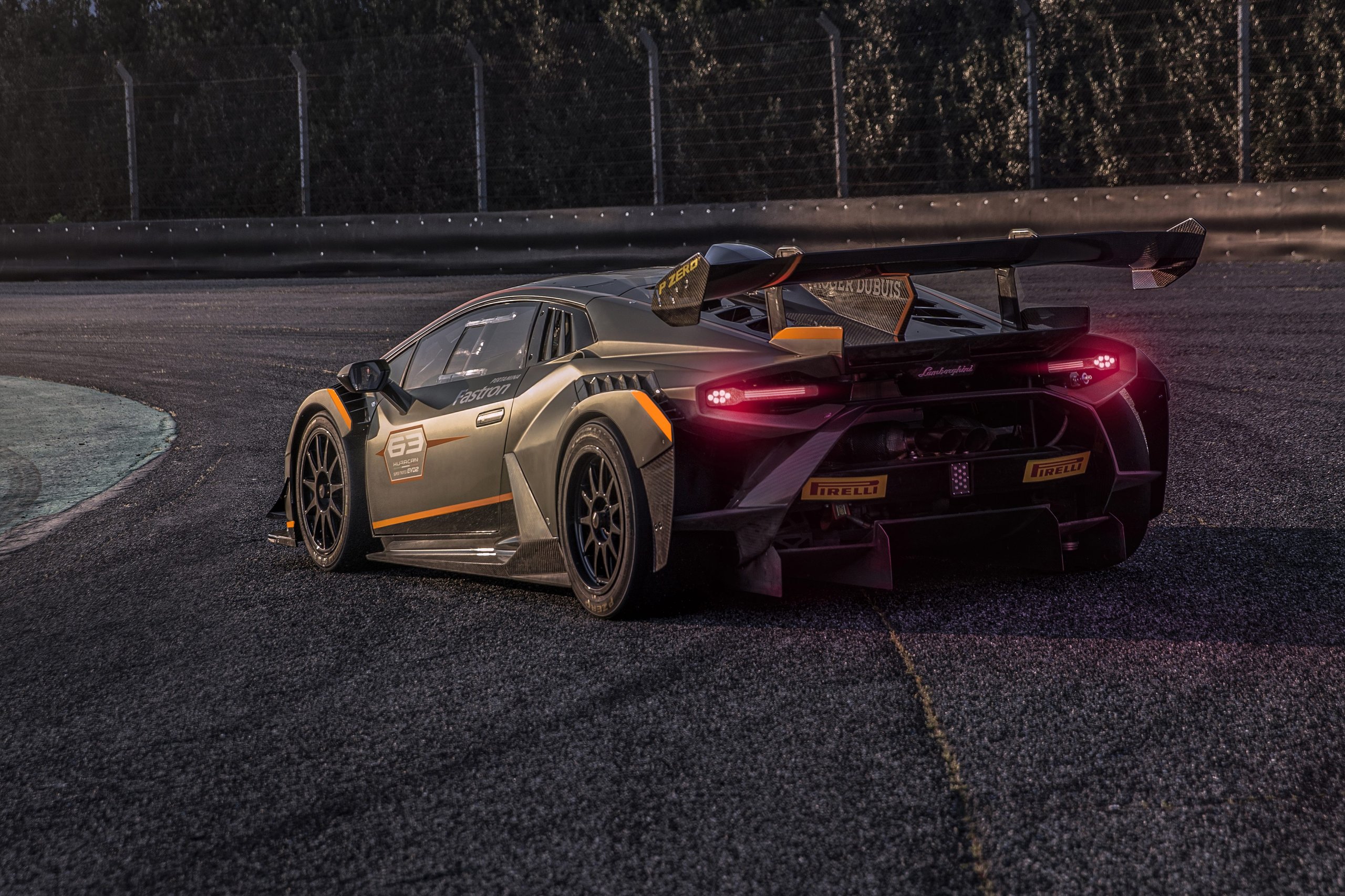
At the rear, the design team made an even bolder statement. The frames of the new LED taillight clusters explicitly reference the Countach, pulling one of Lamborghini’s most sacred design signatures forward into a modern racing context. An arched carbon-fiber bumper ties the rear aerodynamic appendages behind the wheels to redesigned diffuser fins, creating a single visual sweep rather than a collection of bolted-on elements. The rear fenders themselves became a single continuous piece, integrating part of the side spoiler for what Lamborghini describes as optimal surface continuity.
Taken as a group rather than individually, these details reveal deliberate vocabulary choices, not random aesthetic experiments. Hexagonal lighting signatures, single-element fender construction, Countach-era taillight framing: each one reappeared, in recognizable form, when the Huracán’s road car successor eventually arrived. The EVO2 functioned exactly as Borkert promised.

The striking hexagonal LED taillight of the Huracán Super Trofeo EVO2 glows intensely, highlighting its modern design.
Aerodynamic and Mechanical Upgrades That Serve the Bigger Picture
The design preview would mean little if the car beneath it were not genuinely improved. Lamborghini’s braking system, designed and developed in-house by Squadra Corse, received enlarged front steel discs (up from 380 mm to 390 mm) paired with new calipers accommodating larger-surface pads. The goal was better performance and reduced pad consumption, a detail that matters enormously to privateer teams managing season-long budgets.
Bodywork construction shifted meaningfully toward carbon fiber. Side member paneling and rear aerodynamic appendages that previously used plastic were replaced with carbon-fiber components. Lamborghini framed this as maintaining sustainability in running costs, which translates to real-world durability: carbon panels resist stone chips and minor contact damage better than their plastic predecessors, and replacement panels weigh less. For teams running full seasons across Europe, Asia, or North America, that weight reduction compounds over hundreds of laps.
The powertrain carried over largely unchanged, with the 5.2-liter V10 still delivering its power at 8,250 rpm through the rear-wheel-drive X-Trac gearbox. CTO Maurizio Reggiani positioned the Super Trofeo as “the best testing ground for technical and aerodynamic solutions for both road cars and GTs.” The EVO2’s development priorities reflect that philosophy precisely: refine the aero and the structures, extract data, and feed it back to Sant’Agata’s road car and GT3 programs. Every carbon panel and every enlarged brake disc does double duty, solving a racing problem while generating knowledge that shapes the next production Lamborghini.

The Huracán Super Trofeo EVO2's intricate front design, featuring sharp headlights and aerodynamic elements, is captured in detail.
The Super Trofeo as Lamborghini’s Public Laboratory
Lamborghini’s one-make series, which entered its 13th season in 2021, occupies a strategically important slot in the brand’s motorsport hierarchy. It sits below the GT3 program in outright performance, but its value to Sant’Agata extends well beyond grid positions. Since 2009, 950 drivers had competed in the Super Trofeo across more than 310 hours of racing at circuits worldwide. That volume of track time generates an enormous dataset on component durability, aerodynamic behavior, and driver feedback, all of which flows directly into road car and GT3 development.
Reggiani noted that Squadra Corse celebrated the milestone of the 400th Huracán racing car in April 2021, with a target of reaching 500 within a few years. Those numbers carry commercial weight, too. Each car sold at the European price of €250,000 (excluding taxes) represents both revenue and a customer who becomes deeply embedded in the Lamborghini ecosystem. Existing Huracán Super Trofeo EVO owners could purchase a dedicated upgrade kit available from early 2022, keeping the installed base competitive without forcing a full chassis replacement. That approach reduces the barrier to entry for returning customers and protects residual values across the grid.
Drivers who sampled the EVO2 on track described it as approachable at moderate pace but demanding at the limit, with adjustable traction control and ABS settings that accommodate both gentleman drivers and aspiring professionals. Giorgio Sanna, Lamborghini’s Head of Motorsport, confirmed the car was designed with both categories in mind, prioritizing an engaging driving experience alongside controlled running costs. The result is a platform that keeps paying customers on track long enough to generate the real-world data Lamborghini’s engineers need.

The Huracán Super Trofeo EVO2 stands ready in a hangar, showcasing its aggressive side profile and racing specifications.
An Unusually Explicit Track-to-Road Strategy
Most supercar manufacturers maintain some version of a customer racing program, and several use those platforms to preview production car technology. Ferrari’s Challenge series refines chassis and electronic systems that eventually filter into road-going Berlinettas. Porsche’s Carrera Cup cars share fundamental architecture with their 911 GT3 road counterparts. Lamborghini’s approach with the EVO2, however, was unusually explicit about the aesthetic dimension. Where competitors tend to emphasize engineering transfer, Lamborghini openly used a race car to debut a visual language.
That distinction matters because Lamborghini’s design identity carries outsized commercial weight. Buyers choose the brand partly for the way these cars look standing still, and Sant’Agata knows it. By staging the EVO2 as a design manifesto, Lamborghini signaled confidence in a new aesthetic direction before committing it to a six-figure road car. The track provided a low-risk environment to gauge reaction: if enthusiasts and media responded positively to hexagonal lighting and Countach-era taillight references on a race car, the design team could proceed with greater certainty on the production model.
Car and Driver later ran the EVO2 at its Lightning Lap test, reporting a $360,000 figure for the race car and confirming its competitive pace against a broad field. That kind of independent validation reinforced what Squadra Corse built: a car that performs as convincingly as it previews.

The Huracán Super Trofeo EVO2's aggressive rear design, featuring a large diffuser and striking taillights, is showcased in a hangar.
The Last Naturally Aspirated V10 on the One-Make Grid
The EVO2 represents the final evolution of the Huracán-based Super Trofeo platform. Lamborghini confirmed the Temerario Super Trofeo as its successor, which means EVO2 cars will eventually transition from front-line competition machines to collectible racing hardware. Teams buying new EVO2 chassis or upgrading existing EVOs could race competitively through the platform’s remaining seasons, then hold cars that carry genuine historical significance as the last naturally aspirated V10 one-make racers Lamborghini will build.
The broader significance, though, is strategic rather than sentimental. The EVO2 proved that Sant’Agata’s design studio treats its racing program as a public laboratory, not merely a marketing exercise. Borkert’s team used the track car to test public appetite for a design direction that would eventually define the next generation of Lamborghini road cars. When those road cars arrived with hexagonal lighting signatures and cleaner single-element bodywork, the EVO2 was the car that showed them first.
At €250,000 before taxes, with an upgrade kit option that kept existing EVO owners competitive and loyal, the program reflects a brand that understands its customer racing series serves multiple purposes simultaneously. It generates revenue, builds lifelong ambassadors among wealthy enthusiasts, and provides a real-world proving ground for the design and engineering ideas that define the next Lamborghini you see on the road. The EVO2 did all three, and it did them while quietly sketching the future in carbon fiber and hexagonal light.

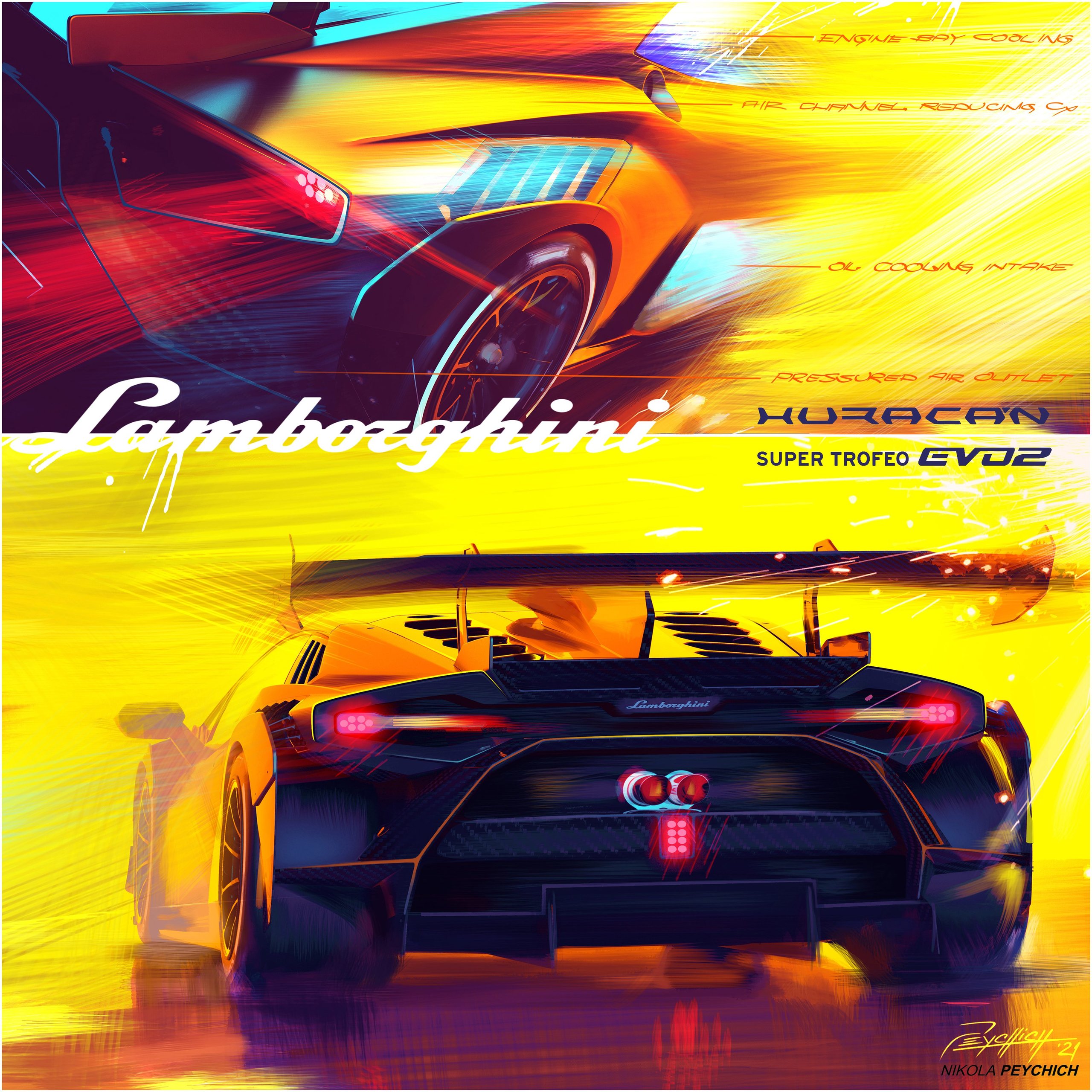
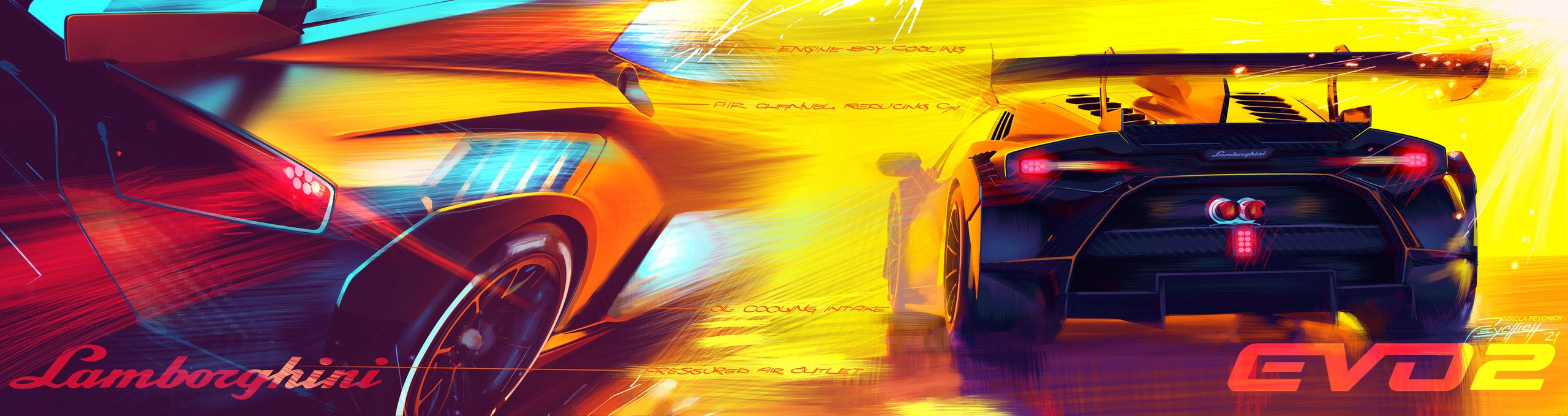
Front and rear design sketches of the Lamborghini Huracan Super Trofeo EVO2 reveal its aggressive track-ready aesthetics.
Gallery