Two New Collaborations, One Fashion Stage
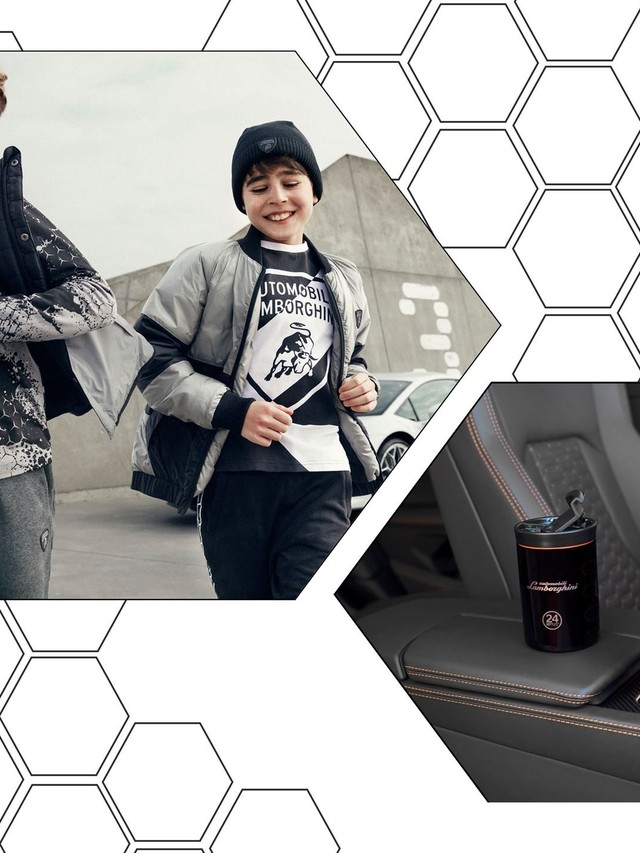
Lamborghini chose the 2022 edition of Pitti Immagine Uomo e Bambino, Florence’s influential fashion trade fair, to debut two lifestyle collaborations that sit firmly outside the garage. The first is a Special Edition thermal bottle and a new thermal travel mug created with Italian drinkware brand 24Bottles, both wrapped in a hexagonal pattern with an iridescent finish borrowed directly from Lamborghini’s design vocabulary. The second is a Fall-Winter 2022 children’s apparel collection for ages four to sixteen, developed with Danish kids’ wear specialist KABOOKI, featuring deconstructed Lamborghini logos and graphic nods to the supercars built in Sant’Agata Bolognese.
Neither product will set a Nurburgring lap record. Yet the venue choice tells you everything about what Lamborghini is actually selling: brand identity, translated into objects that live in kitchens, school hallways, and commuter bags rather than climate-controlled collections. Pitti Immagine is where luxury fashion houses go to signal seriousness about lifestyle positioning, and Lamborghini showing up alongside established apparel brands says the company views these collaborations as strategic, not novelty. Taken together, the two launches reveal a single ambition: embed the raging bull into daily routines and wardrobes that exist far from any showroom, cultivating emotional loyalty in audiences who may not buy a supercar for years, or ever.
The Strategic Vision Behind Lamborghini’s Brand Expansion
The staggered release schedule reinforces that ambition. Lamborghini says the 24Bottles items will be available from March through authorized retail outlets and the official Lamborghini store, while the KABOOKI kids’ collection arrives in September through Lamborghini’s own sales channels and selected retailers. That cadence keeps the brand visible in consumer retail across two distinct shopping seasons, a rhythm that mirrors how fashion labels, not automakers, typically plan their calendars.
The underlying logic is straightforward. Lamborghini builds roughly 10,000 cars per year for a global audience of buyers who can afford them. The universe of people who want a Lamborghini but will never configure one on the Ad Personam portal is orders of magnitude larger. Lifestyle products create a revenue stream from that aspirational audience while reinforcing the brand’s presence in daily life. A kid wearing a Lamborghini hoodie to school is a walking billboard, yes, but also a potential future customer whose earliest brand association is personal rather than distant.
Rather than building a standalone retail empire or licensing broadly, Lamborghini is choosing focused collaborations with specialist partners. 24Bottles brings sustainability credentials and existing retail distribution in the premium drinkware segment. KABOOKI brings expertise in children’s licensed apparel, having worked with brands including LEGO. Each partner handles production and distribution within their specialty, while Lamborghini contributes design direction and brand equity. The advantage of this model is quality control and brand protection. Every collaboration goes through Lamborghini’s design team, which means the hexagonal patterns and color choices should feel consistent with the automotive products. The trade-off is scale: a handful of curated collaborations will never generate the revenue of a sprawling in-house lifestyle division. Whether Lamborghini views these partnerships as the foundation for something larger, or as a deliberately limited complement to the car business, the company’s official materials do not say.
Design DNA on the Go: Translating Automotive Aesthetics to Everyday Objects
The interesting design challenge in any automotive lifestyle product is avoiding two failure modes. One is slapping a badge on a generic item and calling it a collaboration. The other is over-designing to the point where the product looks like a souvenir rather than something an adult would carry without irony.
Lamborghini says both 24Bottles products feature the hexagonal pattern and iridescent effect that the company treats as core design signatures. The hexagon appears across Lamborghini’s automotive design language, from tail light clusters to interior trim elements and engine bay detailing. Translating that geometry onto a stainless steel bottle is a relatively elegant solution: it reads as intentional to anyone familiar with the cars and simply looks like a premium pattern to everyone else. The iridescent finish is a subtler reference. Lamborghini’s Ad Personam program offers paint effects that shift color depending on viewing angle, a characteristic that high-end bottle finishes can approximate surprisingly well. Whether the execution on a thermal bottle genuinely evokes a Huracan’s paint booth or merely suggests it depends on the production quality, which nobody outside the factory can evaluate from announcement materials alone.
The KABOOKI collection takes a different approach. Lamborghini describes it as using slogans, deconstructed logos, and reimagined supercar elements to express creativity, dynamism, and energy. For children’s apparel, deconstruction is a smart move. A four-year-old wearing a literal shield logo on a polo shirt looks like a miniature brand ambassador at a dealer event. A graphic tee that abstracts a supercar’s silhouette into something playful reads as actual kids’ fashion. The distinction matters if Lamborghini wants these clothes worn to school rather than just to Cars and Coffee.

Lamborghini branded travel accessories are perfectly integrated into the luxurious interior of a Urus. Image: Automobili Lamborghini.
Cultivating Future Enthusiasts, Starting at Age Four
The KABOOKI collection targeting ages four to sixteen is the more strategically revealing of the two collaborations. Thermal bottles appeal to existing enthusiasts and owners who want branded accessories for their daily routine. Children’s clothing aims at a demographic that cannot buy a car for at least a decade, and in most cases, two or three decades.
Luxury brands understand that early emotional associations compound. A child who grows up wearing Lamborghini graphics, who associates the shield logo with something cool rather than something alien, becomes a teenager who puts the poster on the wall and an adult who walks into the dealership already primed. Lamborghini’s partnership with KABOOKI, a Danish company that specializes in licensed children’s wear, suggests the company wanted a partner with genuine expertise in the segment rather than a generic apparel licensee. That choice implies Lamborghini is treating kids’ fashion as a real product category, not a checkbox.
For Lamborghini owners with families, these products also serve a practical function. Anyone who has brought children to a Lamborghini event, a Squadra Corse race weekend, or even a casual dealership visit knows that kids gravitate toward the cars instinctively. Giving them branded clothing they actually want to wear turns that instinct into something the family shares. Multi-generational brand loyalty in the luxury automotive world is a documented phenomenon, and it rarely starts with a spec sheet. It starts with a hoodie, a poster, a toy car on a nightstand. The KABOOKI line is Lamborghini’s bet that planting those seeds early, through well-designed apparel rather than generic merchandise, pays dividends measured in decades rather than quarters.
Lamborghini’s Approach vs. Ferrari and Porsche
None of this happens in a vacuum. Ferrari’s lifestyle operation is the benchmark that every competitor measures against, and the gap is significant. Ferrari operates branded retail stores in major cities, runs fashion collections that appear at dedicated runway shows, and licenses its name across categories from fragrances to theme parks. The company explicitly targets lifestyle revenue as a growth pillar in its financial strategy. Porsche takes a different route through Porsche Design, a standalone brand that sells watches, electronics, luggage, and eyewear at premium price points. The connection to the cars is aesthetic rather than literal: clean lines, dark materials, functional minimalism.
Lamborghini’s approach, based on what the company shows at Pitti, occupies a middle ground. The curated collaboration model lets the company move quickly into new product categories without the overhead of in-house manufacturing, while keeping design consistency tight. A hexagonal bottle that echoes the Urus tail lights and a kids’ hoodie that deconstructs the shield logo both serve the same purpose: they make the brand tangible in contexts where a V10 engine note cannot reach. The question is whether this restrained approach reflects strategic discipline or simply an earlier stage of the same trajectory Ferrari has already traveled. What is clear from the Pitti debut is that Lamborghini is no longer content to let the cars do all the talking.
What Buyers and Fans Should Know
The 24Bottles thermal bottle and travel mug arrive in March through authorized retailers and the Lamborghini store. The KABOOKI kids’ collection follows in September through Lamborghini’s own channels and selected outlets. Pricing for either collaboration was not disclosed in the announcement, though 24Bottles’ standard Clima Bottles typically retail in the €30 to €45 range before any co-branding premium.
For current owners, the 24Bottles products represent the kind of accessory that fits naturally into the ownership ecosystem. Official imagery shows the bottles sitting in the cup holders of a Urus interior, complementing the orange contrast stitching, a detail that suggests Lamborghini’s design team thought about how these objects would look inside the cars, not just on a shelf. For enthusiasts who follow the brand but do not own one of the cars, these collaborations offer a genuine entry point. A well-designed thermal bottle with authentic Lamborghini design language costs a fraction of even the least expensive item in the Ad Personam catalog. Whether that accessibility dilutes the brand’s exclusivity or strengthens it by expanding the community is the perennial debate in luxury marketing, and reasonable people disagree.
The broader signal from Pitti is consistent with everything else Lamborghini showed there: the company is building a lifestyle layer around its automotive core, one specialist partnership at a time. The 24Bottles and KABOOKI collaborations are modest individually, but they represent a deliberate pattern of embedding the brand into routines and wardrobes that exist far from the racetrack or the dealer showroom. For a company that built its reputation on cars too dramatic to ignore, the quiet ambition of a hexagonal water bottle is its own kind of statement.
Gallery


