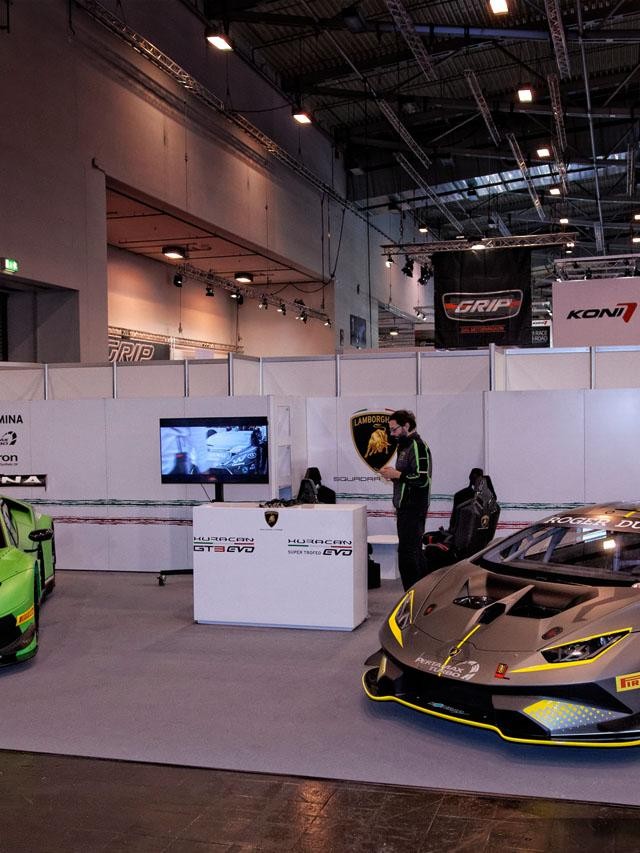
Lamborghini Took Its Motorsport Program Digital in 2020, and the Timing Was Perfect
On May 29, 2020, with most of the world’s racetracks sitting silent, Lamborghini opened registration for “The Real Race,” its first official eSports competition. Built as a virtual one-make series on Assetto Corsa Competizione by Kunos Simulazioni, the format put competitors behind the wheel of the Lamborghini Huracán GT3 EVO, a car that by that point already carried three Daytona 24 Hours victories on its résumé. Five qualifier weekends ran from late May through early August, with the top finishers advancing to a live final scheduled for September 18 at Lamborghini’s headquarters in Sant’Agata Bolognese.
The prize for the top three finalists: a three-day trip to Italy, training alongside Lamborghini Squadra Corse drivers, and seat time in a real Lamborghini race car on an internationally recognized circuit. Former Formula One driver David Coulthard served as studio commentator for the live event, lending credibility to a format that many luxury brands were still treating as a marketing curiosity.
The 2020 global lockdowns gave the program an obvious audience of homebound sim racers, but what separated it from the wave of pandemic-era virtual events was the infrastructure behind it. Lamborghini says its own Squadra Corse test and race drivers use Assetto Corsa Competizione for real-world preparation, so the platform choice was not arbitrary. Kunos Simulazioni developed the game in collaboration with car manufacturers, and the Huracán GT3 EVO’s in-game physics model reflects that partnership. Competitors were not playing an arcade game wearing a Lamborghini skin. They were running the same simulation tool that actual factory drivers use to learn circuits. That distinction, invisible to casual observers, would prove to be the foundation on which Lamborghini built something far more ambitious than a lockdown distraction.
From Pandemic Project to Permanent Fixture
Most manufacturer-backed virtual racing events from 2020 quietly disappeared once real motorsport resumed. The Real Race did not. It returned for a second season in 2021 and kept expanding, reaching its fifth season by 2024. That longevity alone separates it from the dozens of one-off lockdown activations that Ferrari, Porsche, and McLaren also tried during the same period.
The competition grew in geographic scope, eventually spanning three regions: EMEA, North America, and Asia Pacific. In subsequent seasons, competitors raced the Lamborghini Huracán Super Trofeo EVO2, keeping the virtual car aligned with the real-world one-make championship hardware. Lamborghini’s Centro Stile designed an exclusive race livery for the inaugural season, customizable in 12 versions, with each car carrying the logos of Squadra Corse partners Pertamina, Pirelli, and Roger Dubuis. That level of visual integration mirrored how the real Super Trofeo series presents itself, reinforcing the point that this was never a casual brand exercise.
Throughout its growth, the competition remained open to all experience levels. Lamborghini could have restricted entry to established sim racers, but the open format served a dual purpose: it widened the funnel for talent discovery and gave casual enthusiasts a genuine reason to engage with the brand beyond scrolling through Instagram configurators. The real significance of that open door, though, only became clear when Lamborghini raised the stakes.
The Prize That Changed Everything: A Factory eSports Contract
The original 2020 prize structure was generous but ultimately experiential: fly to Italy, drive a race car, go home with memories and a story. By the 2022 edition, Lamborghini fundamentally changed the stakes. The overall champion earned the chance to join the official Automobili Lamborghini Esports team on a contracted basis, with regional champions from EMEA, North America, and Asia Pacific competing for that coveted factory seat.
This shift transforms the entire narrative. A VIP track day is a marketing expense. A contracted team position is a career pathway. One report suggests that Lamborghini’s pipeline offers a more direct route from competition winner to contracted team member than most alternatives in the sim racing landscape. The eSports squad reportedly operates under the same Squadra Corse umbrella that manages the real-world Super Trofeo and GT3 programs, which means winning The Real Race places a driver inside the same organizational structure that fields cars at Daytona and Spa.
The fourth season in 2023 continued this trajectory. Regional winners also earned designation as brand ambassadors within their respective championships, adding a public-facing role to the competitive one. Lamborghini introduced a €15,000 prize pool in 2022 for the top six sim drivers in each regional final ranking, layering financial reward on top of the factory contract opportunity.
For anyone who follows Lamborghini’s real-world customer racing ladder, the parallel is hard to miss. The Super Trofeo series already functions as a stepping stone to GT3 competition. The Real Race now serves a similar role on the virtual side, creating a structured path from open qualifier to official team driver.
Why Assetto Corsa Competizione Matters to the Sim-to-Real Argument
Stefano Domenicali, then Chairman and CEO of Automobili Lamborghini, framed the program’s launch around a specific claim: that eSports creates an environment where established drivers can be challenged by anyone, encouraging wider engagement with real-life racing. Coulthard reinforced the point, emphasizing how sim racing skills transfer directly to actual driving.
Those statements carry more weight when the simulation platform is credible. Assetto Corsa Competizione occupies a particular position in the sim racing world: it models tire behavior, aerodynamic loads, and fuel strategy with enough fidelity that professional teams use it for pre-event preparation. Because Squadra Corse drivers train on the same software, the skills a competitor develops during The Real Race qualifiers are, at least in theory, built on the same physics model that informs real pit-wall decisions.
How close the sim-to-real translation actually gets remains a fair question. Lamborghini has not published detailed data on how many Real Race competitors have gone on to real-world racing seats, and the exact training regimen that winners experience alongside Squadra Corse drivers stays vague in official material. The program emphasizes that skills honed in Assetto Corsa Competizione are directly transferable to Squadra Corse’s real-world racing initiatives, but the specifics of that bridge, including lap-time correlation, coaching methodology, and physical fitness requirements, remain undisclosed. The platform choice is deliberate and technically serious, even if the full sim-to-real pipeline is still maturing. That honesty about its limits, paradoxically, is part of what makes the program more credible than rivals that oversell the connection.
Lamborghini’s Digital Strategy in a Competitive Context
Ferrari runs its own eSports series. Porsche fields factory sim racers. McLaren invested heavily in virtual competition during the same 2020 window. Lamborghini was not alone in recognizing the opportunity. Where the Sant’Agata approach differs is in integration depth. Most rival programs treat eSports as a parallel marketing channel, separate from the motorsport department’s core operations. By housing its eSports team under Squadra Corse, Lamborghini signals that virtual competition feeds into the same competitive ecosystem as its physical racing programs.
Beyond The Real Race, Lamborghini has reportedly broadened its gaming partnerships to include titles like Rocket League and Asphalt 9: Legends. Those are pure brand-awareness plays, putting Lamborghini models in front of millions of casual gamers who may never touch a sim rig. The Real Race occupies a different tier entirely: it filters for serious competitors and rewards the best with professional opportunities.
For Lamborghini enthusiasts who care about the brand’s competitive positioning, the practical takeaway is straightforward. As the Temerario GT3 prepares to replace the Huracán GT3 in real-world competition, the virtual side of Squadra Corse’s operation already has an established talent identification system in place. Whether future seasons of The Real Race feature the Temerario remains unconfirmed, but the program’s structure, built around whatever car Lamborghini currently races, makes that transition logical.
Five seasons in, The Real Race is no longer a pandemic experiment. It functions as a permanent layer of Lamborghini’s motorsport identity, one that costs far less than fielding a prototype at Le Mans and reaches an audience that traditional GT racing simply cannot access. What began as a lockdown stopgap has become something rarer in the supercar world: a genuine talent pipeline with a factory contract waiting at the end of it.
Gallery


