Twenty Years On, the Gallardo Still Defines What Lamborghini Became
When the Lamborghini Gallardo rolled onto the stage at the 2003 Geneva Motor Show, it carried a burden no other car from Sant’Agata had shouldered before: it needed to sell. Not in the dozens or low hundreds that kept the Countach and Diablo mystique alive, but in volumes that could sustain a company under new ownership and prove that a Lamborghini could be accessible without being ordinary. Two decades later, the numbers confirm it delivered. Lamborghini says 14,022 Gallardos left the factory across 32 variants, reaching buyers in 45 countries over a ten-year production run.
Those figures rewrote the company’s financial story. Before the Gallardo, Lamborghini built roughly 300 cars a year. After it, annual production climbed past 2,000. As the brand’s first production V10, the Gallardo became the volume anchor that funded the Murciélago’s successor, enabled the Huracán program, and arguably made the Urus business case possible. Every modern Lamborghini traces part of its DNA back to the decisions made during the Gallardo’s development.
Calling it the “baby Lambo” was always reductive. The Gallardo sat below the V12 flagship, but it was the car that proved Lamborghini could build a supercar you could live with every day, one that started reliably, fit in a normal parking space, and let you see out the back window. That combination of drama and domesticity became the brand’s commercial formula for the next two decades.
Why the Gallardo Still Matters to Lamborghini’s Current Lineup
The Gallardo established the strategic template Lamborghini still follows: a V12 flagship for maximum spectacle, a more accessible mid-engine model for volume, and eventually a third pillar for everyday usability. The Huracán inherited the Gallardo’s market position and its V10 engine architecture. The Urus inherited its commercial philosophy, the idea that broadening the customer base strengthens the brand rather than diluting it.
The pattern is unmistakable in the current lineup. The Revuelto sits at the top with its hybrid V12, the Temerario occupies the Gallardo’s old slot with a twin-turbo V8, and the Urus covers the daily-use segment. Lamborghini learned from the Gallardo that accessibility and exclusivity can coexist, provided the engineering is genuinely good and the design remains unapologetically dramatic.
For prospective buyers considering a used Gallardo today, the car occupies a fascinating position: old enough to feel analogue and raw, young enough to benefit from Audi-era build quality. Many enthusiasts consider the pre-LP manual Gallardo particularly desirable, citing its gated shifter and analogue driving feel. Forum threads on Lamborghini-Talk regularly revisit the topic, with multiple owners describing how well early Gallardos age both aesthetically and mechanically.

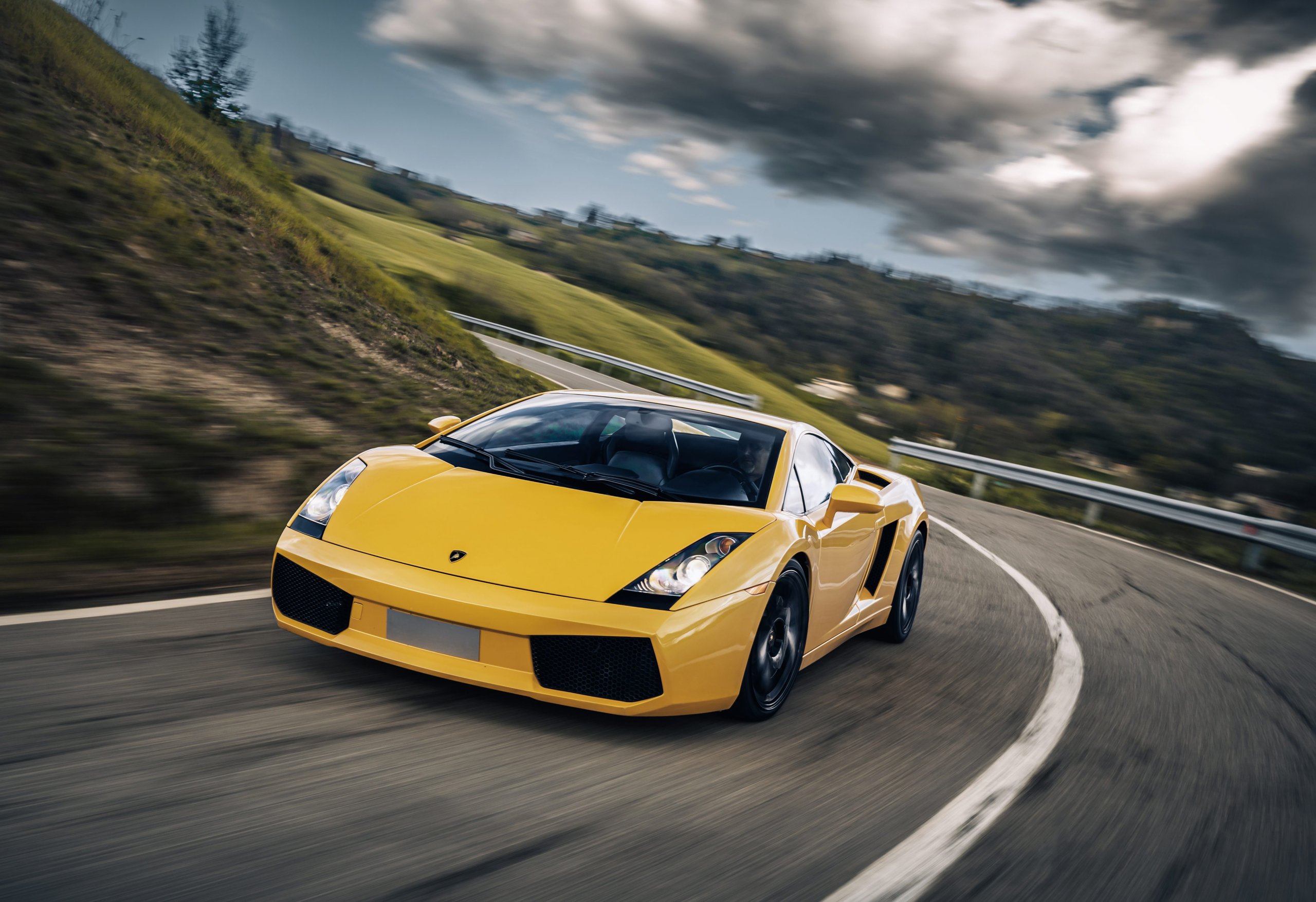
A striking yellow Lamborghini Gallardo is perfectly positioned against a breathtaking backdrop of snow-capped mountains.
Engineering the V10: A 90-Degree Gamble That Paid Off
The Gallardo’s V10 deserves more than the usual “it sounds amazing” treatment, because the engineering decisions behind it shaped every Lamborghini ten-cylinder that followed. The story starts with the L140 project, which began in 1987. Early prototypes explored V8 and V10 configurations, but the original L140 V10 used a 72-degree V angle with the gearbox integrated into the oil pan area. According to Maurizio Reggiani, Lamborghini’s Technical Director from 2006 to 2022, this layout proved impractical: the gearbox position raised the center of gravity to a point that would compromise handling.
After the Volkswagen Group acquired Lamborghini in 1998, the project restarted. Engineers Massimo Ceccarani and Reggiani developed a 5-liter V10 with a 90-degree bank angle. The wider V angle reduced engine height, lowering the center of gravity and improving rear visibility. For a mid-engine supercar intended for daily use, being able to see what is behind you was not a trivial consideration.
The 90-degree angle created a problem: a V10 at that angle does not naturally produce regular firing intervals. Lamborghini solved this with crankpins offset by 18 degrees, a “split pin” arrangement that ensured smooth operation. The crankcase used a hypereutectic aluminum alloy that allowed cylinder liners to be cast directly into the block, reducing engine length, weight, and production costs simultaneously. A dry-sump lubrication system kept oil supply consistent under hard cornering while dropping the engine lower in the chassis.
The result was a 500 HP naturally aspirated powerplant that could be produced in the volumes Lamborghini needed. One source notes the Gallardo’s initial 500 HP output surpassed the Ferrari 360’s 400 HP at launch.
When the engine grew to 5.2 liters for the LP 560-4 in 2008, Reggiani’s team removed the split pin entirely, accepting an irregular firing order in exchange for greater crankshaft rigidity. That decision gave the later Gallardo its distinctive, slightly ragged exhaust note. Direct fuel injection arrived with the same update. The 5.2-liter architecture carried forward into the Huracán, where it eventually reached 640 HP in the Performante.

A detailed view of the powerful Lamborghini V10 engine, showcasing its intricate design and branding.
The Daily-Drivable Supercar Before That Was Normal
Lamborghini says the Gallardo stood out for its performance combined with drivability, reliability, and everyday practicality. In 2003, the idea that you could use a Lamborghini for a grocery run was genuinely surprising. Previous models demanded tolerance for overheating, difficult clutches, and visibility that ranged from limited to nonexistent.
Its all-aluminum structural chassis, built from extruded parts welded to cast connection elements, gave the car a rigidity that translated into predictable handling. The VT all-wheel-drive system provided traction in conditions where a rear-drive Italian exotic would terrify its owner. The optional e-gear robotized sequential transmission meant buyers who did not want a manual could still order the car.
Enthusiast forums paint a consistent picture of ownership. Multiple owners describe the Gallardo as relatively reliable by supercar standards, with LP-era cars (2009 onward) generally considered more dependable than pre-LP models. Many parts share architecture with Audi and Volkswagen Group components, keeping certain service costs lower than fully bespoke alternatives. The single-clutch e-gear transmission remains a point of debate: some owners find its aggressive shifts characterful, while others strongly recommend seeking out a manual car.
Critics who perceived the Gallardo as “too sensible” missed the point. Its approachability was precisely what made it commercially viable, and Lamborghini kept enough visual aggression in the design to ensure nobody confused it with an Audi TT on steroids.

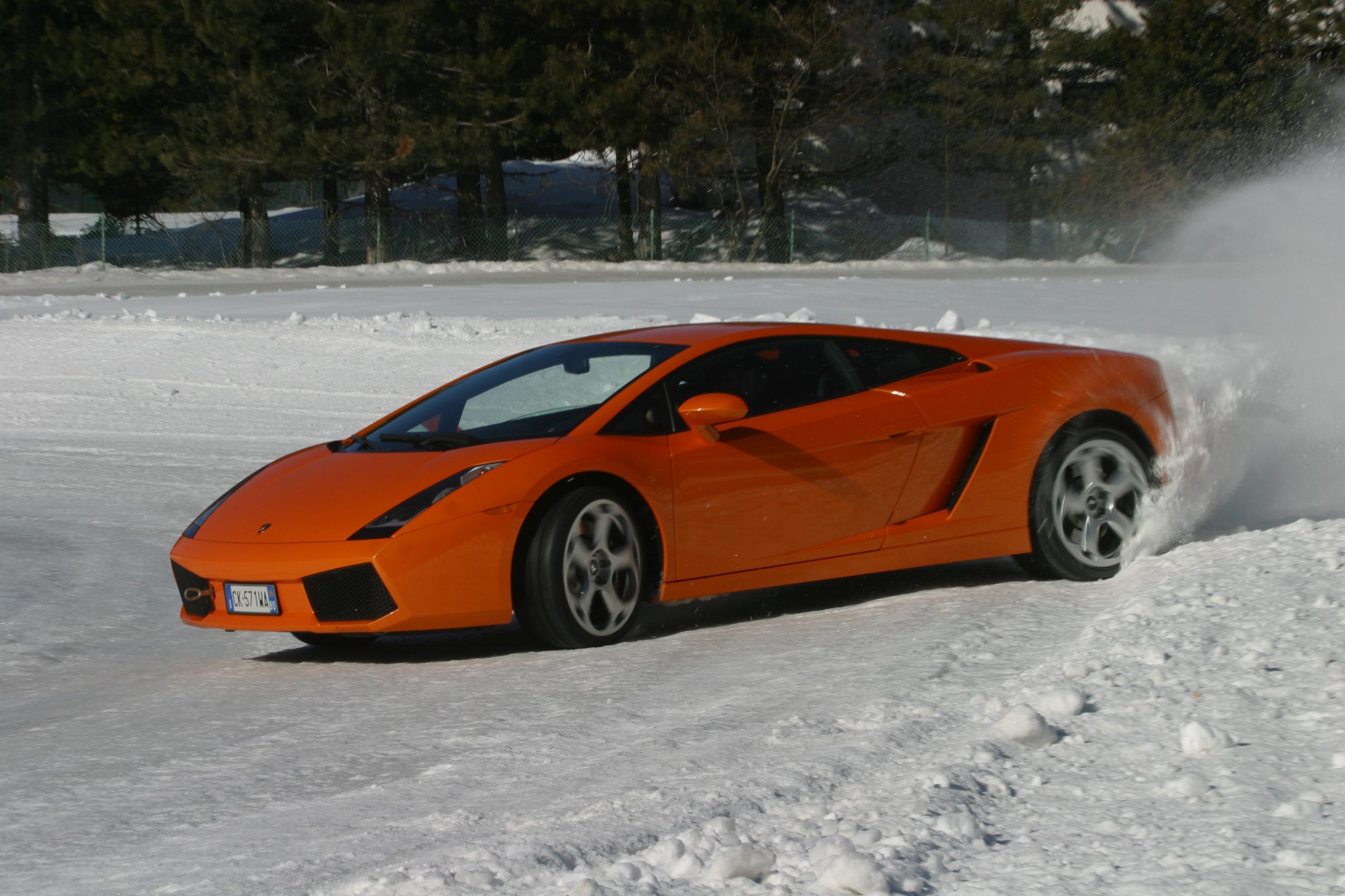
Two Lamborghini Gallardos, a yellow coupe and an orange coupe, are parked on a snowy mountain resort.
Design Language and the Variants That Kept It Fresh
The Gallardo’s design began in 2000 with a proposal from Italdesign-Giugiaro, then was refined by the newly established Lamborghini Centro Stile under Luc Donckerwolke. The result drew from aeronautics: a cab-forward cockpit, sharply angled windshield, and flat surfaces crossed by distinct creases that gave the car a sense of compressed energy. These cues also appeared on the Murciélago, establishing a visual family language maintained through the Huracán and into the current generation.
What kept the Gallardo commercially relevant for a full decade was constant evolution. The Spyder arrived at the 2005 Frankfurt Motor Show with a new soft-top and a power bump to 520 HP from the 4,961 cc V10. The 2007 Superleggera shed 100 kg and gained 10 HP, achieving a power-to-weight ratio of 2.5 kg/HP through carbon fiber and a fixed rear wing. By 2007, production exceeded 5,000 units.
The LP 560-4 refresh in March 2008 brought the 5.2-liter engine with 560 CV and direct injection, trimming another 20 kg. Production reached 7,100 units that year. The 2009 LP 550-2 Valentino Balboni edition, limited to 250 cars, introduced rear-wheel drive to the Gallardo, a configuration so popular it became a regular production model in 2010 with a Spyder following in 2011. Engineers overhauled the springs, shock absorbers, stabilizer bars, tires, rear differential, and ESP calibration to give the rear-drive cars their own distinct character.
The LP 570-4 Superleggera of 2010 pushed further: 70 kg lighter than the previous Superleggera, 570 HP, and a power-to-weight ratio of 2.35 kg/HP. The Spyder Performante, Blancpain Edition, Edizione Tecnica, and Squadra Corse followed in rapid succession. The final Gallardo, an LP 570-4 Spyder Performante in Rosso Mars, left the Sant’Agata production line on November 25, 2013.

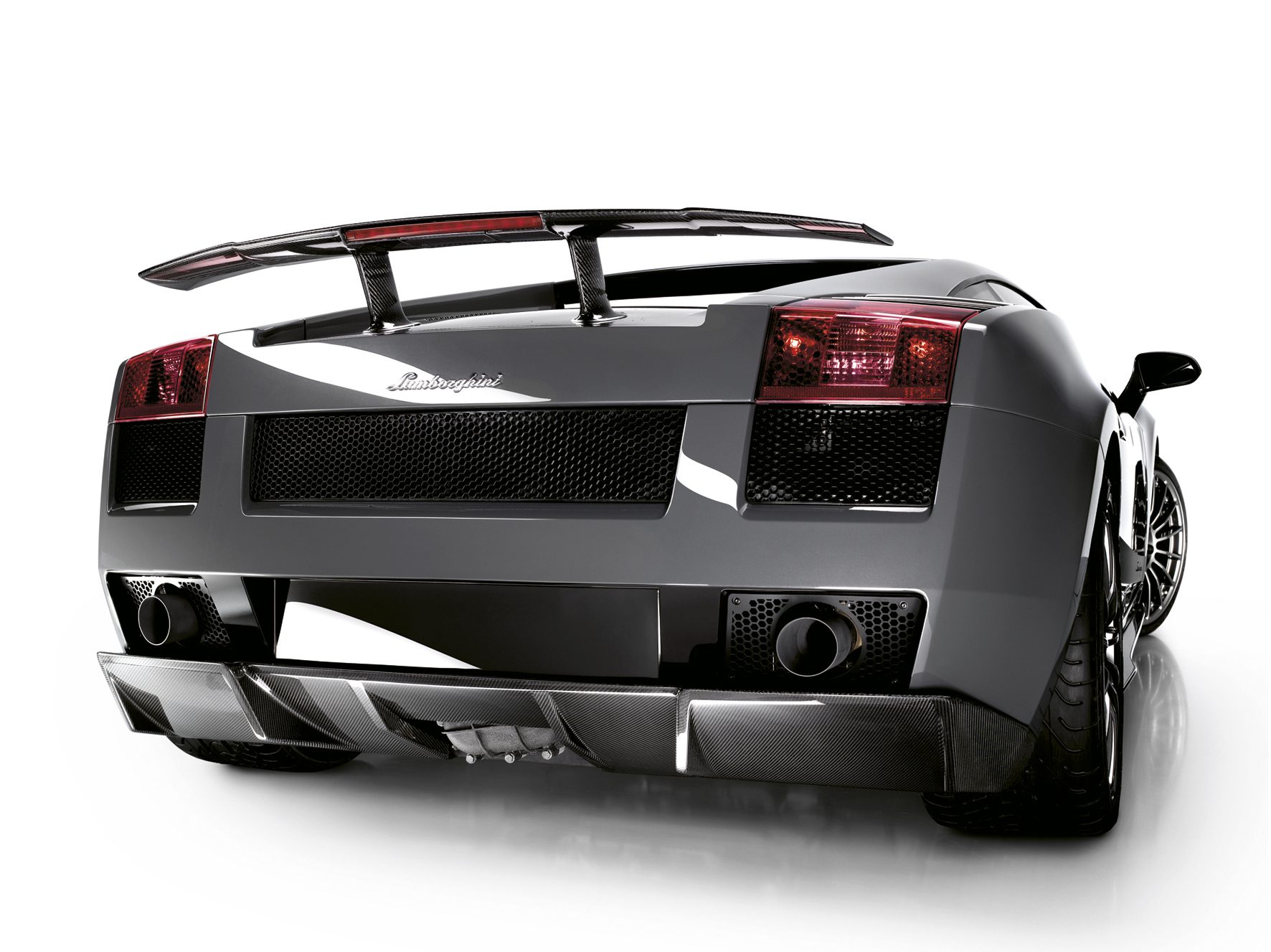
The sleek grey Lamborghini Gallardo Superleggera showcases its performance-oriented design in a pristine studio setting.
From Police Cars to GT3: The Gallardo’s Cultural Footprint
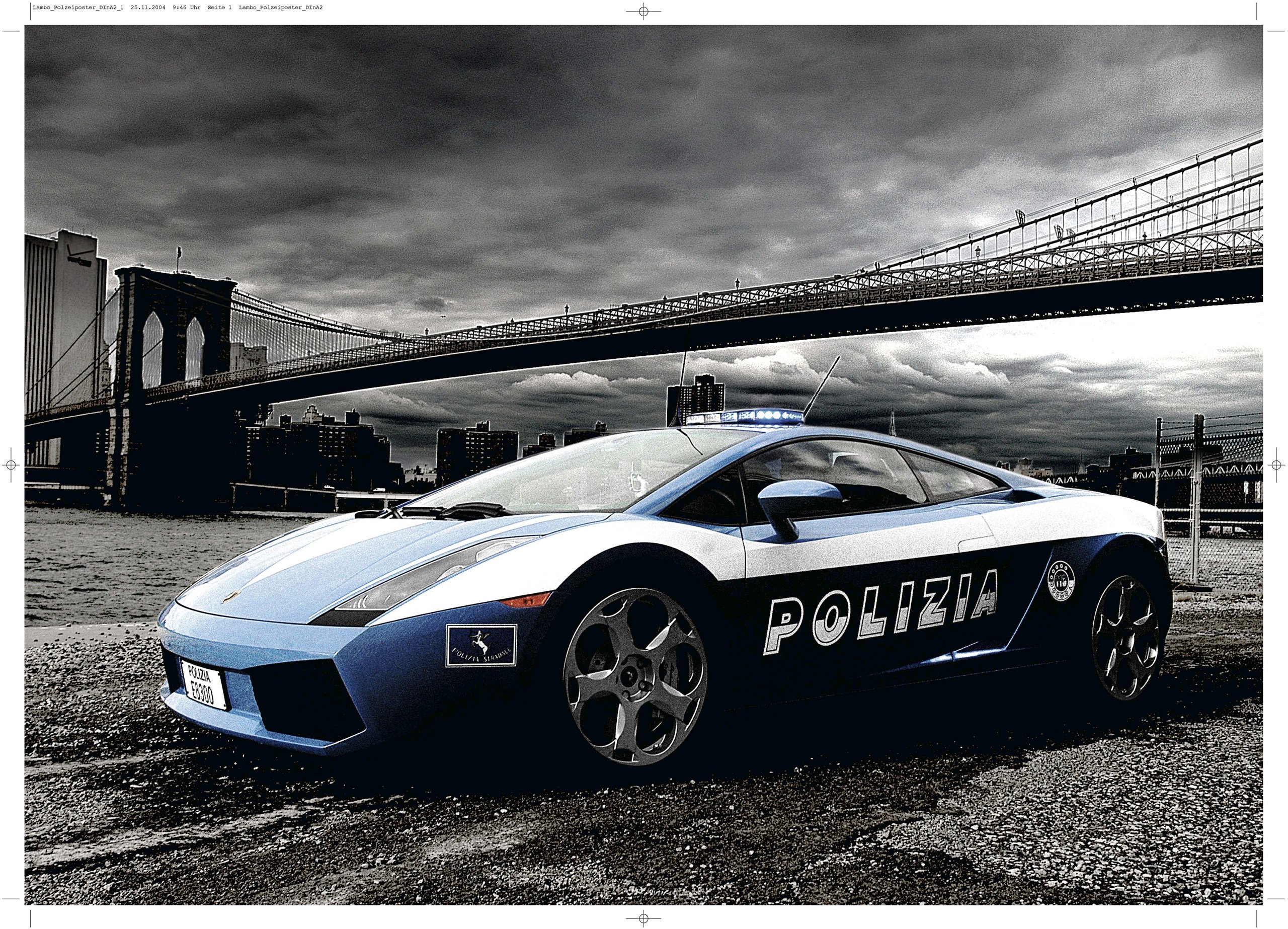
Few production cars can claim they transported human organs at high speed through Italian traffic while wearing a police light bar. The tradition of donating Gallardos to the Italian State Police began in May 2004, and the cars were used for rapid delivery of organs and life-saving medicines. The program generated enormous publicity and reinforced the idea that a Lamborghini could be reliable enough for duty that mattered.
On track, the Gallardo became the foundation of Lamborghini’s customer racing ambitions. The Blancpain Super Trofeo one-make championship, established in 2009, gave private owners a structured competitive environment. A GT3 program based on the Gallardo MY13 was announced in January 2013, laying the groundwork for the Huracán Super Trofeo and GT3 programs that followed. The Squadra Corse, presented at the 2013 Frankfurt Motor Show, brought Super Trofeo inspiration to a road-legal limited edition.
Top Gear reports that the concept of an entry-level V10 Lamborghini was an Italian initiative dating back to the 1980s, predating Audi’s involvement. That matters because it reframes the Gallardo as the fulfillment of a long-held ambition rather than a product imposed by German corporate ownership. Audi provided manufacturing discipline and financial backing, but the fundamental idea of a smaller, more accessible Lamborghini belonged to Sant’Agata from the beginning, stretching back through the Jalpa and Urraco to Ferruccio Lamborghini’s own instinct that the market existed.

The Lamborghini Gallardo Polizia stands ready for duty in front of a historic Roman basilica, flanked by two officers.
Where the Gallardo Stands in a Market Full of Rivals and Successors
At launch, the Gallardo competed directly against Ferrari’s V8 mid-engine cars and the Porsche 911 Turbo. Its advantage was a distinctive combination: a naturally aspirated V10 in a segment dominated by V8s and flat-sixes, standard all-wheel drive, and a design that looked like nothing else on the road. Commentators widely praised the V10’s melodic, even-firing character in original 5.0-liter form, a quality that became one of the car’s defining traits.
For anyone considering entry into Lamborghini ownership today, the Gallardo represents the most affordable path to the badge, with the broadest selection of variants and the most established service network of any used Lamborghini. LP-era cars with the 5.2-liter engine offer more power and generally better reliability, while pre-LP manual cars command a premium among collectors who value the gated shifter experience. The e-gear transmission remains the most divisive element: functional and dramatic, but mechanically less robust over high mileage than a manual gearbox.
Lamborghini’s current Temerario occupies the Gallardo’s old market position, but with a twin-turbo V8 and hybrid assistance rather than a naturally aspirated V10. That shift makes the Gallardo the last of a particular breed: a mid-engine Lamborghini with ten cylinders, no turbochargers, and no electric motors. What the 20-year anniversary confirms is that the car’s impact on Lamborghini was permanent. The company that builds the Revuelto and the Urus is the company the Gallardo made possible.

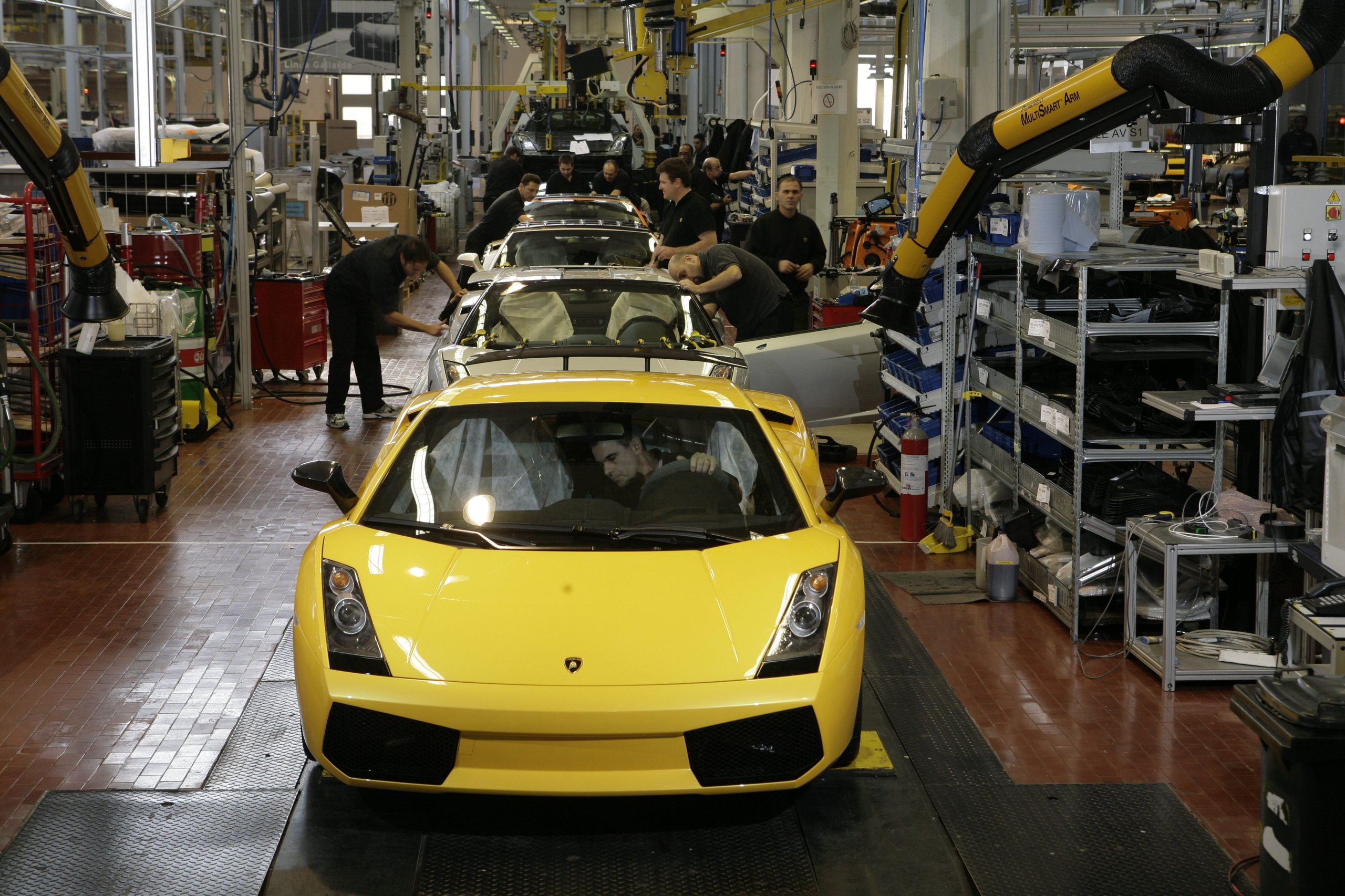
A vibrant yellow Lamborghini Gallardo progresses along the assembly line, meticulously crafted by skilled artisans.
Gallery