A Global Brand Plants Its Flag at Home
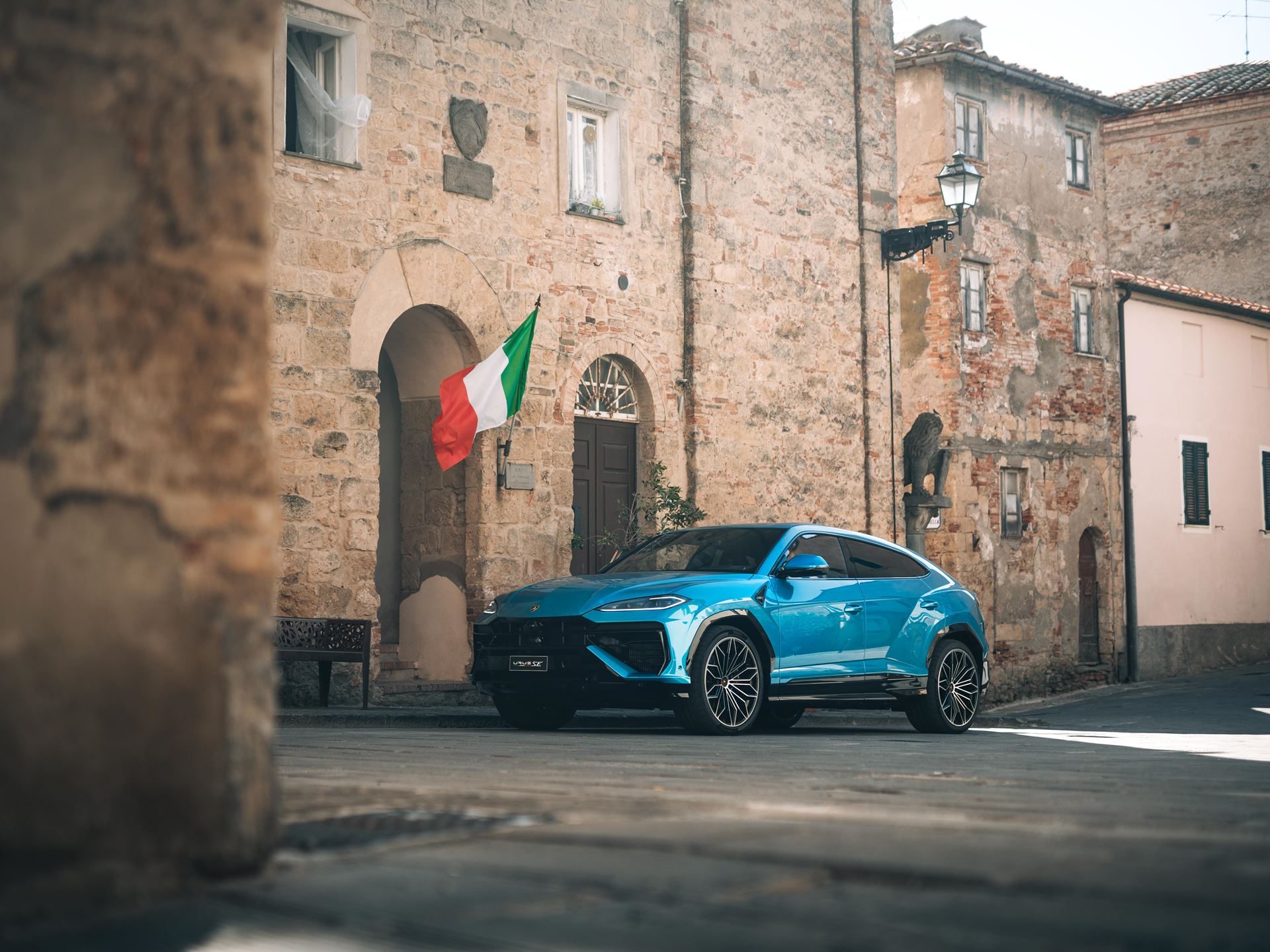
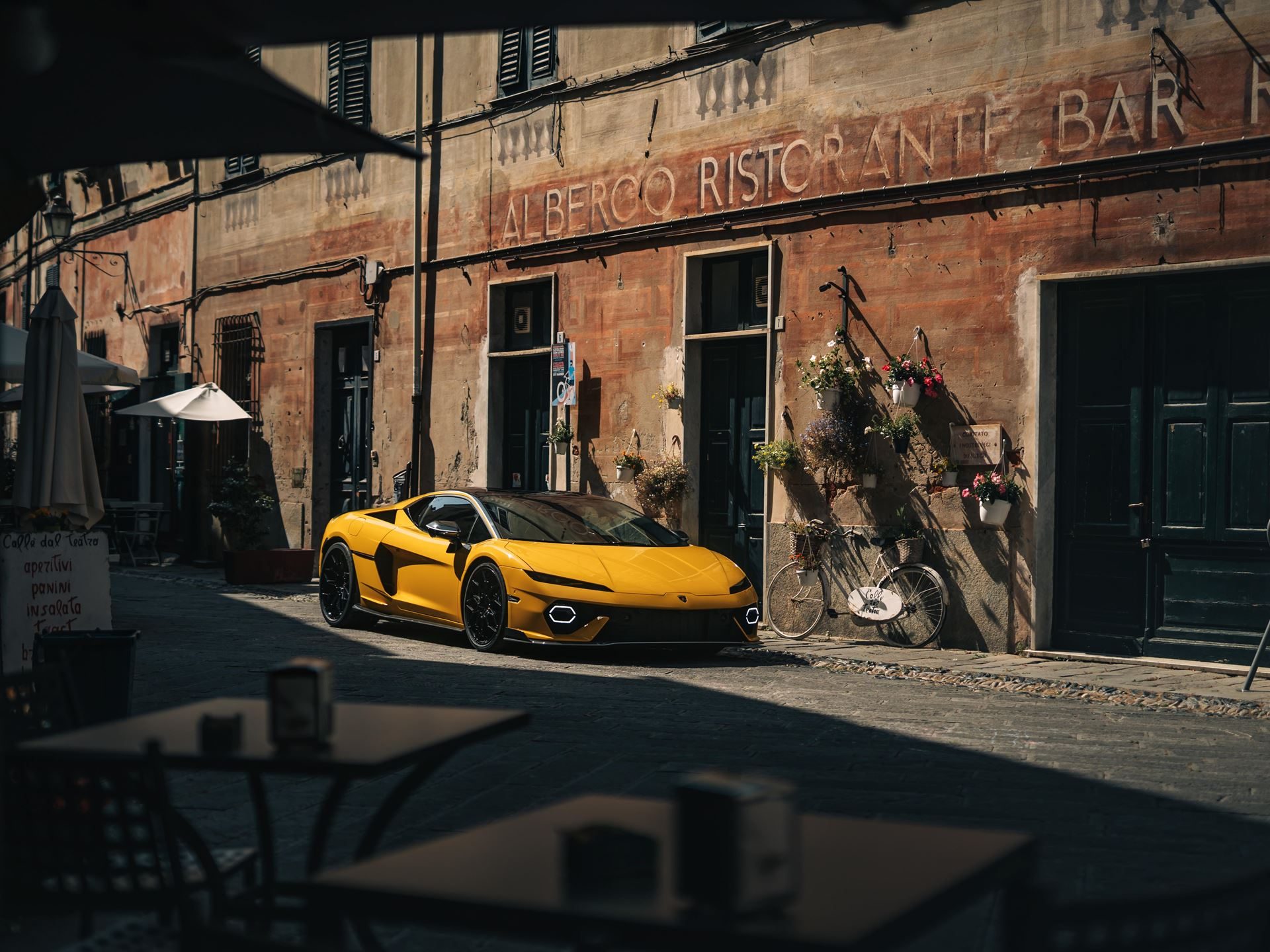
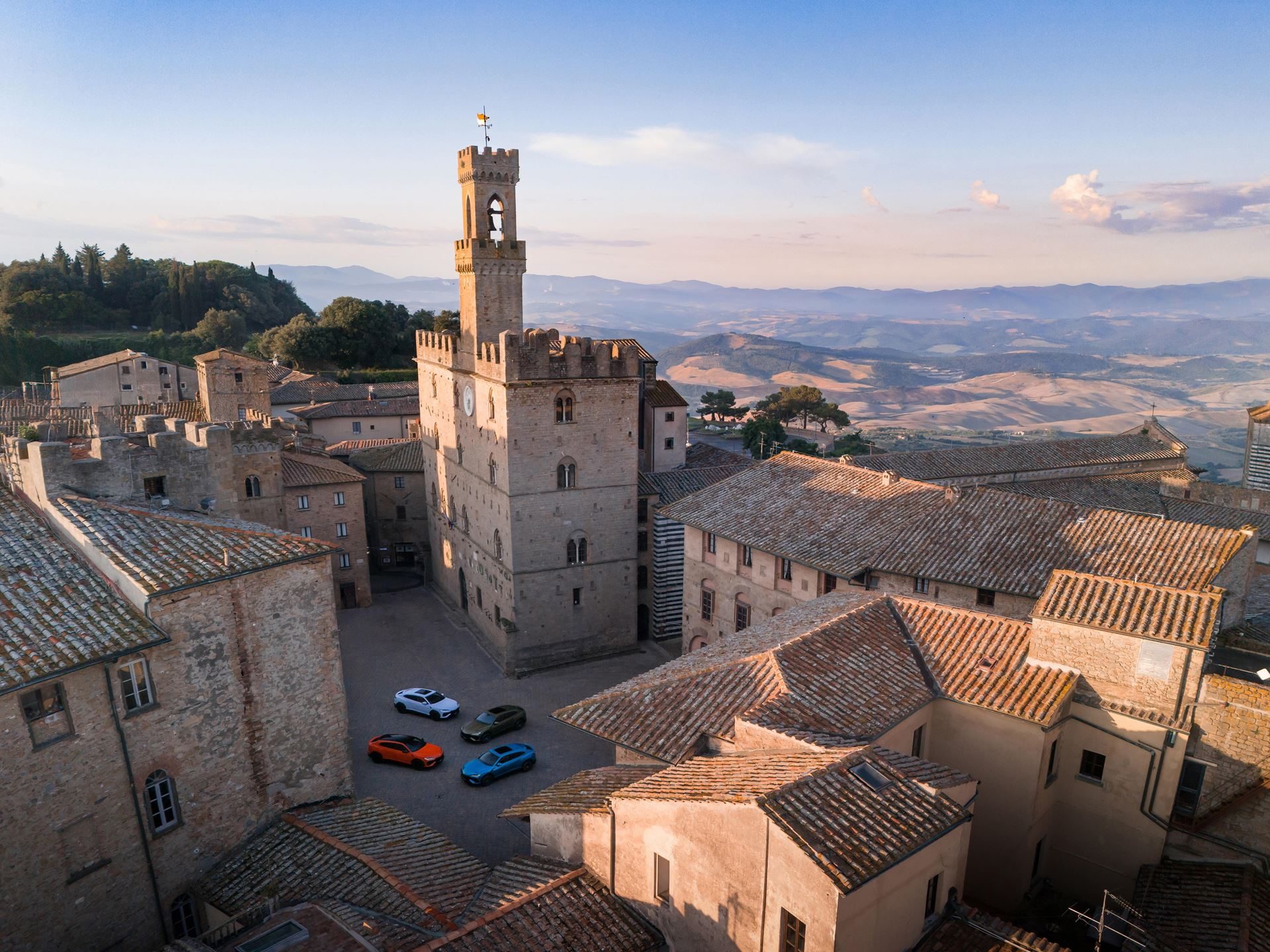
On 15 April 2026, Lamborghini arranged its current lineup across the cobblestone squares and medieval archways of its home region to mark National ‘Made in Italy’ Day. Revueltos and Urus SUVs stood framed against clock towers, palazzo facades, and the tricolore. The imagery was deliberate, and Lamborghini does this sort of thing well. Yet the real significance lay in what the company chose to emphasize alongside the glossy photographs.
Stephan Winkelmann, Chairman and CEO, used the occasion to make an unusually specific economic case for the brand’s Italian identity. “We are a 100% Italian brand,” Winkelmann stated, “and this represents invaluable worth for our customers around the world, who recognise a unique mark of assurance in Italian-manufactured products.” That phrasing is carefully chosen. Winkelmann is not simply waving a flag. He is positioning Italian provenance as a competitive asset, a quality guarantee that Lamborghini says its global buyer base actively values.
For a company founded in 1963 and still headquartered in Sant’Agata Bolognese, the ‘Made in Italy’ label carries weight that goes beyond marketing. It points to something tangible: where the cars are actually built, who builds them, and how deeply the supply chain remains rooted in Italian soil. That tangibility is the thread running through everything Lamborghini announced on this day, from workforce numbers to regional investment to community partnerships. Provenance, the company argues, is not a slogan. It is a product feature.
The Numbers Behind the Italian Supply Chain
Lamborghini says every vehicle in its current lineup, from the Revuelto V12 hybrid to the Urus SE plug-in hybrid SUV, is produced entirely at its Emilia-Romagna facility. Approximately 3,000 people work at the Sant’Agata Bolognese site. Those figures matter because they distinguish Lamborghini from competitors whose production is increasingly distributed across multiple countries and continents.
The supply chain data is where the provenance argument gains real teeth. Lamborghini says 60% of its supply chain investment over the past year went to Italian companies, with 35% of its suppliers based in Emilia-Romagna alone. That concentration is striking. It means the region that hosts the factory also feeds it, creating an economic ecosystem where the fortunes of local suppliers rise and fall with Lamborghini’s production schedule. The Direzione Cor Tauri electrification program, the largest investment in the company’s history, received formal support from the Emilia-Romagna Region along with a Development Contract from Italy’s Ministry of Enterprises and Made in Italy.
For buyers, this regional density is more than an economic footnote. Short supply chains tend to mean tighter quality control, faster iteration on components, and a closer relationship between the people designing parts and the people assembling them. When your leather supplier and your carbon fiber specialist are both within a couple of hours’ drive of the production line, the feedback loop compresses in ways that genuinely affect fit and finish.

Skilled hands meticulously work on a component featuring the iconic orange Lamborghini logo, highlighting craftsmanship. Image: Automobili Lamborghini.
Craftsmanship as Competitive Advantage
Every supercar manufacturer claims craftsmanship. The question is whether the claim holds up under scrutiny.
Ferrari, Lamborghini’s most obvious competitor, also builds in Emilia-Romagna and leverages Italian identity as a core brand pillar. The difference lies in emphasis. Ferrari’s public narrative leans heavily on racing heritage and Enzo’s founding mythology. Lamborghini’s angle, at least as articulated on ‘Made in Italy’ Day, is more grounded in the physical act of making things: the supply chain, the regional workforce, the hand-stitched interiors. Porsche and McLaren, by contrast, anchor their identities in German engineering precision and British aerodynamic innovation, respectively. Neither wraps its brand story around a national craft tradition in quite the same way.
Lamborghini’s Ad Personam program illustrates this distinction concretely. Multiple owners on enthusiast forums describe the customization process as extraordinary in its depth, with bespoke paint options, interior materials, and stitching patterns executed by hand at the Sant’Agata facility. The program exists because Lamborghini can point to a workforce trained in artisanal techniques that are difficult to replicate at scale or offshore. That workforce, and the culture surrounding it, is what ‘Made in Italy’ actually means when it appears on the build plate of a Revuelto.
The company earned Top Employer Italia certification for the thirteenth consecutive year, a detail that speaks to retention and workplace investment. In a region where skilled labor competition between Ferrari, Pagani, Ducati, and Maserati is intense, holding onto experienced craftspeople is a strategic imperative, not a human resources trophy.

A trio of Lamborghini models, including the Urus, Huracán, and Revuelto, proudly displayed at the brand's iconic headquarters. Image: Automobili Lamborghini.
Italy as a Growth Market, Not Just a Postcard
One of the more quietly significant details from Lamborghini’s announcement: Italy is now firmly in the brand’s top ten markets for deliveries, with domestic sales growing 27% over the past year. That is a meaningful shift for a company that historically sold the vast majority of its production to the United States, Middle East, and Asia.
Growing domestic demand suggests Italian buyers are increasingly willing to invest in the brand at current price points, which for the Revuelto and Urus SE sit well into six figures. It also creates a virtuous cycle that reinforces the provenance argument: the cars are built locally, sold locally, and serviced through a dealer network that Lamborghini says spans 186 locations across 57 countries. The Italian market, once a relatively small piece of the delivery picture, now contributes meaningfully to the whole.
For prospective buyers anywhere in the world, the practical takeaway is straightforward. Lamborghini’s commitment to single-site Italian production means the car you order will be assembled by the same workforce, using the same regional suppliers, regardless of whether you take delivery in Milan or Miami. In an era when some luxury brands quietly shift production to lower-cost facilities, Lamborghini is making the opposite bet: that provenance commands a premium, and that buyers notice where a car was actually made.

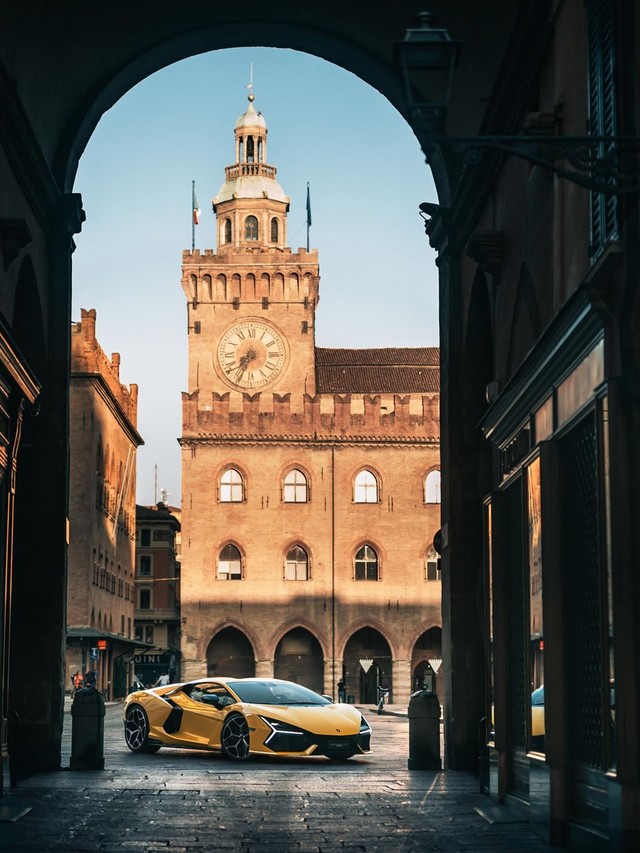
The striking yellow Lamborghini Revuelto emerges from a historic archway, framed by the grandeur of an ancient clock tower. Image: Automobili Lamborghini.
Beyond the Factory: Police Cars, Youth Programs, and Local Investment
The most distinctive detail in Lamborghini’s ‘Made in Italy’ Day materials is one that few competitors can match. Since 2004, Lamborghini says it has collaborated with the Italian State Police, providing vehicles to the Highway Police for road patrol and, more remarkably, for the urgent transport of organs and medical supplies. A Lamborghini Huracán in Polizia livery racing a donor organ across the Autostrada is not just a memorable image. It is a practical demonstration of performance capability that no track day or press launch can replicate, and it ties the brand’s identity directly to Italian public service.
Closer to home, the company signed an agreement with the Municipality of Sant’Agata Bolognese to support projects spanning social inclusion, school services, educational workshops tied to Lamborghini Park, and cultural initiatives including awareness campaigns against gender-based violence. These are not the kind of commitments that sell supercars directly, but they reinforce a relationship between factory and town that dates back over six decades. When Lamborghini talks about provenance, this is part of what it means: a manufacturer so embedded in its community that the boundary between corporate citizen and neighbor has long since blurred.
Lamborghini also positions itself as a training ground for young Italians entering the workforce, connecting its Top Employer certification to a broader narrative about industrial culture and professional development. In a region where automotive manufacturing competes with other industries for talent, that investment in the next generation serves both civic and commercial purposes.

A vibrant collection of Lamborghini models, including the new Revuelto, graces a historic Italian city square at dusk. Image: Automobili Lamborghini.
What ‘Made in Italy’ Actually Buys You
Strip away the ceremonial occasion and the scenic photography, and Lamborghini’s ‘Made in Italy’ Day argument reduces to a single competitive thesis: provenance is a product feature, not a slogan.
The company’s current lineup is fully electrified, with the Revuelto (V12 plug-in hybrid, introduced in 2023), the Temerario (V8 plug-in hybrid, unveiled in 2024), and the Urus SE (twin-turbo V8 plug-in hybrid, launched in 2024) all built at the same Sant’Agata facility. As the brand navigates the most significant technological transition in its history, the decision to keep everything under one roof, fed by a predominantly Italian supply chain, is both a constraint and a statement of intent. The supply chain numbers, the workforce retention, the community agreements, the police collaboration: each reinforces the same point. Lamborghini is betting that where and how a supercar is made still matters to the people who buy them.
Lamborghini operates as a subsidiary of Audi AG, which gives it access to Volkswagen Group resources and engineering. The tension between German corporate ownership and Italian manufacturing identity is one the company manages carefully. On days like this, the message is unambiguous: the cars are Italian, the people who build them are Italian, and the culture that shapes their character is rooted in a specific patch of Emilia-Romagna. Whether that distinction matters to you depends on what you value in a supercar. For a significant number of Lamborghini buyers, it clearly does.

A stunning lineup of Lamborghini supercars, including the Revuelto and Huracán, graces a majestic Italian palace square. Image: Automobili Lamborghini.
Gallery