Lamborghini Turned Estoril Into a 15-Day Temerario Proving Ground
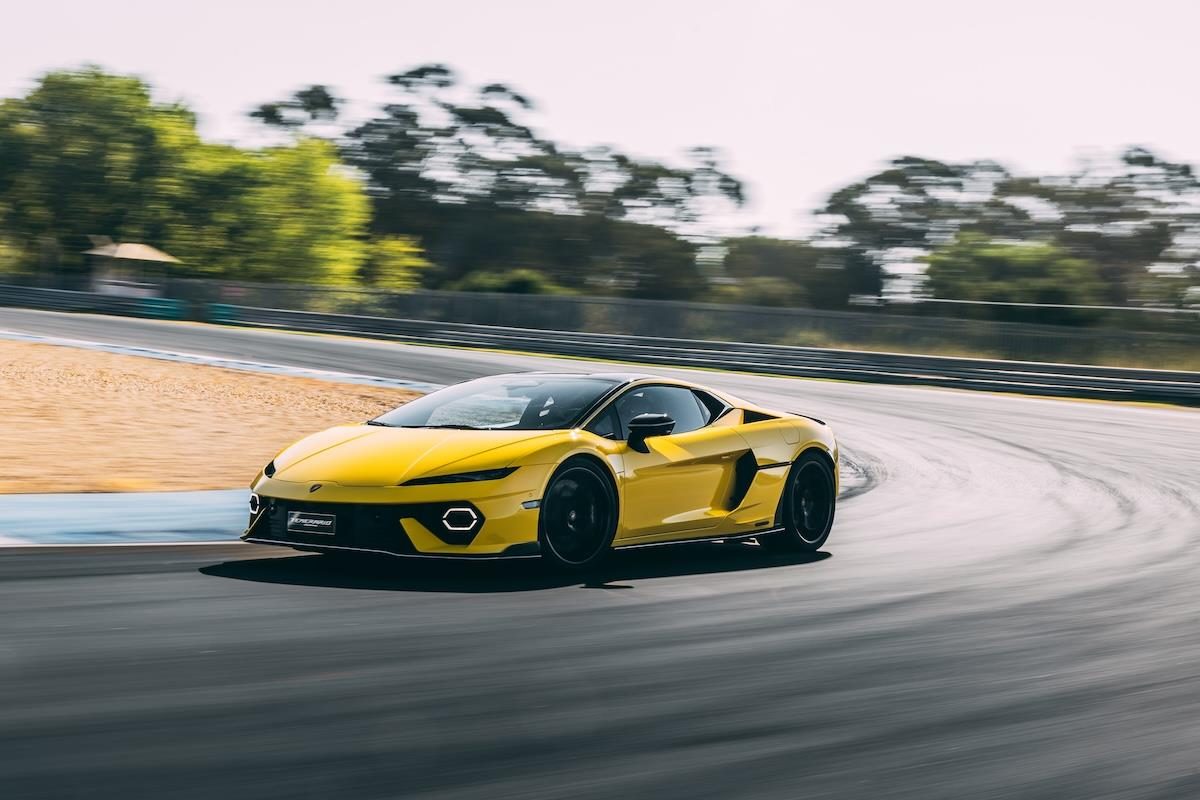
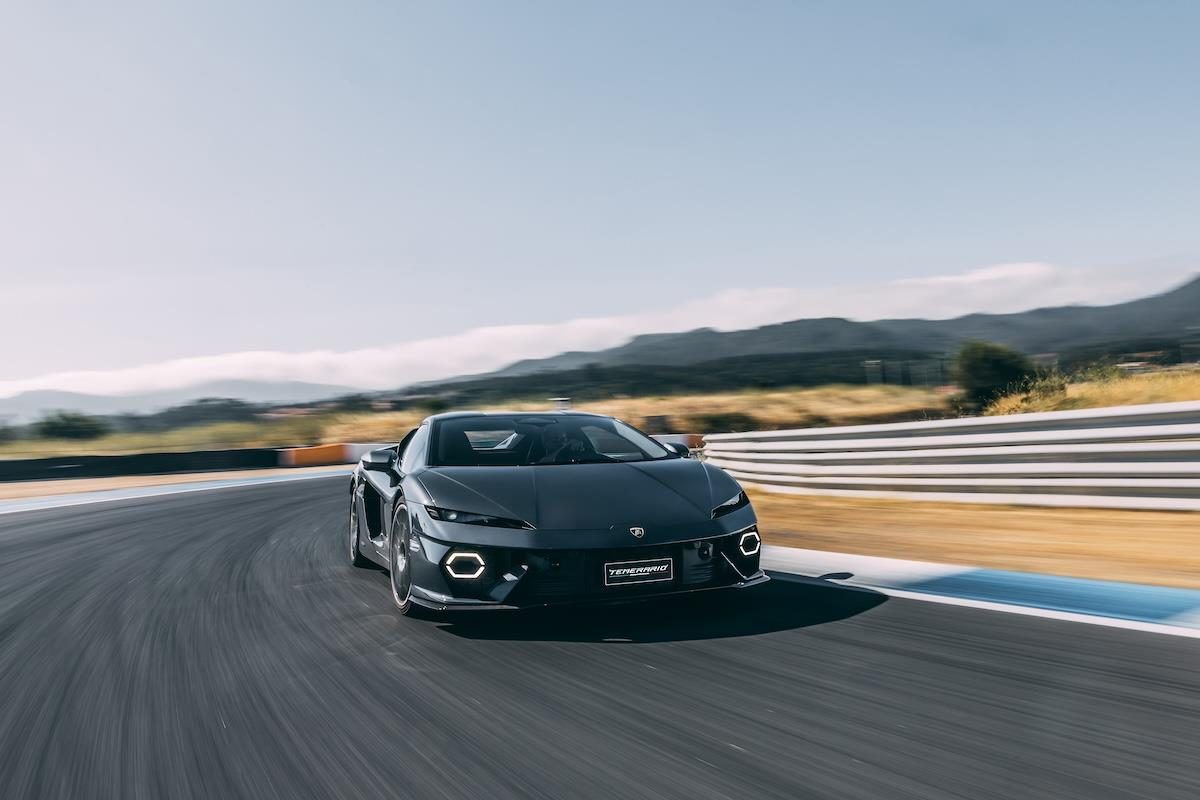
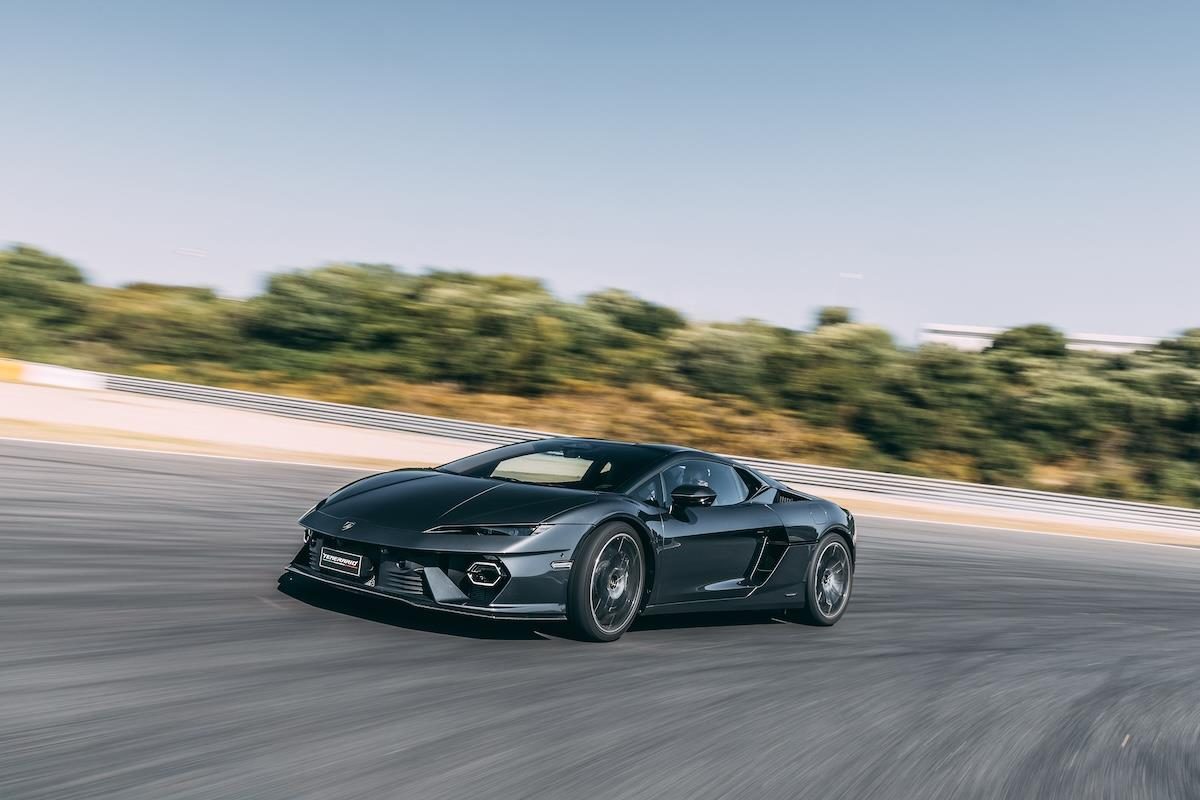
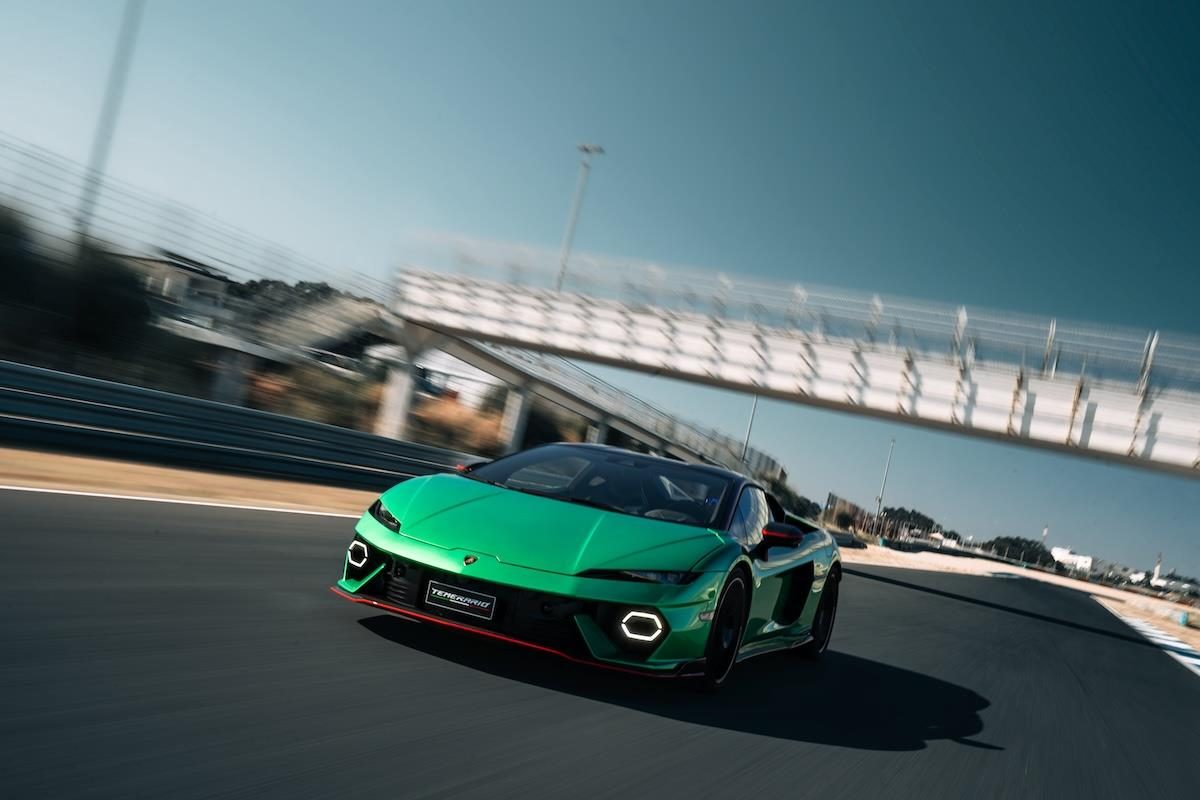
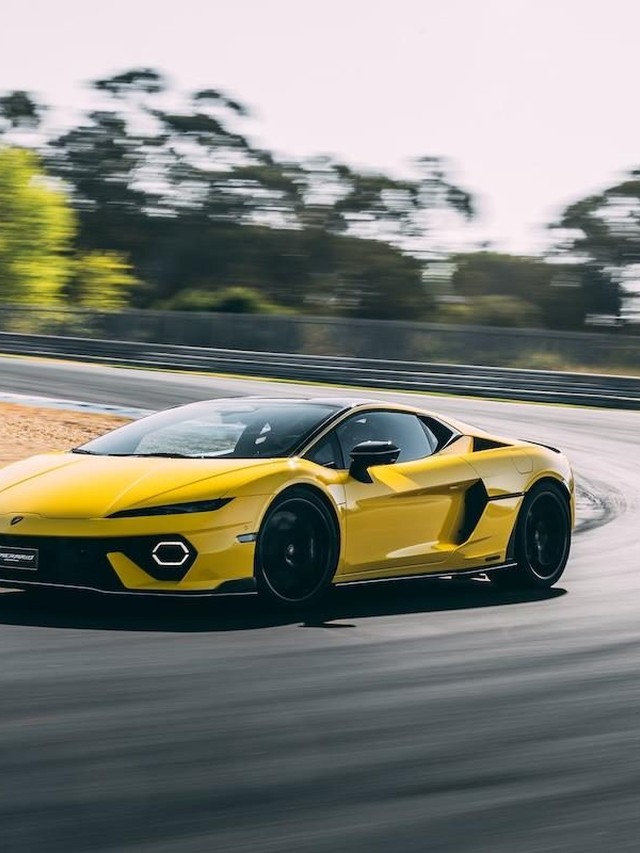
Lamborghini occupied the Circuito do Estoril in Portugal for more than two weeks, staging a global driving launch that put the Temerario into the hands of nearly 100 journalists, dealers from 56 markets, and select existing owners. Over those 15 days, Temerario models, including Alleggerita lightweight variants, completed hundreds of laps on the 4.36 km circuit. Participants tested launch control, the new Drift mode, and the full spectrum of the car’s 13 driving modes. The scale alone made a statement: this was not a polished reveal behind velvet ropes but a sustained, open-throttle argument that Lamborghini’s hybrid future can deliver the visceral experience its buyers demand.
The guest list reinforced that argument. Inviting dealers and owners alongside media to a global driving launch is not standard practice in this segment. Ferrari and McLaren typically separate those audiences. Lamborghini’s decision to merge them suggests confidence in the product, but it also signals something about how Sant’Agata Bolognese views its customer relationship in the hybrid era: owners who ordered a car built around an entirely new powertrain architecture needed to feel it before deliveries begin. Letting them share the tarmac with journalists was a calculated move to build conviction at the point of sale.
CEO Stephan Winkelmann has publicly described the customer reception as “positive,” with buyers responding to the car’s distinctiveness as a modern Lamborghini. For anyone on the waiting list, that matters. The Estoril event was designed to convert anticipation into certainty, and every element of the fortnight, from the powertrain to the personalization on display, served that single purpose.

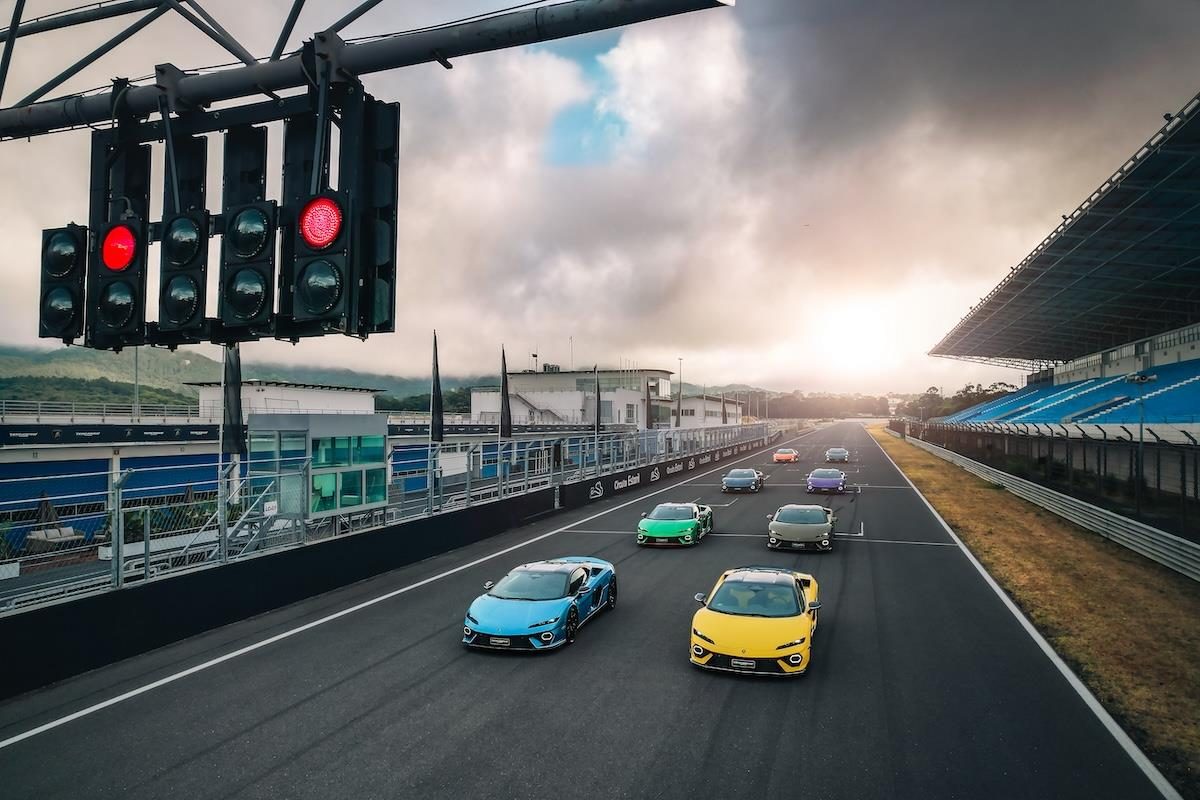
A vibrant fleet of Lamborghini Temerario models awaits their dynamic launch on the circuit.
The 10,000 RPM V8 That Replaces a Beloved V10
At the center of Lamborghini’s confidence sits an all-new powertrain that had to answer a loaded question: can a turbocharged V8 with electric assistance replace the Huracán’s naturally aspirated V10 without losing the emotional high ground? The Temerario succeeds the Huracán, and Lamborghini’s design boss reportedly stated that the two cars share no components whatsoever, “not even screws.” That clean-sheet approach centers on a 4.0-liter twin-turbo V8, internally designated L411, paired with three lightweight axial-flux electric motors. One report identifies the motor supplier as British company YASA, now a Mercedes subsidiary. Combined output reaches 920 CV (907 hp) and 800 Nm (590 lb-ft) of torque.
The headline number is the redline. Lamborghini says the combustion engine alone produces 800 CV between 9,000 and 9,750 rpm, making the Temerario the first and only production super sports car capable of reaching 10,000 rpm with a turbocharged V8. For context, the Huracán’s naturally aspirated V10 peaked at 8,500 rpm. The new engine spins 1,500 rpm higher while breathing through turbochargers, which typically compress an engine’s useful rev range rather than extending it. That engineering choice is deliberate: Lamborghini wanted the psychoacoustic drama of a high-revving engine to survive the transition from natural aspiration to forced induction.
Road & Track called the car a “technical masterpiece” in its early driving impressions, and Car and Driver noted that the steering, initially disarmingly light, rewards a lighter grip with genuine feedback and a sense of agility. Early forum discussion is more mixed: some find the engine note exhausting at lower RPMs in city driving, and the interior busier than the Huracán’s cleaner layout. Those are real ownership considerations for anyone cross-shopping, though track impressions from journalists remain overwhelmingly positive.

A powerful statement on identity and authenticity is displayed alongside a high-performance engine.
What Estoril Proved About the Temerario’s Dynamics
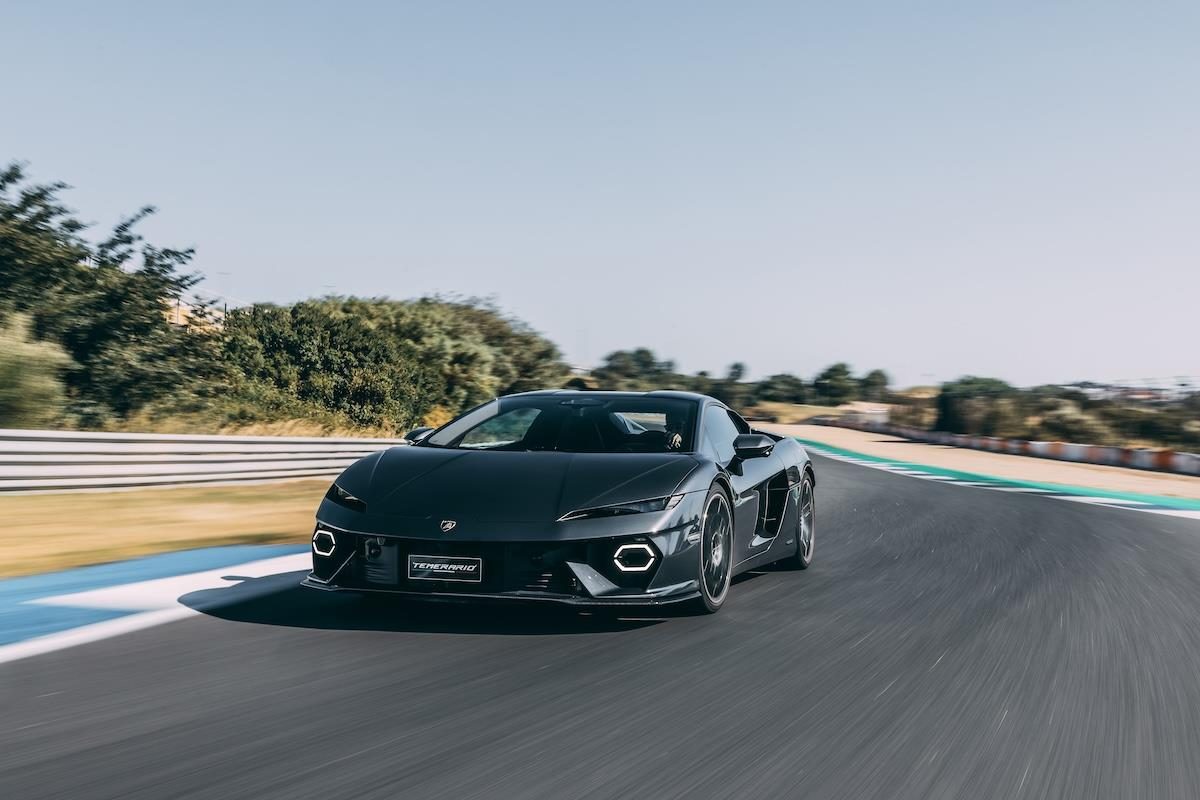
Estoril is a circuit with history. Ayrton Senna tested Lamborghini’s V12 Formula 1 engine here in 1993, a detail Lamborghini was clearly happy to invoke. The track’s 13 corners and mix of fast sweepers and tight hairpins gave journalists a thorough workout of the Temerario’s handling envelope, and the results fed directly into the conviction Lamborghini was trying to build: that hybridization has not dulled the car’s reflexes.
The numbers support the claim. The Temerario accelerates from 0 to 100 km/h in 2.7 seconds and tops out at 343 km/h (213 mph). Lamborghini claims 0 to 200 km/h arrives in under 7.3 seconds. The new eight-speed dual-clutch transmission, more compact than the unit it replaces, delivers faster shift times. One report mentions carbon-ceramic brakes with 410 mm front discs and 10-piston calipers, hardware shared in philosophy with the Revuelto’s braking architecture.
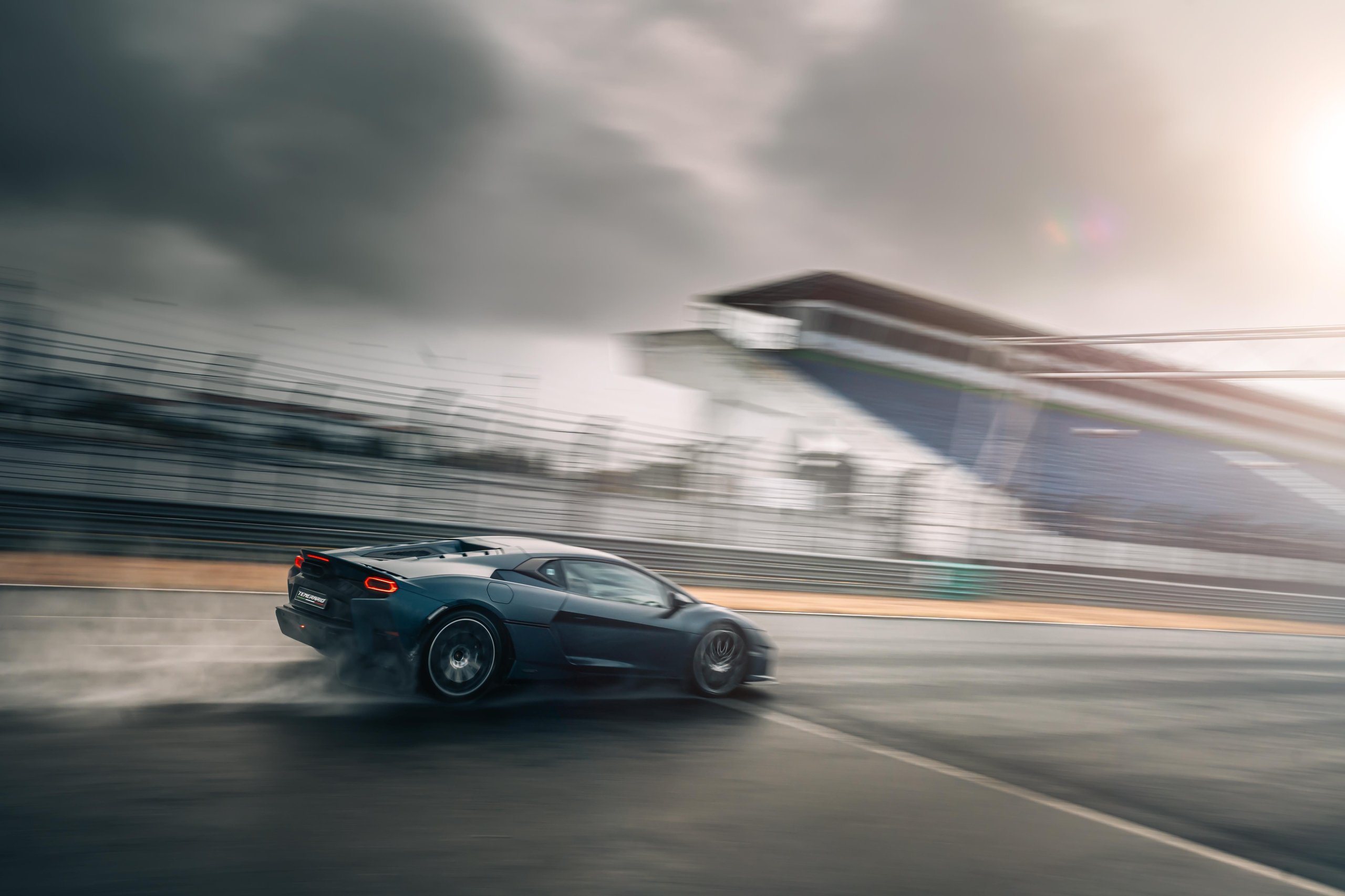
Aerodynamics represent a significant leap. Lamborghini states the Temerario generates 103% more rear downforce than the Huracán, a figure that climbs to 158% with the Alleggerita package fitted. That package strips over 25 kg (roughly 55 lbs) through lighter body and interior components while also improving overall aerodynamic load efficiency by 67%. For buyers who plan to track the car regularly, the Alleggerita is likely to become the must-have option. One review noted that understeer can appear at the car’s absolute limit, which is worth knowing. One source suggests the hybrid system adds approximately 250 kg to the car’s weight, a penalty the aerodynamic and chassis engineering clearly aims to offset. Images from Estoril show a silver Temerario mid-drift with tire smoke billowing behind the rear axle, confirming that the new Drift mode delivers on its promise of controllable oversteer.

The silver Lamborghini Temerario drifts powerfully on the track, leaving a dramatic trail of smoke.
Bespoke Luxury and the Partnerships That Define Ownership
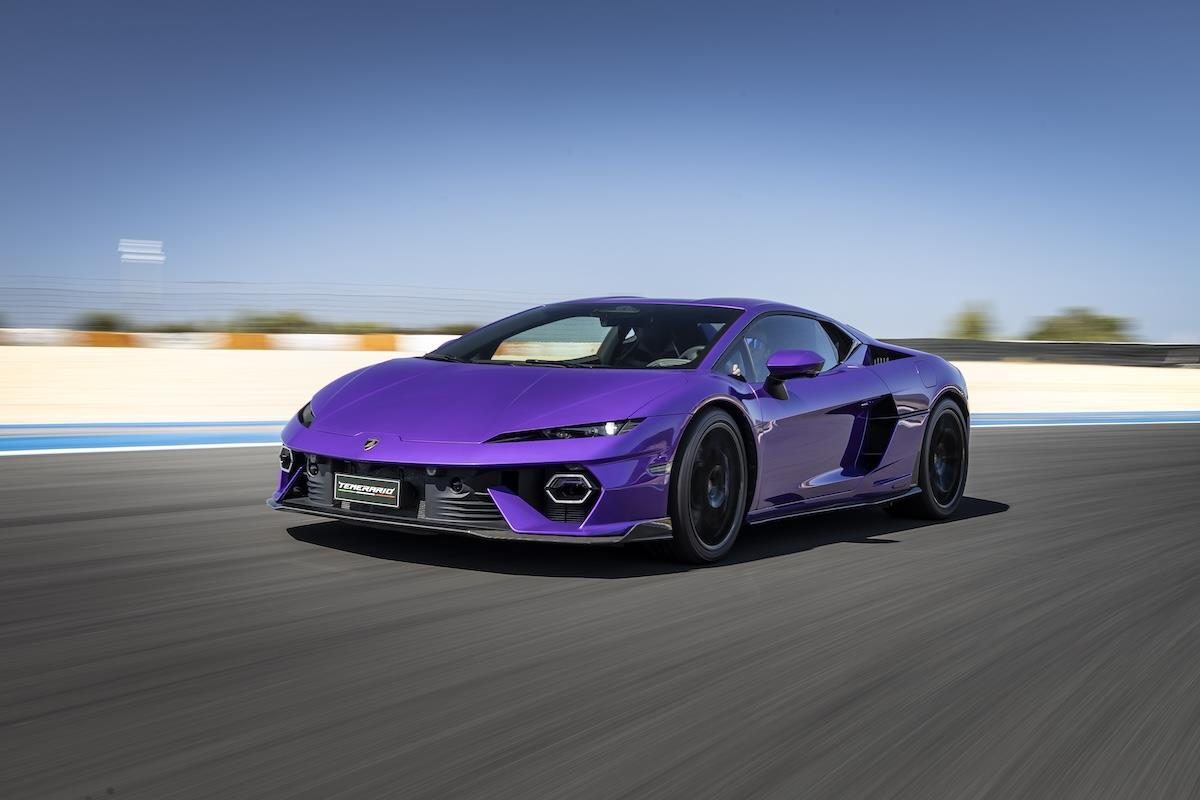
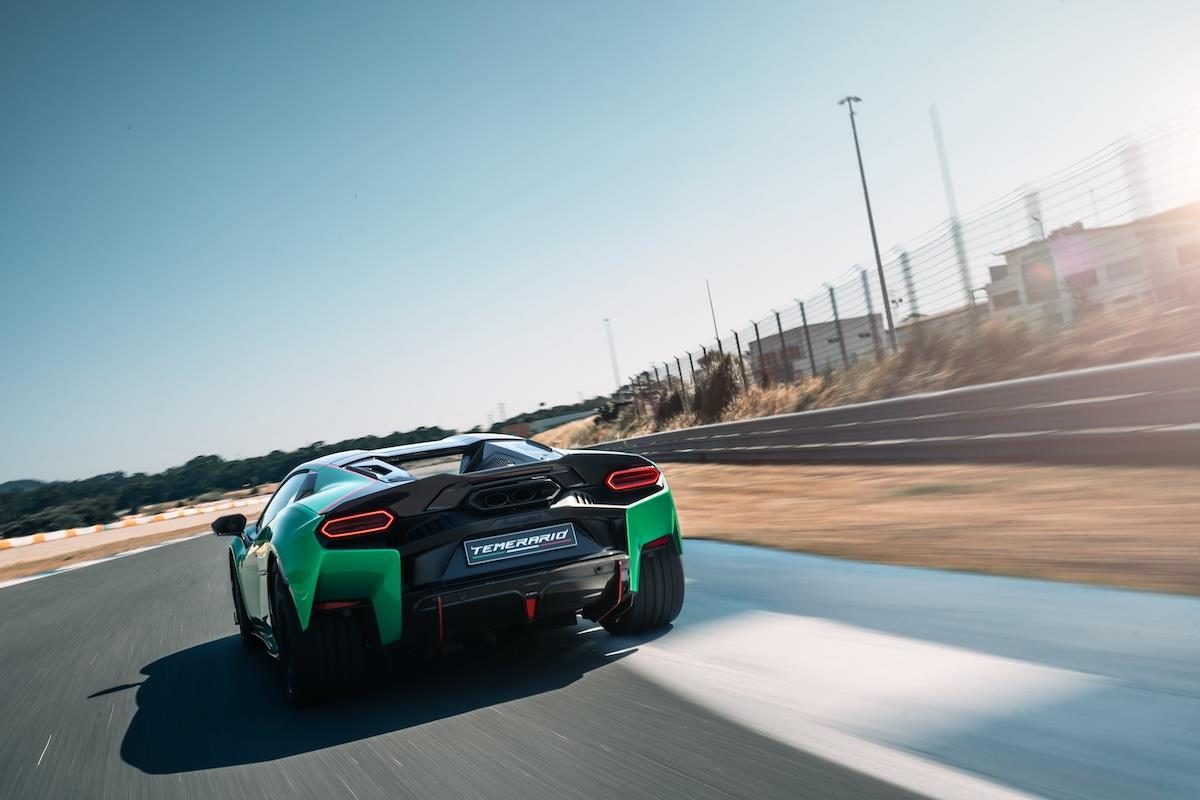
Convincing buyers that a hybrid Lamborghini still feels special extends beyond the powertrain. Lamborghini used the Estoril event to showcase the Temerario’s customization depth, and the pit lane lineup visible in event photos, spanning matte gold to vivid purple to bright green, made a deliberate visual argument that this car rewards personalization. Through the Ad Personam program, buyers can choose from over 400 body colors and liveries, with interior options spanning fine leathers and the new ultralight Corsa-Tex fabric in Dinamica microfiber.
Inside, an exclusive Sonus faber audio system with seven independently driven speakers and a 750 W Class-D Dual DSP amplifier delivers a frequency response from 30 Hz to 30 kHz. Lamborghini’s Telemetry 2.0 app provides lap times, sector analysis, reference data for over 150 circuits worldwide, and Apple Watch integration that overlays the driver’s heart rate onto performance data. That last detail is gimmicky in isolation, but it reflects a broader push to make track days more accessible and data-rich for owners who may not arrive with professional coaching.
Bridgestone serves as the exclusive tire partner, not just for the Temerario but now for Lamborghini’s entire supercar range, including the Revuelto and outgoing Huracán variants. The custom tire lineup includes Potenza Sport and Potenza Race for summer and track use, plus Blizzak LM005 winter fitment, all developed using Bridgestone’s Virtual Tyre Development technology. A run-flat version of the Potenza Sport is also offered. For a car that Lamborghini positions as usable year-round, the winter tire option signals genuine intent toward daily drivability.

Exquisite carbon fiber trim and a Sonus Faber speaker grille highlight the luxurious interior craftsmanship.
Where the Temerario Sits in Lamborghini’s Electrified Hierarchy
With the Temerario joining the Revuelto and Urus SE, Lamborghini says it is the first brand in the super sports car segment to offer a fully hybridized lineup. The Temerario occupies the position the Huracán held for a decade: the entry point to Lamborghini’s mid-engine range, priced below the V12 flagship. Car and Driver lists an MSRP of $292,100, though real-world transaction prices for a car this anticipated will almost certainly climb beyond that.
The competitive landscape sharpens the Temerario’s identity. Ferrari’s 296 GTB and McLaren’s Artura both use hybrid V6 architectures with lower cylinder counts and lower redlines. The Temerario’s V8 with its 10,000 rpm ceiling is Lamborghini’s answer to the question of whether electrification demands downsizing: you can add turbos and electric motors while still building an engine that rewards the top of the tachometer. Whether that argument holds up against the Huracán’s naturally aspirated V10 in the hearts of existing owners is a question only long-term ownership will settle.
The GT3 racing variant, which drops the electric motors per regulations and ran its first competitive race at the 2026 12 Hours of Sebring, confirms that the V8 architecture was designed from the start with motorsport homologation in mind. For buyers who care about racing pedigree, the Temerario’s competition lineage is already being written. Lamborghini also organized the Estoril event to ISO 20121 standards for sustainable event management, certified by TÜV SÜD. In full electric mode, Lamborghini claims the Temerario reduces CO2 emissions by up to 50% compared to the Huracán. These are corporate commitments unlikely to influence a buying decision, but they reflect the regulatory and reputational pressure shaping every new supercar program.
Judged on what Estoril revealed, the Temerario appears to be Lamborghini’s most complete argument yet that hybridization can coexist with the kind of theatrical, high-revving performance the brand’s buyers expect. Fifteen days, hundreds of laps, and an audience that included the people writing the checks: if the car could not make its case under those conditions, it never would. By all early accounts, it did.

A stunning lineup of Lamborghini Temerario models awaits their turn on the track, showcasing diverse finishes.
Gallery