Supercar Leather, Second Life: The Upcycled Leather Project Arrives
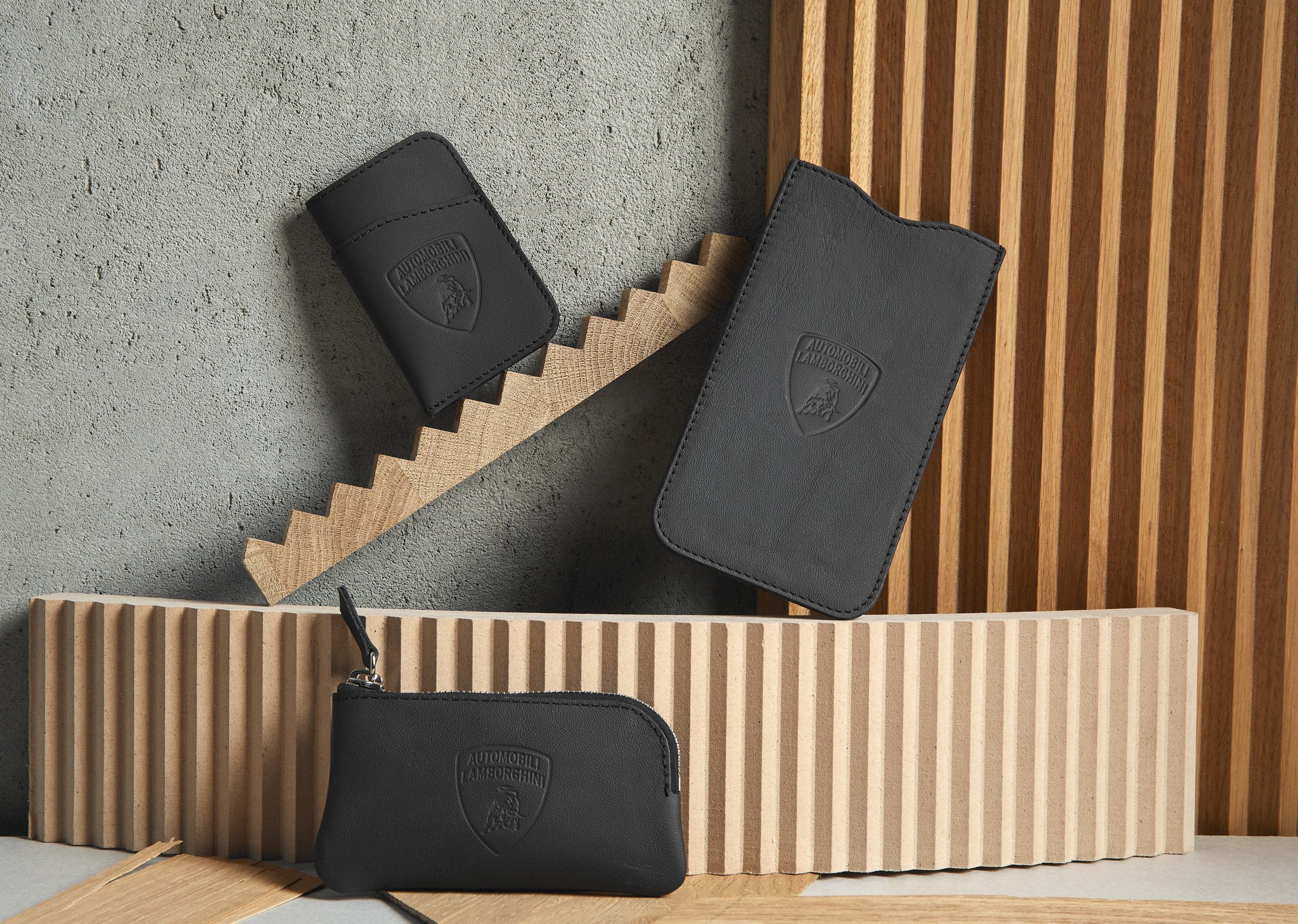
Every Lamborghini interior starts with large hides of premium leather, and not every piece makes the cut. Sections too small for a door panel, or bearing a minor surface imperfection invisible to anyone but a Sant’Agata quality inspector, would typically end up as waste. The new Upcycled Leather Project reroutes that material into a four-piece collection of branded accessories: a tote bag, a smartphone case, a card holder, and a key fob, each stamped with the Automobili Lamborghini shield logo.
The partner is Cartiera, an ethical fashion enterprise based in Emilia-Romagna that produces accessories from reclaimed leather and fabrics. Cartiera’s proximity to the factory matters. The leather travels a short distance from Sant’Agata Bolognese to a workshop that Lamborghini says operates under principles of social inclusion, fine craftsmanship, and environmental sustainability. The result sits at an unusual intersection: genuine supercar-grade material, handcrafted by an artisan social enterprise, carrying one of the most recognizable logos in automotive history.
Products are available now at the Lamborghini flagship store in Sant’Agata Bolognese, with availability expanding to lamborghinistore.com and Lamborghini dealerships. Pricing from the official online store places comparable upcycled leather items (keyrings, clipcords, passport holders) in a range from $29 to $86, positioning the line well below the cost of Lamborghini’s bespoke Alcantara luggage sets but firmly above generic branded merchandise.

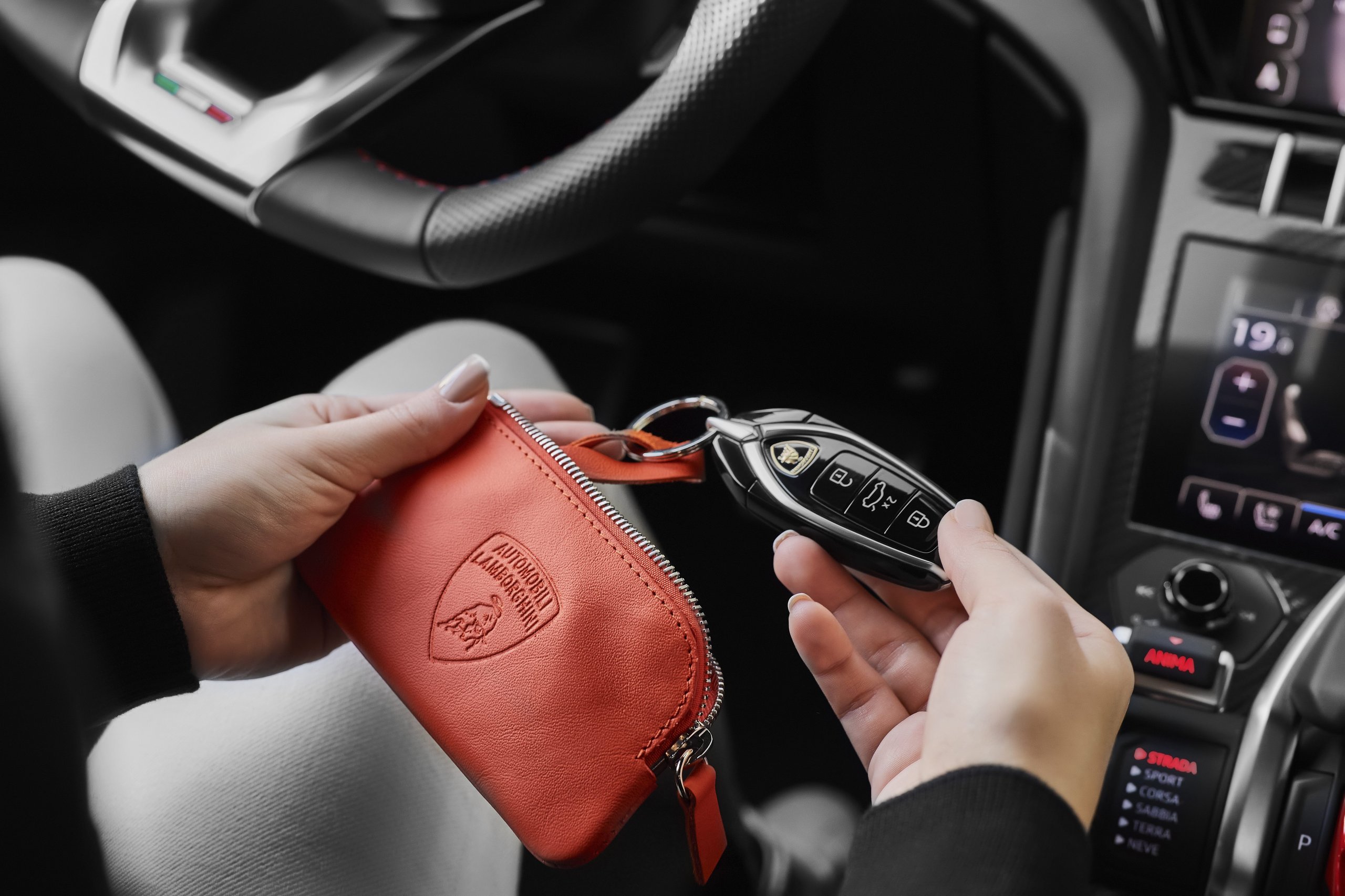
An orange leather zippered pouch with an embossed Lamborghini logo is presented with an 'Upcycled Leather Project' card. Image: Automobili Lamborghini.
Why Lamborghini Is Betting on Circular Luxury
Lamborghini says it launched two circular economy projects in 2020 that gave 56% of certain production waste, including leather and carbon fiber, a second life. The Upcycled Leather Project extends that effort into a consumer-facing product for the first time, turning an internal waste-reduction initiative into something an owner can actually hold, use, and show off.
The strategic logic is straightforward. Lamborghini already asks buyers to spend six figures on Ad Personam interior specifications, choosing from dozens of leather colors and stitch patterns. The factory floor generates offcuts in Arancio Borealis, Verde Mantis, Blu Cepheus, and every other shade in the catalog. Recovering those scraps and branding the result as a conscious luxury product lets the company monetize waste while reinforcing a sustainability narrative that matters increasingly to younger high-net-worth buyers.
One genuinely interesting wrinkle: Lamborghini frames the color selection as a deliberate “non-choice.” Black is always available, but the remaining palette depends entirely on which leather happens to be reclaimed from the production line at any given time. The buyer accepts whatever color the factory’s waste stream produces. For a brand built on extreme personalization, asking customers to surrender control over color is a surprisingly bold move, and it signals that the sustainability premise is more than decorative.

A collection of colorful leather scraps showcases the raw materials used in Lamborghini's ethical and sustainable leather goods. Image: Automobili Lamborghini.
Craftsmanship Beyond the Badge
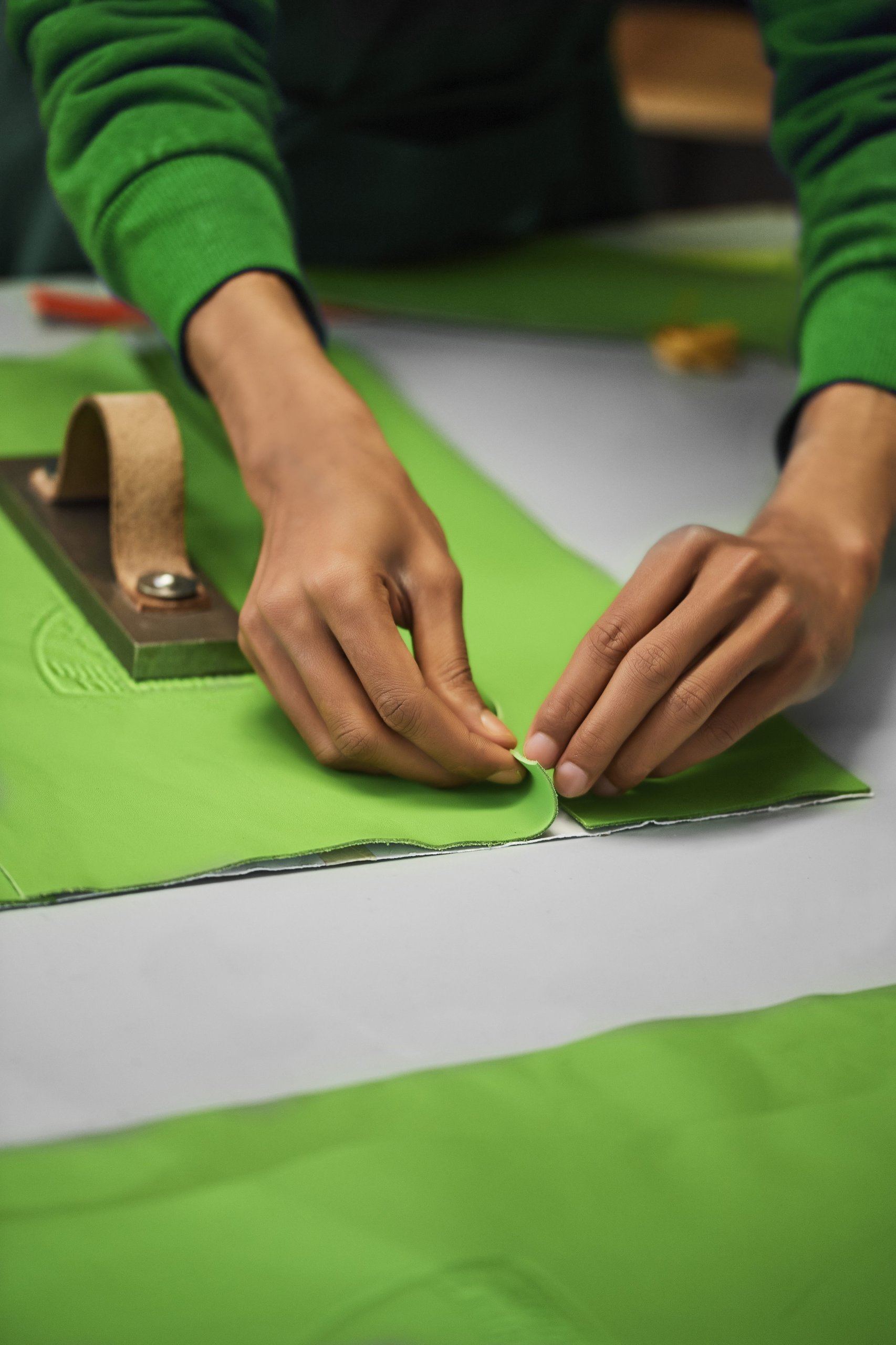
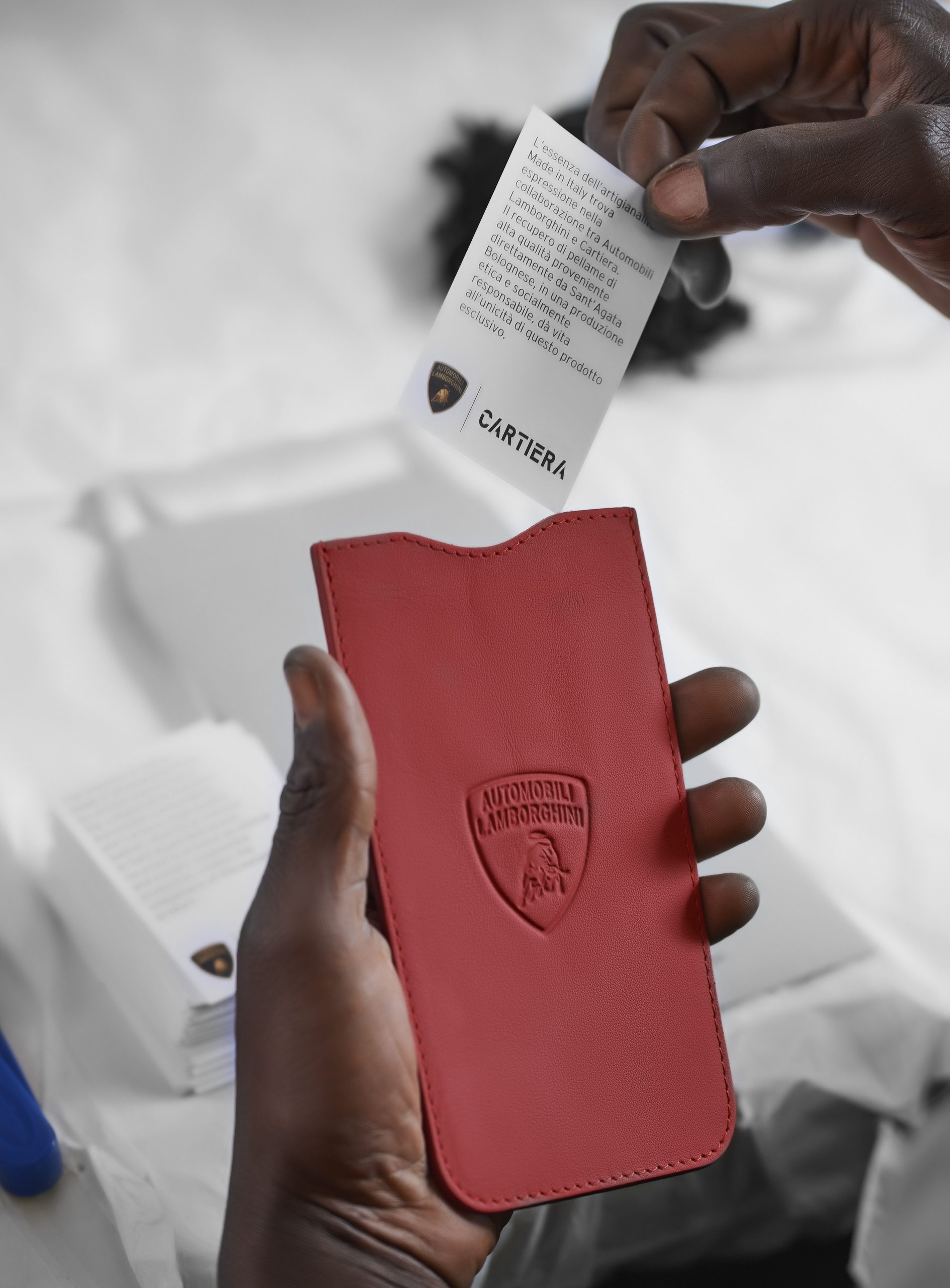
Production imagery tells a story that product descriptions alone cannot. Artisans at Cartiera’s workshop cut reclaimed leather by hand using rulers and craft knives, emboss the Lamborghini shield with manual presses, and stitch finished pieces on industrial sewing machines. The process is visibly labor-intensive, closer to a traditional Italian pelletteria than to a mass-production merchandise line.
Lamborghini’s official material emphasizes that these are not factory seconds repackaged with a logo. The leather originates from the same hides selected for Huracan, Aventador, and Urus interiors. Imperfections that disqualify a piece from a supercar dashboard, a slight grain variation or a cut too narrow for a seat bolster, do not compromise its suitability for a card holder or tote. The material quality is identical; only the cosmetic standard differs.
For enthusiasts who appreciate the tactile side of the ownership experience, that distinction carries weight. Lamborghini already sells Alcantara and leather luggage sets designed to fit specific models, and forum discussion around OEM accessories suggests owners value items with a genuine factory connection. The upcycled collection offers that connection at a far lower price point, with the added appeal of a sustainability story that most branded merchandise simply cannot claim.

Skilled artisans meticulously cut vibrant green leather, ensuring precision for every piece in the collection. Image: Automobili Lamborghini.
Living with the Collection: What Owners Actually Get
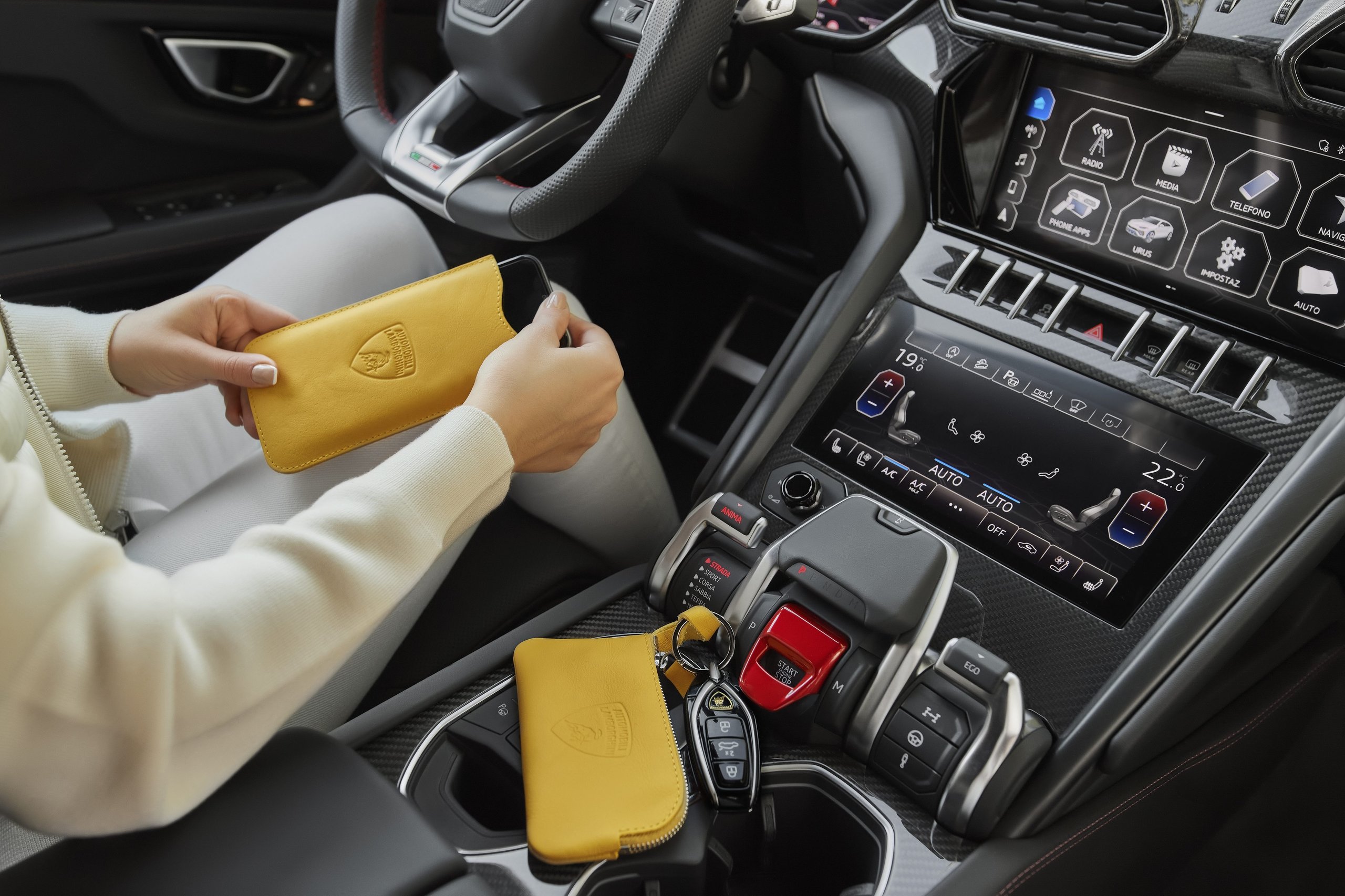
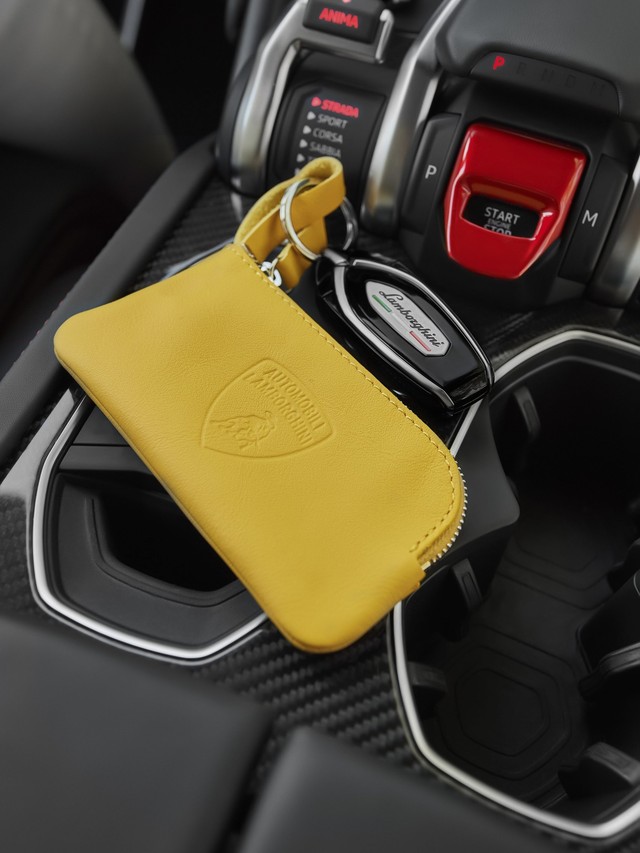
The four launch products cover daily carry essentials that Lamborghini owners interact with more often than their cars. A key fob case in, say, Giallo Orion yellow sits on the Urus center console’s carbon fiber trim as naturally as any Ad Personam interior detail. The smartphone case and card holder slip into a jacket pocket. The tote bag works as a weekend errand companion or a subtle flex at the country club.
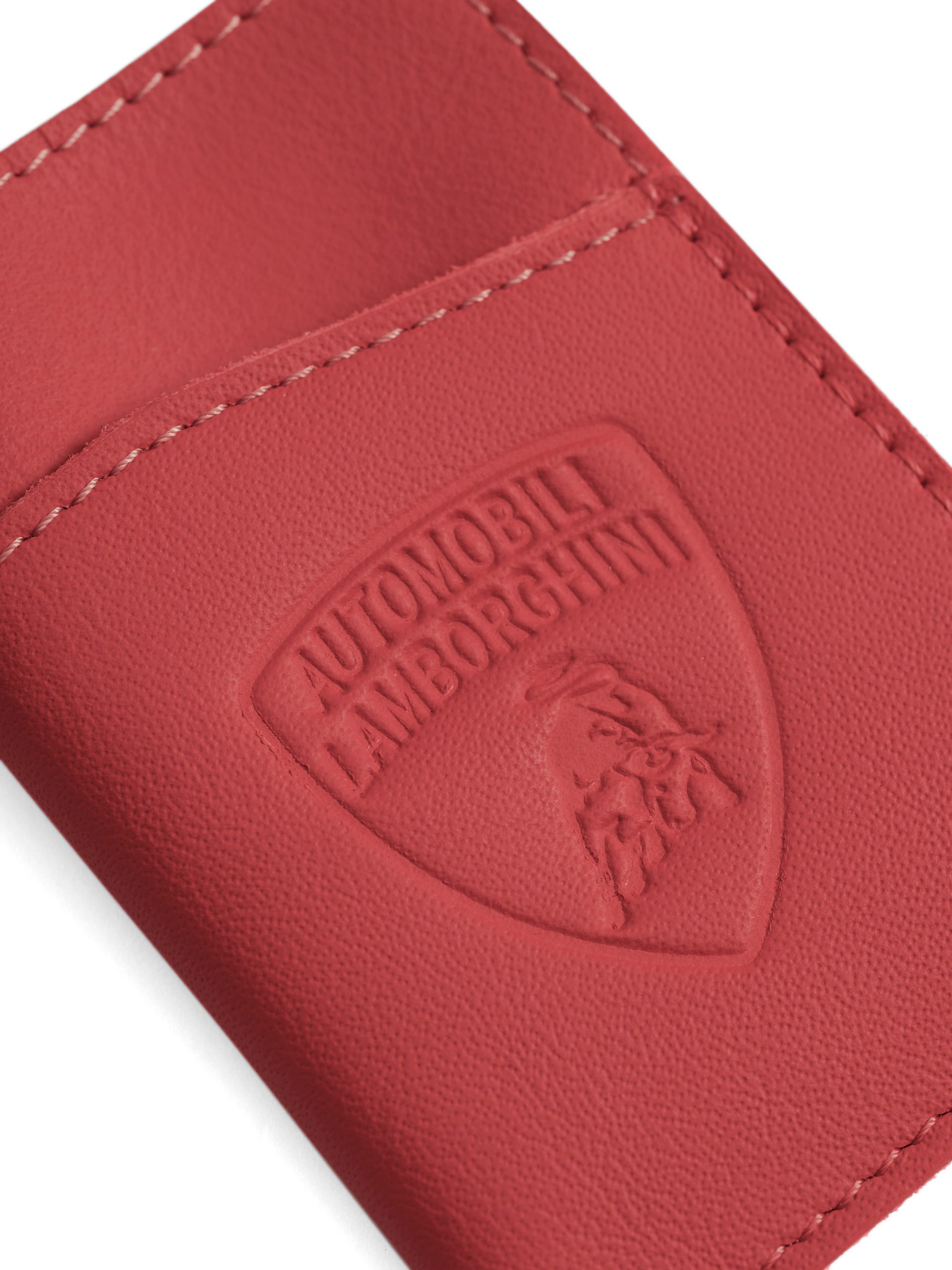
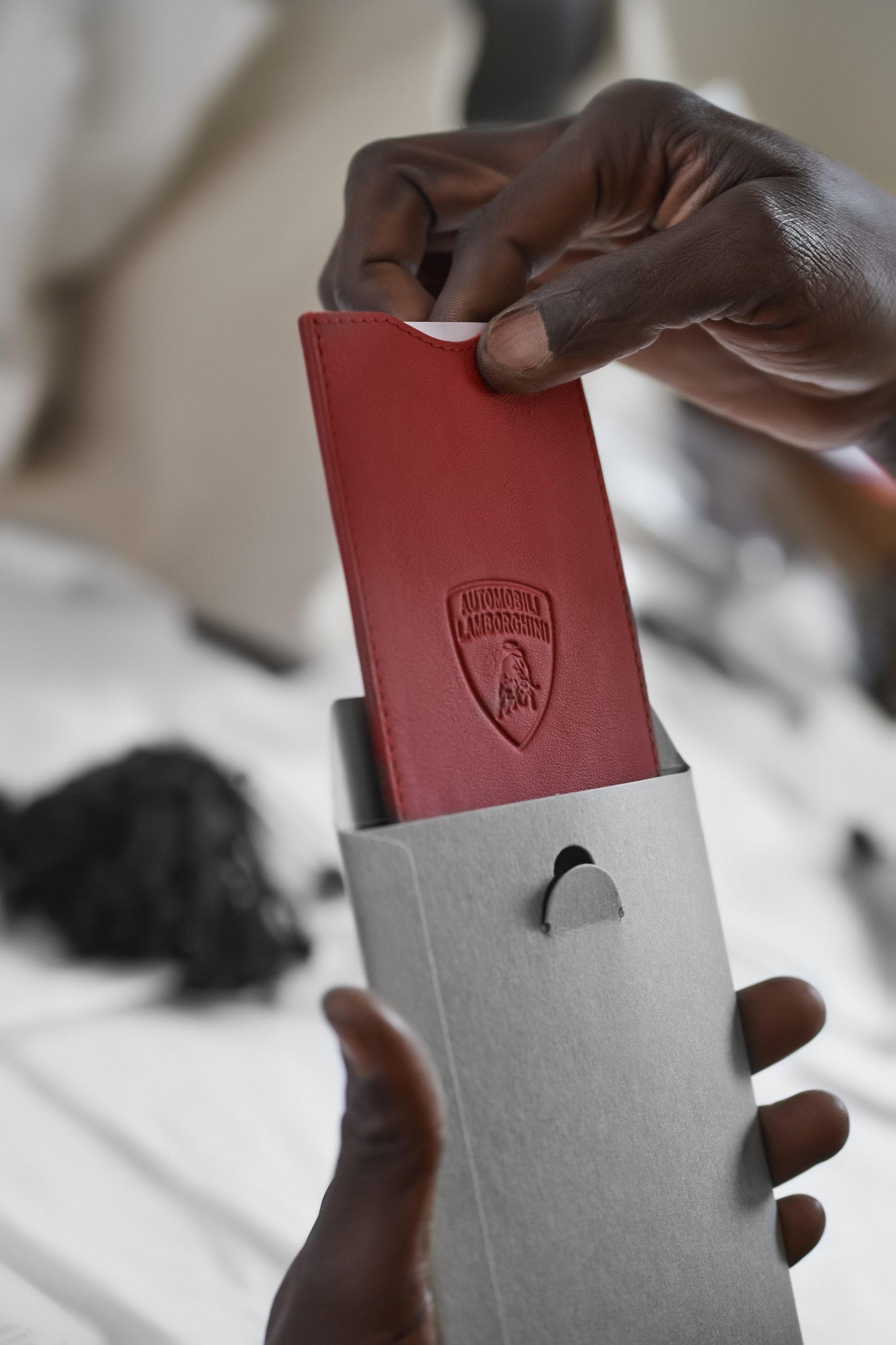
All items carry the embossed Automobili Lamborghini shield, and some pieces include a “REDUCE REUSE RECYCLE” marking on interior straps, a small but visible nod to the project’s ethos. Packaging appears to include product information tags detailing the ethical sourcing, adding a layer of storytelling that generic branded goods lack.
The practical buyer takeaway: if you already own a Lamborghini and want accessories with a genuine material link to the factory, this collection delivers at accessible prices. If you do not own one, the upcycled line is arguably the most authentic piece of the brand available below the cost of a scale model. Lamborghini confirmed no production limits, so scarcity is not a factor, though color availability will naturally fluctuate with the factory’s leather usage.

The vibrant yellow leather key case and Lamborghini key rest elegantly within the Urus's luxurious interior. Image: Automobili Lamborghini.
How Lamborghini’s Approach Stacks Up Against Ferrari and Porsche
Luxury automotive lifestyle merchandise is a crowded space, and Lamborghini is not the first to expand beyond keychains and baseball caps. Ferrari operates an entire fashion line through its Maranello boutique and online store, complete with runway shows and high-fashion collaborations. Porsche Design functions as a standalone lifestyle brand with its own watches, luggage, and electronics. Neither, however, markets a product line explicitly built from reclaimed production waste.
That distinction gives Lamborghini a narrative advantage. Ferrari’s lifestyle goods are premium, but they are manufactured as standalone fashion products with no direct material link to the cars. Porsche Design items are engineered with automotive-inspired aesthetics, yet the titanium in a Porsche Design watch never sat inside a 911. Lamborghini’s upcycled collection can make a claim its rivals currently cannot: the leather in your card holder was originally destined for a supercar interior in Sant’Agata Bolognese.
Whether that story translates into meaningful commercial volume is another question. Lamborghini confirmed no production targets or sales projections for the line. The safer read is that this collection functions primarily as brand-building, reinforcing Lamborghini’s sustainability credentials while offering a tangible product that embodies the company’s broader Direzione Cor Tauri environmental roadmap. If it also generates modest revenue from a material stream that previously cost money to dispose of, so much the better.

Colorful leather cardholders in red, yellow, and blue, each embossed with the Lamborghini logo, are displayed. Image: Automobili Lamborghini.
What the Upcycled Leather Project Signals for the Brand
Lamborghini chose to partner with a small, local, ethically focused workshop rather than licensing the project to a major luxury goods house. That decision is revealing. A collaboration with a Florentine leather atelier would have carried more fashion-world prestige. Working with Cartiera instead keeps the story rooted in Emilia-Romagna, emphasizes social responsibility over glamour, and gives Lamborghini direct oversight of a supply chain that begins and ends within a short drive of the factory.
The collection also quietly expands the range of people who can own something genuinely connected to Lamborghini’s production line. An Aventador or Huracan demands a substantial financial commitment. A key fob made from the same leather, for under $100, does not. For a brand that thrives on aspiration, lowering the entry point without cheapening the product is a delicate balance, and the upcycled line threads that needle by anchoring its value in material provenance and ethical production rather than in exclusivity alone.
Lamborghini confirmed the initial four products but left open whether the line will expand. Given that the factory’s leather waste stream is continuous and Cartiera’s capacity is scalable, growth seems plausible. For now, the Upcycled Leather Project stands as a small but considered extension of what Lamborghini ownership means: not just the cars, but the culture, craft, and increasingly, the conscience behind them.

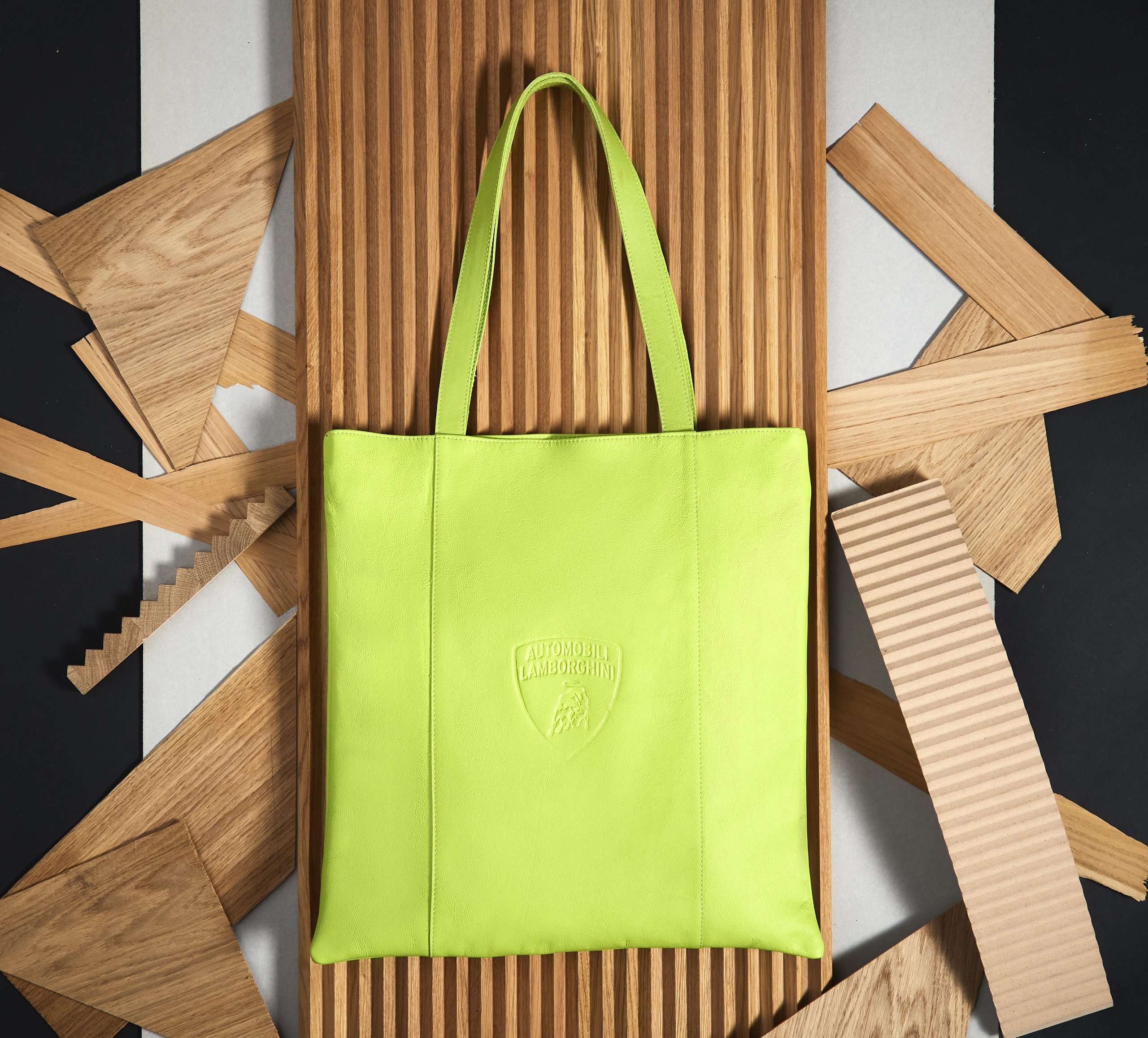
The iconic Automobili Lamborghini logo is elegantly embossed on a vibrant green leather surface.
Gallery