Romain Grosjean Becomes a Lamborghini Factory Driver, With Daytona First and LMDh Next
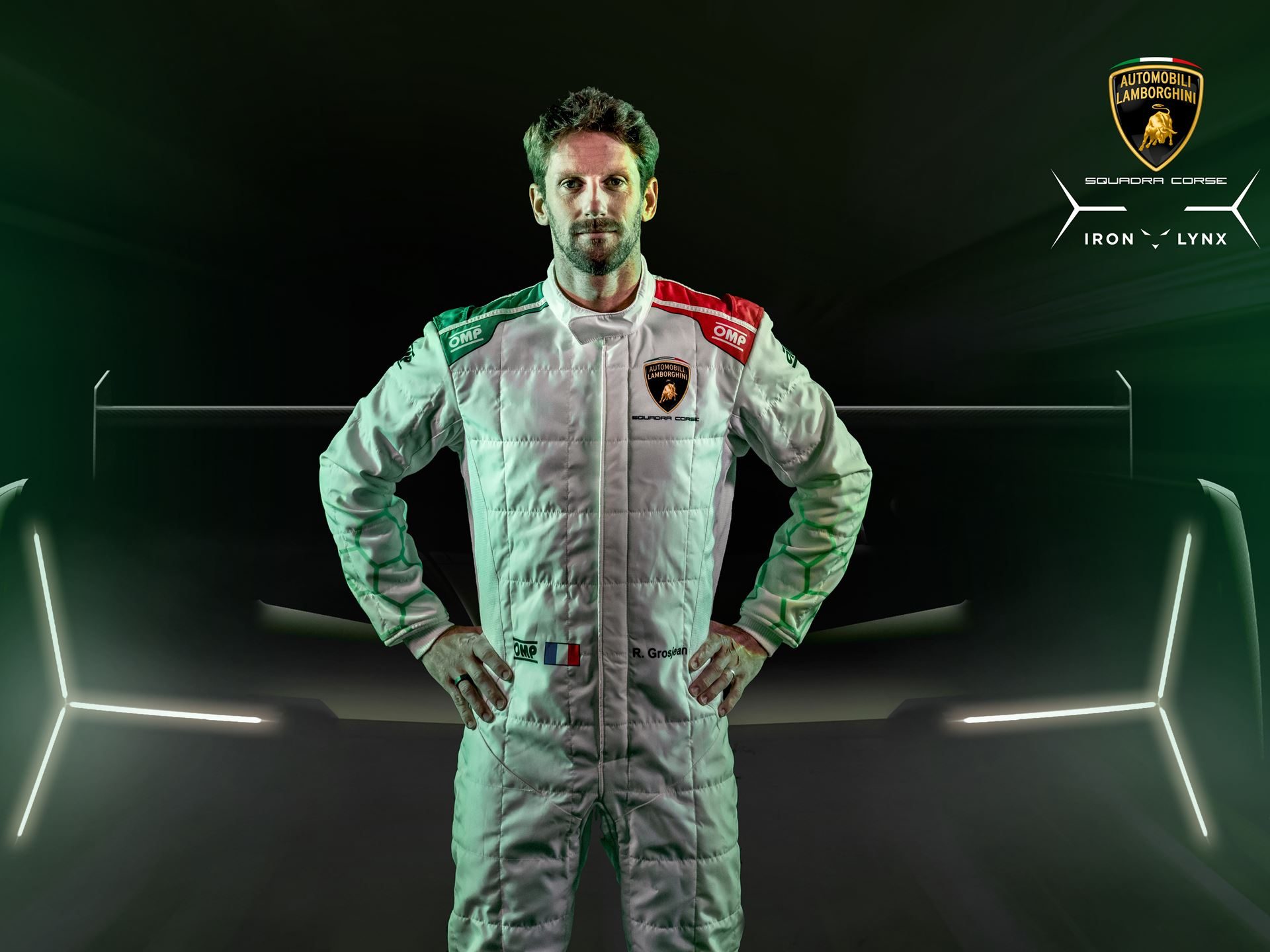
Lamborghini Squadra Corse confirmed Romain Grosjean as an official factory driver starting in 2023, pairing him with the Iron Lynx team for an immediate competitive debut at the 24 Hours of Daytona in a Huracán GT3 EVO2. Grosjean will share the car with fellow Lamborghini factory drivers Andrea Caldarelli and Mirko Bortolotti, according to Lamborghini. The GT3 program, though, is the appetizer. The main course is the Lamborghini LMDh project, slated for a 2024 debut in both the FIA World Endurance Championship and the IMSA WeatherTech Sports Car Championship.
This is not a celebrity endorsement or a feel-good story about a driver’s second act. It is a calculated investment in prototype development. Lamborghini needed someone who could race competitively in GT3 to absorb the team’s operational culture, then translate years of single-seater engineering feedback into a brand-new hybrid prototype set to face Ferrari, Porsche, and Cadillac at the highest level of endurance racing. That combination of skills narrows the candidate pool considerably.
Why Grosjean? The Value of an F1 and IndyCar Development Brain
Lamborghini says Grosjean spent nine seasons in Formula One, collecting 10 podium finishes across stints with Renault, Lotus, and Haas. He transitioned to the IndyCar Series in 2021. Those biographical details matter less than what they represent: thousands of hours spent communicating with engineers about chassis balance, tire degradation curves, hybrid energy deployment, and aerodynamic sensitivity at speeds most GT drivers never experience.
Formula One, more than any other category, trains drivers to be rolling data acquisition systems. A good F1 development driver does not simply report that the car feels loose. They describe which phase of the corner, under what fuel load, at what ambient temperature, and how the issue evolved across a stint. That granularity is exactly what a manufacturer needs when bringing a new prototype from the simulator to the racetrack. IndyCar added a different dimension: oval racing and a more mechanically dependent car taught Grosjean to adapt quickly to unfamiliar vehicle dynamics, a useful trait when the SC63 would be an entirely new machine with no competitive baseline.
Lamborghini Head of Motorsport Giorgio Sanna framed the hire in broad terms, noting Grosjean’s experience across categories and the value he brings to both the GT3 program and, more importantly, LMDh development. The subtext is clearer than the official language: Squadra Corse picked Grosjean because building a competitive prototype from scratch demands a driver who can function as an engineer’s translator.

Grosjean’s Role in SC63 Development: More Than Seat Time
Grosjean himself described the LMDh car as “a beautiful car” and “an incredible project in endurance,” adding that the category is becoming increasingly competitive with multiple manufacturers entering. That last observation carries the most weight. The LMDh/Hypercar convergence created the most crowded top class in endurance racing in decades, and every manufacturer entering the arena brought factory-level resources and experienced driver rosters.
For Lamborghini, this represented a genuinely new frontier. Squadra Corse built its modern reputation on GT3 customer racing, where the Huracán GT3 EVO earned three consecutive victories at the Rolex 24 in the GTD class from 2018 to 2020, according to Lamborghini. Prototype racing at the WEC and IMSA level poses a fundamentally different engineering challenge: hybrid energy management, LMP2-based chassis integration, aerodynamic efficiency targets that dwarf anything in GT3. Grosjean’s job was to compress the learning curve.
The collaboration structure reinforces how seriously Lamborghini treated this program. Iron Lynx, owned by Swiss company DC Racing Solutions Ltd, serves as the partner team, and the operation also works closely with PREMA Engineering, bringing PREMA’s championship-winning expertise from single-seater categories. That three-way partnership of Squadra Corse, Iron Lynx, and PREMA mirrors the organizational depth that established prototype manufacturers rely on, and Grosjean sat at the intersection of all three entities as the primary feedback conduit.
The Competitive Landscape: Lamborghini’s LMDh Gambit Against Established Rivals
When Lamborghini committed to LMDh, it entered a battlefield already occupied by manufacturers with deeper prototype racing histories. Ferrari returned to top-class endurance racing with its 499P Hypercar and won Le Mans in its debut year. Porsche fielded the 963 LMDh with factory and customer programs. Cadillac ran the V-Series.R with years of DPi experience feeding its development. Each of those programs recruited drivers with extensive prototype or single-seater backgrounds for precisely the same reason Lamborghini signed Grosjean: new cars need drivers who can diagnose problems at the limit and articulate solutions in engineering language.
Squadra Corse’s approach differed in one notable respect. Rather than assembling a roster of pure endurance specialists, it chose a driver whose career had been defined by adaptability across wildly different racing formats. The bet was that versatility and analytical precision would compensate for the organization’s relative inexperience in prototype competition. Whether that bet paid off would be measured on track in 2024, but the logic behind it was sound.
For Lamborghini fans watching from the outside, the Grosjean signing was the clearest signal that Squadra Corse intended to compete at the sharp end of the field, not simply participate. The entire point of an LMDh program is to validate road car technology and brand image at the most demanding level of motorsport, and you do not hire a nine-season F1 veteran to circulate at the back.

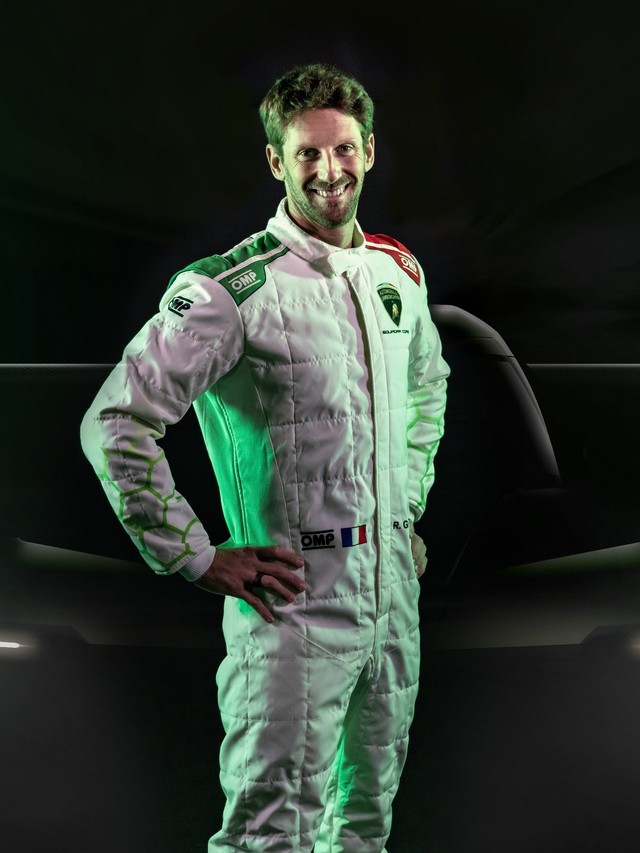
Romain Grosjean smiles, ready to take on new challenges as a Lamborghini factory driver.
What This Means for Lamborghini’s Motorsport Trajectory
The Grosjean signing marked the moment Squadra Corse transitioned from a GT3 powerhouse into a multi-category factory operation with genuine prototype ambitions. His GT3 outings at Daytona and other endurance events through 2023 served a dual purpose: building chemistry with the Iron Lynx crew and establishing a performance baseline before the far more complex SC63 arrived.
One detail worth noting for the long view: Grosjean’s career arc included a race win on his FIA GT1 World Championship debut in Abu Dhabi in 2010, as well as a Spa 24 Hours entry that same year. He was not arriving to sports car racing as a complete novice. The GT3 season functioned less as a training exercise and more as an integration period, getting a proven driver embedded in Lamborghini’s operational DNA before the stakes escalated dramatically.
Lamborghini left several questions unanswered at the time of this announcement, including Grosjean’s full 2023 endurance calendar beyond Daytona and the specific technical targets for the SC63’s development program. What the signing did confirm is that Squadra Corse was building its prototype effort around experienced, analytically rigorous drivers rather than relying solely on GT specialists stepping up. For a brand entering the deepest manufacturer field in modern endurance racing history, that distinction mattered.
Gallery