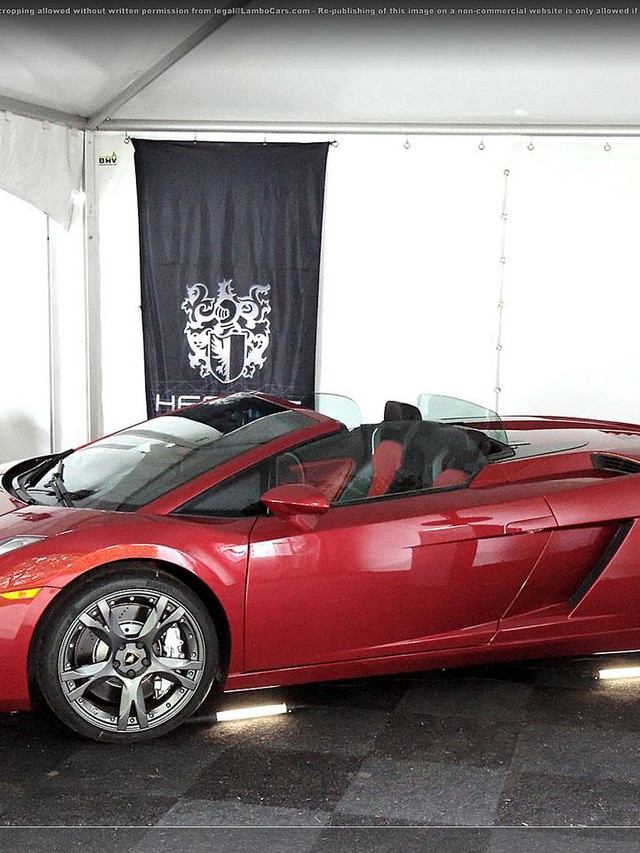
A Supercar Launch Without a Stage
On May 7, 2020, Lamborghini debuted the Huracán EVO RWD Spyder not under studio lights in Sant’Agata Bolognese or on a sun-baked runway at Nardò, but inside the homes of anyone with a compatible iPhone or iPad. The mechanism was Apple’s AR Quick Look, accessed through a simple “See in AR” button on lamborghini.com. Tap it, point the camera at your driveway, kitchen floor, or questionably sized apartment, and a photorealistic, full-scale rendering of the new V10 open-top appeared in your environment, ready to be rotated, zoomed, and inspected inside and out.
Lamborghini says it was the first automotive brand to use augmented reality for a full model launch. Physical events were impossible during the spring 2020 lockdowns, and the company needed a way to generate the kind of visual spectacle a new Spyder variant deserves while every showroom on the planet sat dark. The result was part product reveal, part technology demonstration, and part declaration that Lamborghini intended to treat digital engagement as a serious channel rather than a novelty. That declaration is the real story here: a supercar company built on theatrical live events chose to bet its newest model on a technology most of its competitors had never tried, and in doing so redefined what a car launch could look like.
Why AR, and Why Apple?
Choosing augmented reality over a conventional livestream or pre-recorded video was a deliberate escalation. A video plays the same way for everyone. AR Quick Look lets the viewer control the experience: walk around the car, crouch to inspect the rear diffuser, scale it up to true 1:1 dimensions, and snap photos that look like the Spyder is genuinely parked in their space. For a brand that sells aspiration as much as it sells carbon fiber, that personal, tactile quality matters.
The Apple partnership gave Lamborghini instant reach. AR Quick Look runs natively on Safari, requiring no app download, no headset, and no special hardware beyond an iPhone or iPad with an A9 processor or later, effectively any device from 2015 onward. According to then-CEO Stefano Domenicali, the company was “innovating once again and exploring new methods of communication.” Phil Schiller, Apple’s senior vice president of Worldwide Marketing at the time, framed the collaboration around a shared emphasis on design and innovation. Lamborghini also announced plans to extend the AR functionality across its entire model range.
The strategic logic is straightforward. Luxury car buyers increasingly research online before ever contacting a dealer, and younger enthusiasts who may be years away from a purchase still build brand loyalty through digital touchpoints. Placing a photorealistic Lamborghini in someone’s physical space collapses the distance between aspiration and ownership in a way that a configurator screenshot cannot. By partnering with the world’s most valuable technology company rather than building a proprietary tool, Lamborghini ensured the barrier to entry was as low as possible, reinforcing the idea that this was not a gimmick but a genuine shift in how the brand communicates.
Experiencing the Huracán EVO RWD Spyder in AR: What Actually Happened On-Screen
The technical barrier was low by design. Visit lamborghini.com on a compatible Apple device, navigate to the Huracán EVO RWD Spyder page, and tap the AR prompt. The phone’s camera activates, the software identifies a flat surface, and the car appears. Pinch to resize. Walk around it. Lean in to study the stitching on the seats or the Y-shaped LED running lights.
Lamborghini and Apple emphasized “a high level of photorealism,” though early user feedback was mixed. Some online commentary described the rendering quality as closer to a video game than a showroom photograph. That gap between marketing language and real-world results is worth noting for anyone expecting a replacement for seeing the car in person. AR Quick Look in 2020 was impressive for a browser-based, no-download experience, but it operated within the rendering limits of mobile hardware. The technology was a complement to the showroom visit, not a substitute for it.
Still, the practical value went beyond pixel fidelity. Seeing a full-scale Huracán Spyder in your garage answers a surprisingly common question: will it actually fit? And the ability to photograph the car in a personal setting gave owners and aspirants alike a new way to engage with the brand, turning every flat surface into a potential stage for Lamborghini’s latest creation.
The Huracán EVO RWD Spyder Beneath the Pixels
No amount of augmented reality wizardry matters if the car underneath is not worth the spectacle, and the Huracán EVO RWD Spyder occupies a specific and appealing position in Lamborghini’s V10 lineup. Rear-wheel drive, naturally aspirated 5.2-liter V10, open top. According to TopSpeed, the Huracán EVO RWD Spyder is a facelifted iteration of the rear-wheel-drive variant Lamborghini first offered in 2016, distinguished by a unique front bumper and rear diffuser compared to other Huracán models.
RWD Huracáns appeal to a specific kind of buyer: someone who values steering feedback and throttle adjustability over the all-weather security of the AWD system. Multiple owners on enthusiast forums describe the rear-wheel-drive Spyder as the most engaging version of the Huracán to drive, with a rear end that rewards precise throttle inputs and punishes laziness. That combination of a screaming naturally aspirated V10, rear-drive dynamics, and open-air exposure makes a compelling case for the car as one of the purest expressions of the Huracán platform.
With the Huracán now out of production and replaced by the hybrid Temerario, forum discussion around these last naturally aspirated V10 models reflects growing collector interest. Enthusiasts on Lamborghini-Talk continue to seek out EVO RWD Spyders specifically, with some buyers noting that the car represents a bargain relative to the new generation’s pricing while delivering an analog driving character that the turbocharged, electrified successor deliberately moves away from. The AR launch, in hindsight, introduced a car whose desirability would only sharpen with time.
How Lamborghini’s Digital Gamble Compared to the Competition
In May 2020, most luxury and supercar manufacturers responded to lockdowns with livestreamed reveals or slickly produced YouTube premieres. Those formats work, but they are passive. Lamborghini’s AR approach was interactive, personal, and required a technology partnership that competitors did not pursue at the same scale or timing. The company’s claim to be the first automotive brand to launch a model via AR is difficult to independently verify in absolute terms, but no competing manufacturer made a comparable public claim at the time.
Ferrari, McLaren, and Porsche all accelerated their digital configurator tools during the same period, but configurators let you build a hypothetical car on a screen. AR Quick Look let you place a specific car in your actual environment. For a brand that thrives on visual spectacle and emotional impact, that distinction matters more than it might for a manufacturer selling on lap times alone.
Whether this particular AR execution changed anyone’s purchase decision is impossible to measure from outside Lamborghini’s sales data. The more durable effect was positional: Lamborghini demonstrated willingness to experiment with how it communicates, and it did so alongside the world’s most valuable technology company. That association carries its own weight, and it set a benchmark that rivals would eventually need to acknowledge.
What This Means Going Forward
Lamborghini promised to extend AR Quick Look across its full range, and the implications reach beyond a single model reveal. The Temerario and Revuelto represent a generational shift in powertrain philosophy; the AR launch of the Huracán EVO RWD Spyder represented an earlier, quieter shift in how Lamborghini thinks about reaching its audience.
Mobile AR rendering in 2025 already outpaces what was possible on an iPhone in 2020, and Apple’s continued investment in spatial computing suggests the tools will only get more capable. For Lamborghini, the question is whether future launches will treat AR as a standard feature of every reveal or reserve it for moments when physical events are impractical. The smarter play, based on the 2020 precedent, would be both: use AR as a persistent engagement layer on the website while continuing to stage the theatrical live events that define the brand’s identity.
The Huracán EVO RWD Spyder deserved a proper debut. Lamborghini gave it one, just not the kind anyone expected. And in choosing a format that put the car directly into the viewer’s world rather than on a distant stage, the company revealed something about its own future as clearly as it revealed the car itself.
Gallery


