The Milestone That Changed Lamborghini’s Math
In October 2019, a Grigio Titans Huracán EVO coupé destined for the Korean market rolled off the Sant’Agata Bolognese assembly line carrying chassis number 14,022. That grey car matched, in just five years, the total output the Gallardo accumulated across an entire decade of production from 2003 to 2013. The number itself tells a story about velocity: the Huracán reached 8,000 units in roughly three years, meaning the second half of that climb came even faster than the first.
The identity of the milestone car matters for what it reveals about the broader shift underway. This was a Huracán EVO, not a Performante or a limited special edition, headed to South Korea rather than a traditional European or North American collector. By 2019, Lamborghini’s growth engine was running on geographic expansion and a broadened customer base as much as it was running on that 5.2-liter naturally aspirated V10. The production record was not simply a factory achievement. It was evidence that Lamborghini had learned to scale a mid-engine supercar without losing the plot.
From Gallardo to Huracán: The Evolution of Lamborghini’s V10 Supercar Line
The Gallardo debuted in 2003 as the car that democratized Lamborghini ownership, at least by supercar standards. Before it, buying a Lamborghini meant buying a V12 flagship with all the maintenance drama and intimidation that implied. The Gallardo opened a second lane: a smaller, more approachable V10 that still looked like a weapon. Over ten years, Lamborghini sold exactly 14,022 of them. Respectable, but not transformative.
The Huracán, arriving in 2014, inherited that formula and accelerated it. The coupé came first, followed by the Spyder and rear-wheel-drive variants. Performance editions like the Performante in 2017 and the Performante Spyder in 2018 pushed the car’s track credibility, claiming lap records that kept the model relevant against Maranello’s mid-engine offerings. Then in 2019, the EVO refresh brought updated aerodynamics and a revised powertrain calibration, broadening appeal to buyers who wanted sharper electronics without the raw-edged commitment of a Performante.
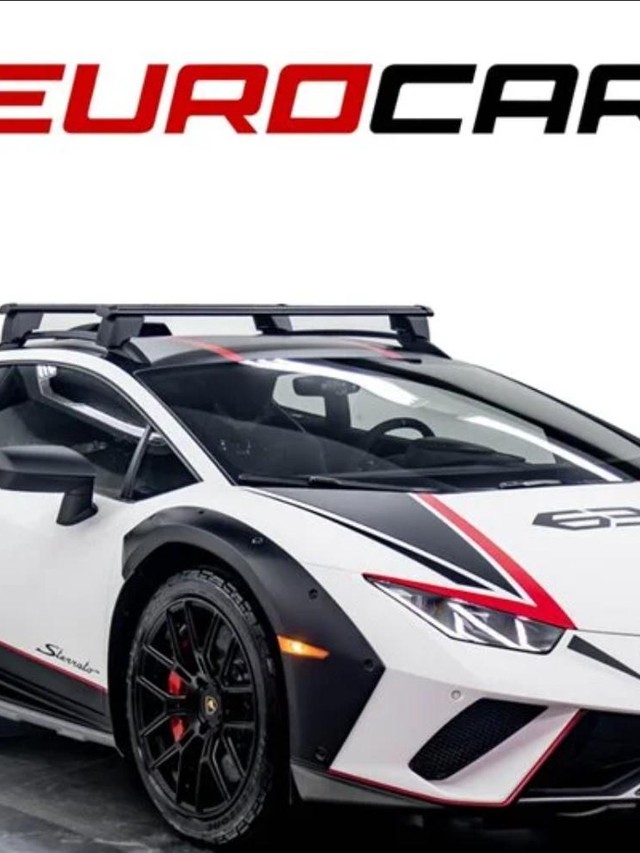
The variant strategy is where the real divergence from the Gallardo becomes clear. Where the Gallardo’s lineup expanded gradually and somewhat cautiously, the Huracán’s cadence was deliberate and relentless. Coupé, Spyder, RWD, Performante, EVO, STO, Sterrato, Tecnica: each variant found a slightly different buyer, and each kept the order books fresh without requiring a clean-sheet redesign. Lamborghini learned to treat the V10 platform like a franchise, not a single product, and that franchise thinking is what turned a healthy seller into a record-breaker.
Why the Huracán’s Rapid Success Matters for Lamborghini’s Brand Strategy Today
Lamborghini says it delivered 4,553 cars in the first half of 2019, a 96 percent increase over the same period the prior year. The Huracán contributed 1,211 of those units, a figure that included both the tail end of Performante deliveries and the early wave of EVO customers, whose cars began arriving in June 2019. The V12 Aventador, led by the SVJ, added 649 units.
That 96 percent surge was not just a Huracán story. The Urus, Lamborghini’s first SUV, was ramping into full production during this period, and its volume fundamentally altered the company’s financial profile. But the Huracán’s contribution is the more revealing thread for enthusiasts because it proved that a naturally aspirated, mid-engine supercar could sustain and even grow demand in a market increasingly crowded by turbocharged rivals. Ferrari’s 488 family, McLaren’s Sports Series, and Porsche’s 911 Turbo all competed for similar wallets. The Huracán kept winning them over.
One reason, often overlooked in spec-sheet comparisons, is the ownership experience. Forum discussions on communities like Lamborghini Talk consistently describe the Huracán as remarkably reliable by exotic car standards. Multiple owners report covering thousands of miles, including European touring, with few mechanical issues. That kind of real-world dependability quietly builds a reputation that no horsepower figure can replicate, and it feeds directly into the repeat-purchase cycle that sustained the car’s production rate year after year.
Balancing Volume and Exclusivity: The Huracán’s Legacy in a Changing Market
Doubling your predecessor’s sales rate sounds like unqualified good news until you remember that Lamborghini sells aspiration, not transportation. Every additional unit on the road dilutes the rarity that justifies the price tag. By 2019, the question was already circulating in collector circles: could Lamborghini keep growing without cheapening the brand?
The answer, so far, appears to be yes, but it required careful management. Lamborghini controlled the narrative through limited editions like the STO, the Tecnica, and the Sterrato, models that commanded premiums and reinforced exclusivity at the top of the range even as the standard Huracán became more common. The strategy mirrors what Ferrari does with its Special Series models, though Lamborghini executed it with a smaller overall lineup and fewer model tiers.
For buyers considering a Huracán on the secondary market today, the high production volume is actually a practical advantage. Parts availability, service familiarity at independent shops, and a healthy pool of used inventory all benefit from scale. A Gallardo, by comparison, can present sourcing headaches for certain components precisely because fewer were made and the platform is now two generations old. The Huracán’s ubiquity, paradoxically, makes it a better ownership proposition for anyone who plans to drive the car rather than vault it. That tension between collectibility and usability is itself a product of the production record: enough cars exist to support a robust aftermarket, yet the brand cachet remains intact because Lamborghini managed the variant hierarchy so carefully.
Setting the Stage for the Temerario: How the Huracán’s Record Impacts Its Hybrid Heir
The Huracán is now officially sold out, with production winding down after exceeding 25,000 units across its full ten-year run. Its successor, the Temerario, confirmed as a 907-horsepower hybrid, faces a commercial benchmark that would intimidate any product planner.
Reports indicate the Temerario’s twin-turbo V8 revs to 10,000 RPM, a figure designed to answer the inevitable grief about losing two cylinders and gaining turbochargers. According to Road & Track, early driving impressions suggest the car loves to rotate and delivers a genuinely engaging experience. The engineering ambition is clear: compensate for the emotional loss of natural aspiration with stratospheric revs and hybrid torque fill.
The Temerario’s real challenge, though, is commercial rather than mechanical. The Huracán proved that Lamborghini’s entry-level supercar could be the company’s volume driver, its brand ambassador, and its gateway drug all at once. Replicating that trick with a hybrid powertrain, at a higher price point, in a market where electrification still divides enthusiast opinion, is a different proposition entirely. Lamborghini did not announce the Temerario’s final pricing alongside the car’s reveal, and the company’s approach to allocation and regional distribution remains an open question.
What the Huracán’s history does confirm is that Lamborghini understands variant strategy. Expect the Temerario to follow a similar playbook: a standard coupé first, then a Spyder, then progressively more focused track variants that keep the order books alive for years. The GT3 racing version is already in development, which, as Road & Track detailed, represents a significant architectural leap over the Huracán GT3 that served customer racing teams for a decade.
The Future of Lamborghini’s Core Supercars: Beyond the V10 Era
Looking back at the 2019 milestone from the vantage point of 2025, the 14,022-unit marker was less a celebration and more a proof of concept. It validated the idea that Lamborghini could scale without self-destructing, that a broader customer base and geographic reach could coexist with the kind of emotional intensity that makes people choose a Lamborghini over a 911 Turbo S.
The Urus pushed that thesis even further, but the Huracán did it within the traditional supercar segment, which is the harder trick. SUVs are supposed to sell in volume. Mid-engine, two-seat supercars are not. The Huracán managed both: it satisfied purists with models like the STO and Sterrato while welcoming new buyers through the standard EVO.
For anyone tracking Lamborghini’s trajectory, the practical takeaway is straightforward. The company now expects its core supercar to function as a growth engine, not merely a halo product. The Temerario will be measured against that expectation from day one. Whether hybrid technology enhances or complicates the formula is the defining question of Lamborghini’s next chapter, and the Huracán’s commercial record is the yardstick against which the answer will be judged.
Gallery


