Lamborghini Shuts Down Sant’Agata Bolognese
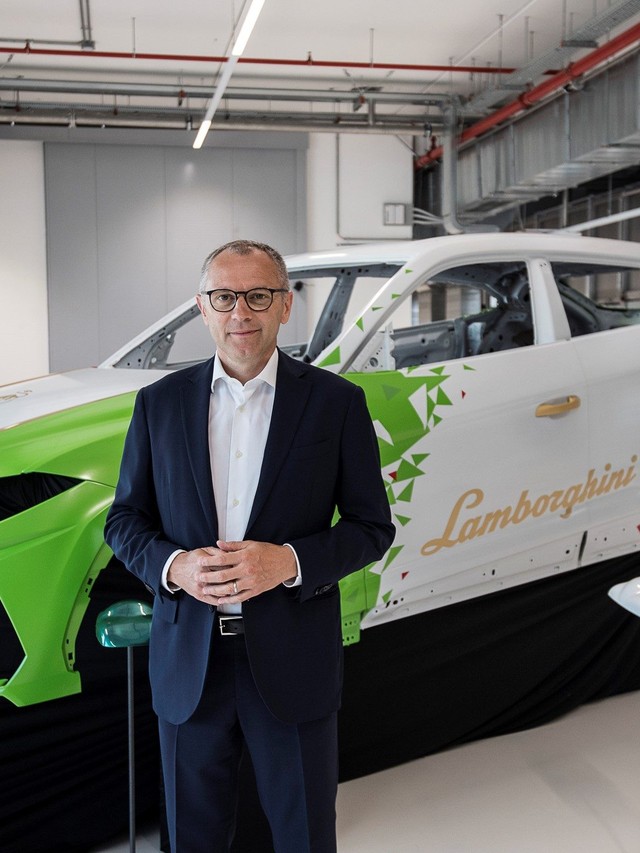
On March 12, 2020, Automobili Lamborghini confirmed it would close its entire Sant’Agata Bolognese campus from March 13 through March 25, halting production of the Aventador, Huracán, and Urus as COVID-19 tore through northern Italy. Chairman and CEO Stefano Domenicali framed the decision in personal terms, calling it “an act of social responsibility and high sensibility towards our people, in the extraordinary situation in which we find ourselves right now in Italy.”
Italy at that point ranked second only to China in confirmed cases, and Emilia-Romagna, the province that houses Lamborghini’s sole production facility, sat squarely in the hardest-hit region. Government directives were tightening daily, yet Lamborghini’s announcement landed before many Italian manufacturers had committed to full shutdowns, positioning the company as an early mover rather than a reluctant follower. For a brand that stakes its identity on the irreplaceable skill of the people who build each car by hand, the speed of that decision hinted at something deeper than regulatory compliance.
More Than a Mandate
Complying with government orders is one thing. Going further is another, and that distinction is where the story gets interesting for anyone who cares about Lamborghini beyond its spec sheets.
Global Finance Magazine highlighted that Lamborghini’s decision to close its factory surpassed the mandatory government measures in place at the time. According to the same report, approximately 300 to 400 of Lamborghini’s 1,800 employees were able to work remotely, while all other furloughed staff received full pay. In an interview with Global Finance Magazine, Domenicali characterized conditions across Italy as “unbelievable” and “surreal,” language that carried weight coming from a CEO known for measured corporate communications.
For a company that builds roughly 10,000 cars a year by hand, paying the entire workforce to stay home is not a trivial gesture. The saddlery technicians who stitch Alcantara interiors, the carbon fiber specialists, the paint shop teams: none of these roles translate to a laptop and a video call. Full pay during a voluntary full shutdown signals something about how Lamborghini views the relationship between the cars and the people who build them. Protecting that human capital was not generosity alone; it was an acknowledgment that the craftsmanship defining every Lamborghini cannot be rebuilt overnight if the artisans walk away.
Italy’s Motor Valley Under Siege
Lamborghini was not alone in shutting its doors. Ferrari’s Maranello factory reportedly ceased production until March 27, 2020, according to The Supercar Blog. Fiat Chrysler Automobiles and Pagani also faced temporary shutdowns or significant production disruptions across their Italian operations. The entire Motor Valley corridor, home to some of the most celebrated automotive names on earth, fell quiet in a matter of days.
What separated Lamborghini’s response was the speed and the messaging. While competitors largely framed their closures as compliance with evolving regulations, Domenicali explicitly positioned the shutdown as a values statement. That framing mattered to the brand’s global audience, many of whom were watching from markets where the pandemic’s severity was still abstract in mid-March 2020. By leading rather than following, Lamborghini turned a crisis into a declaration of principle.
From Surgical Masks to Tricolor Headlights
The factory closure turned out to be just the opening chapter. One report indicates that Lamborghini subsequently repurposed parts of its production plant to manufacture medical supplies: the saddlery departments, normally responsible for hand-stitching car interiors, began producing approximately 1,000 surgical masks per day, while the carbon fiber facility and R&D department used 3D printers to create around 200 protective plexiglass shields daily. These were donated to the Sant’Orsola-Malpighi Hospital in Bologna.
As a gesture of national solidarity, Lamborghini illuminated its historic headquarters each evening in the green, white, and red of the Italian flag. The same report noted that Domenicali anticipated a decrease in annual sales volume but predicted a faster recovery for the super-luxury segment, adding that no customer orders had been canceled.
That last detail should matter most to LamboCars readers. In a market where allocation slots and build positions carry real financial value, zero cancellations during a global crisis speaks to the depth of commitment Lamborghini’s clientele brings to the brand. Buyers waiting on an Aventador SVJ or a freshly ordered Urus were, apparently, willing to wait. The workforce Lamborghini had protected was the very reason those customers stayed loyal: they were paying for the hands, not just the horsepower.
What the Shutdown Signaled for the Brand
Production officially resumed on May 4, 2020, according to one report, well beyond the original March 25 target. That extended timeline inevitably pushed delivery schedules, though Lamborghini did not publicly detail the specific impact on individual model allocations or customer timelines.
The practical takeaway for anyone who owned or had ordered a Lamborghini in early 2020: delivery delays were real, but the order book held. Lamborghini’s approach of protecting workers first and trusting that demand would survive the pause proved correct. The company went on to post record delivery numbers in subsequent years, suggesting the shutdown caused no lasting damage to its commercial momentum.
Viewed from a distance, the March 2020 closure established a template. When a brand builds its identity around exclusivity, craftsmanship, and the irreplaceable human skill embedded in every car, protecting that workforce is not charity. It is strategy. The people who hand-finish a Lamborghini interior or align carbon fiber panels to sub-millimeter tolerances cannot be replaced by a hiring surge six months later. Domenicali’s decision acknowledged that reality, and the record years that followed proved it right.
Gallery


