Lamborghini’s First Sustainability Report and its Strategic Importance
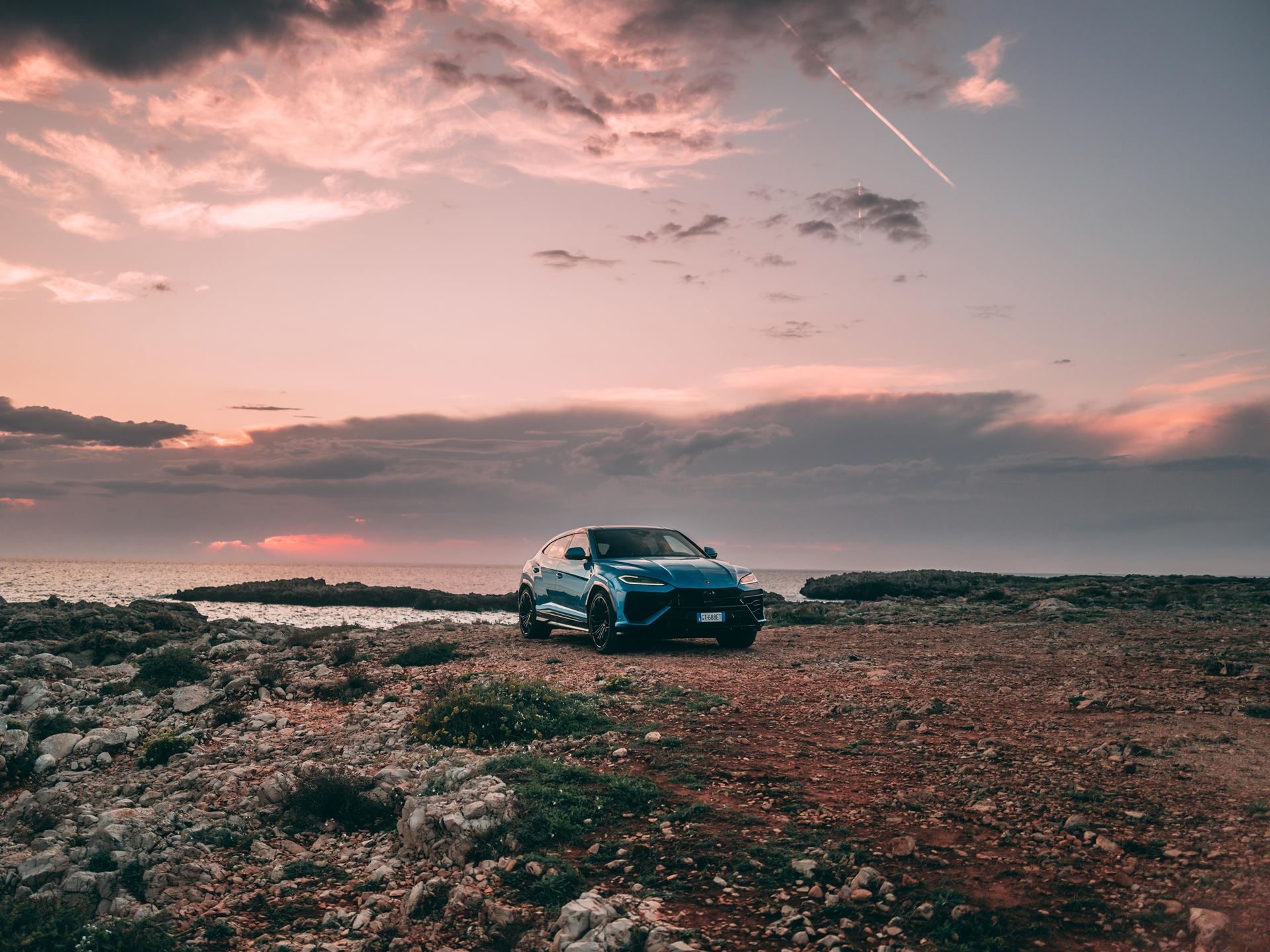
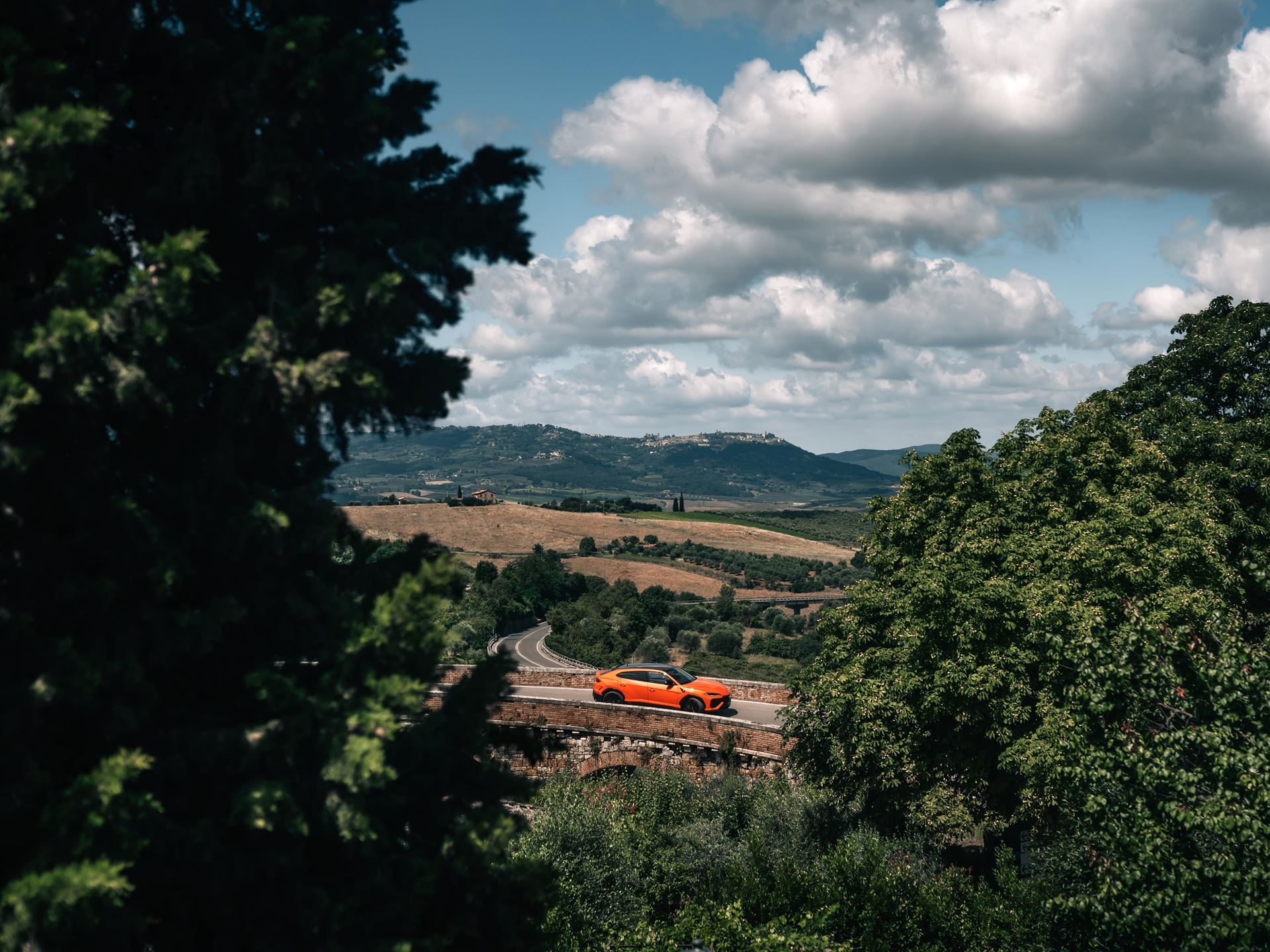
Lamborghini now fields an entirely hybrid super sports car range. The Revuelto, Urus SE, and Temerario collectively represent the first time a brand in this segment launched a fully hybrid super sports car range, and the company’s inaugural Sustainability Report, released on 25 June 2025, frames that achievement as the centerpiece of its environmental strategy under the Direzione Cor Tauri roadmap.
The report covers over 70 quantitative and qualitative indicators across environmental, social, and governance performance for the 2024 calendar year, benchmarked against 2023. Lamborghini says it was prepared voluntarily, drafted in accordance with international GRI standards and the European ESRS framework. More than 50 company representatives participated across 100 cross-functional working sessions.
What makes the document worth reading closely, though, is a tension that runs through every page. In 2024, total emissions reached 851,132 t CO2e, with Scope 1, Scope 2, and Scope 3 each increasing compared to 2023. Lamborghini launched a fully hybrid range and still grew its absolute carbon footprint. That paradox tells us something important about where the brand’s priorities actually sit, and the answer should reassure anyone who feared electrification would dilute the cars themselves. Performance came first. The sustainability gains followed from engineering choices made in service of speed, not the other way around.
The Hybrid Revolution: Performance and Emissions Reductions in Revuelto, Urus SE, and Temerario
The emissions reductions for the Revuelto and Urus SE are genuine and substantial. The Revuelto is reported to achieve a 30% cut in CO2 compared to the Aventador. The Urus SE delivers an 80% reduction compared to the Urus Performante, a figure that reflects its hybrid architecture: the Urus SE uses a 4.0-liter twin-turbo V8 with an electric motor, with a combined CO2 figure Lamborghini reports at 140 g/km. The Temerario’s combined figure sits at 272 g/km.
Lamborghini says performance in these hybrid models is enhanced through instant torque delivery.
This is the thread that holds the entire sustainability strategy together. The hybrid systems were engineered to add performance. The report indicates that electrification at Sant’Agata is intended to reduce emissions while enhancing performance, not the other way around.
Yet those per-unit improvements collide with a blunter reality once you zoom out to the company level.
| Emissions Scope | 2023 (tCO2e) | 2024 (tCO2e) | Primary Driver |
|---|---|---|---|
| Scope 1 (Direct) | 15,653 | 19,738 | Higher energy consumption by the cogeneration plant and activation of new thermal plant in painting section |
| Scope 2 (Indirect energy) | 9,108 | 10,111 | Higher energy consumption by the cogeneration plant and activation of new thermal plant in painting section |
| Scope 3 (Value chain) | 745,939 | 821,283 | More cars brought to market |
Total Scope 1, 2, and 3 emissions for 2024 reached 851,132 tonnes of CO2 equivalent, up across the board compared to 2023. The report attributes the Scope 1 and 2 increases to higher energy consumption from the cogeneration plant and the activation of a new thermal power plant in the painting section. According to Autoblog, over half of the 10,687 vehicles delivered in 2024 were Urus models.
Lamborghini frames the growth as proportionally lower relative to increases in production and revenue. The report states Lamborghini offsets unavoidable production site emissions through carbon credits, a practice maintained since 2015. Whether that strategy evolves toward absolute reductions remains an open question the report does not answer directly.

Sant’Agata’s Green Factory: A Decade of Carbon Neutrality and Operational Sustainability
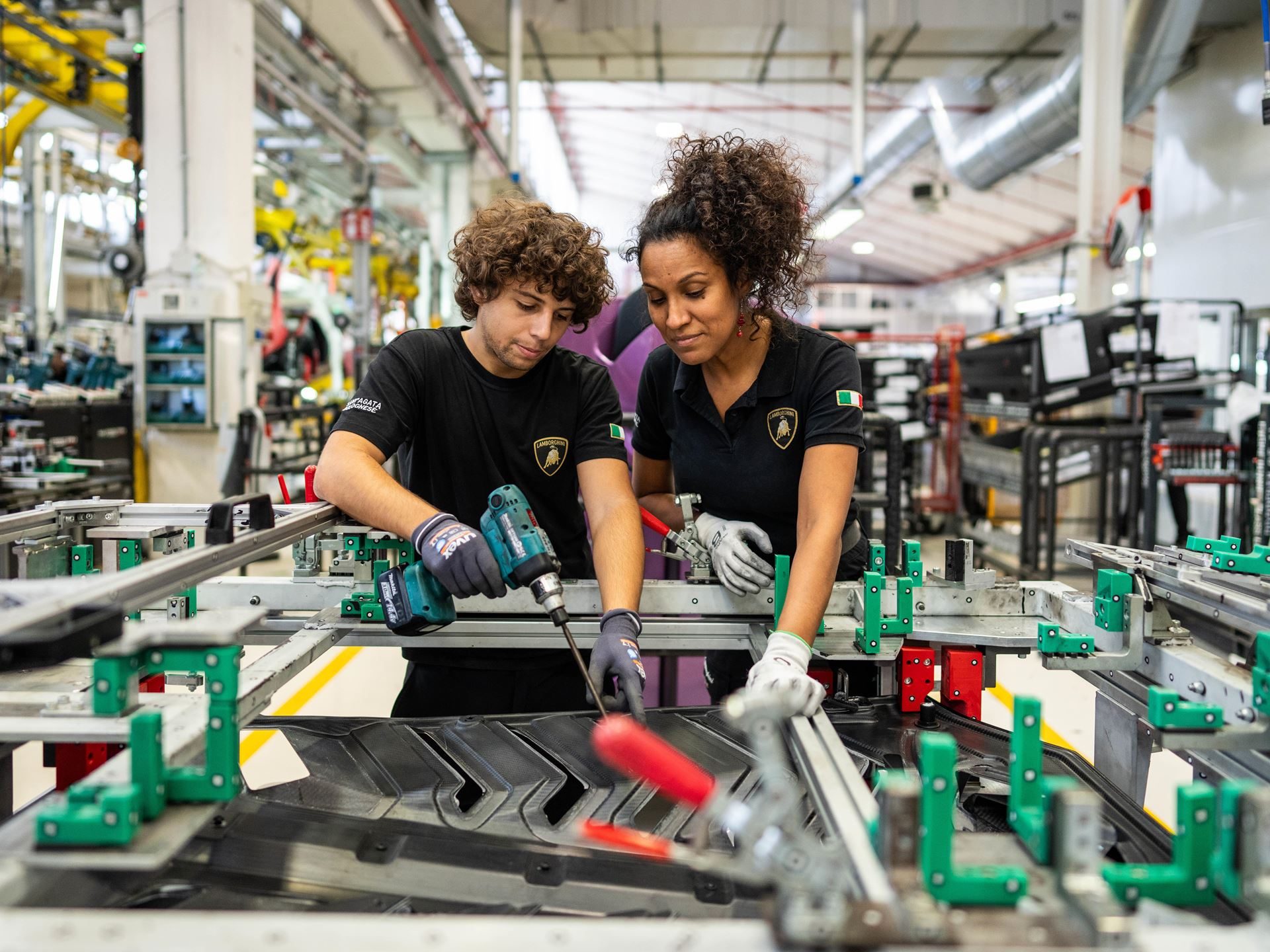
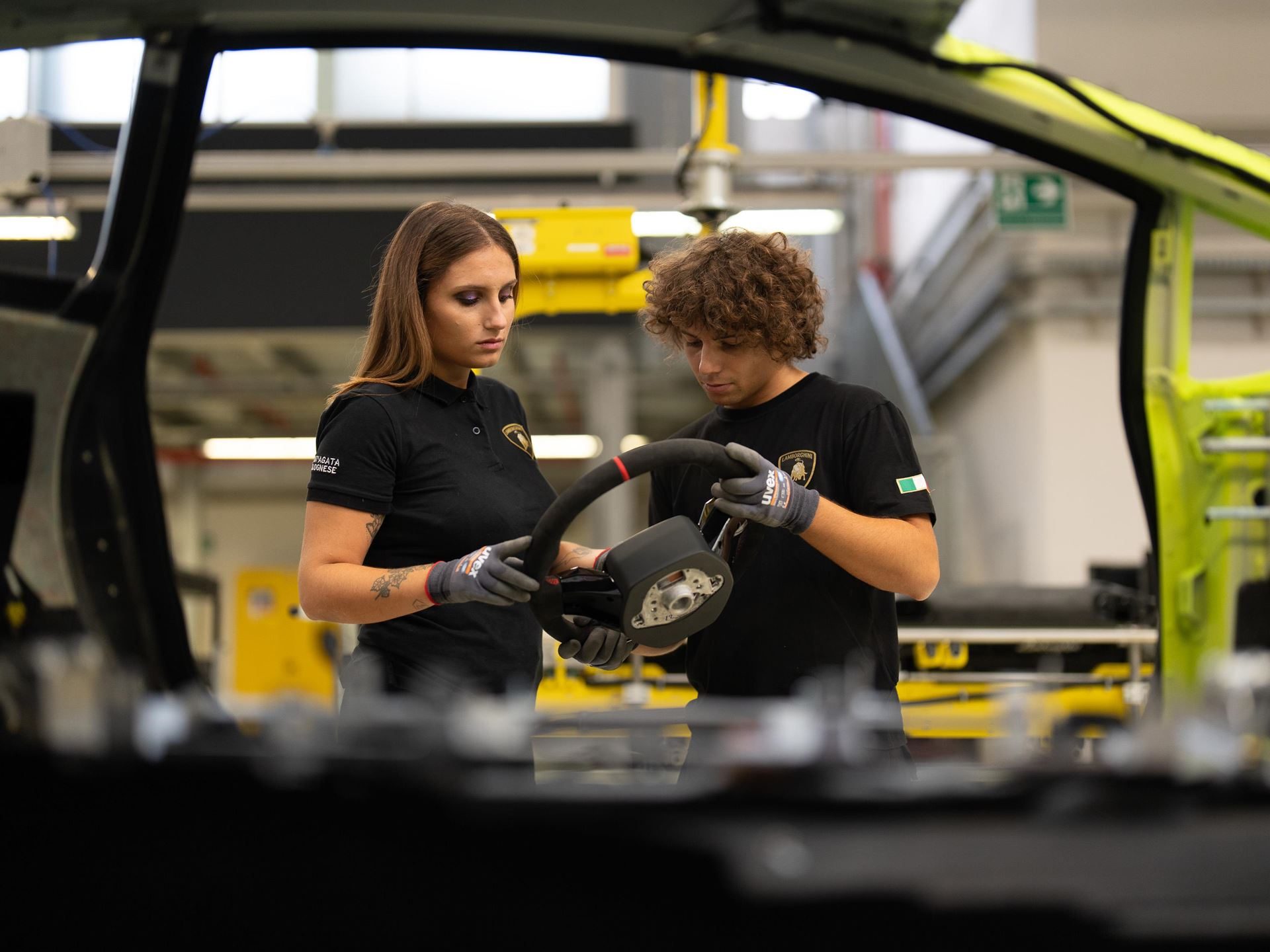
The production site at Sant’Agata Bolognese marks ten years of certified carbon neutrality in 2025, and the scale of growth it absorbed during that decade makes the milestone genuinely notable. Lamborghini states the plant doubled in size and its workforce tripled, yet the site maintained its carbon-neutral certification through investments in trigeneration, photovoltaic systems, and energy efficiency.
Self-generated energy at the facility increased by 22% in 2024 compared to the prior year, with part of that energy fed back into the grid. Waste recovery also improved, with a 15% increase in the share of waste sent for recovery. Lamborghini is pursuing lower-impact materials including recycled carbon and aluminum, alongside reusable logistics containers and more efficient transport routes.
Anyone who follows Lamborghini’s operational announcements will recognize that Sant’Agata has been quietly building green infrastructure for years. Trigeneration, photovoltaic systems, and energy efficiency investments have helped uphold the site’s carbon-neutral certification across the decade. This report formalizes what was already happening on the ground, which is arguably more credible than a sudden green pivot timed to a press cycle. The factory story reinforces the same pattern visible in the cars: sustainability measures that succeed at Sant’Agata are the ones that also improve operational efficiency and production quality.

People and Purpose: Lamborghini’s Social and Governance Commitments
The social and governance sections of the report cover ground that rarely makes supercar headlines but matters to the long-term health of any manufacturer. Lamborghini reports a significant increase in women’s participation across the company, including in managerial roles. Training programs address unconscious bias and inclusive language. The Feelosophy program, which focuses on organizational well-being, balances health, safety, and alignment with corporate purpose.
On the governance side, a cross-functional Sustainability Project Team established in 2021 includes representatives from R&D, purchasing, production, sales, HR, and communications, and is responsible for sustainability initiatives across the company. The S-Rating system assesses suppliers and partners for alignment with company standards, extending the sustainability lens beyond Lamborghini’s own walls. These structures matter because they determine whether the performance-first philosophy visible in the cars and the factory translates into durable institutional practice or fades once the press cycle moves on.
Lamborghini’s Sustainability in the Competitive Landscape
Lamborghini does not benchmark itself against Ferrari or McLaren in this report. For now, Lamborghini owns the conversation.

Looking Ahead: Challenges and Future Directions
The report is also notable for what it does not contain: hard targets for absolute emissions reductions. The Direzione Cor Tauri roadmap addresses all emission sources across the value chain, from raw materials to product use, but the company stops short of committing to a specific tonnage reduction by a specific date. The report attributes Scope 3 growth to bringing more cars to market, a candid admission that commercial success and sustainability goals pull in opposite directions unless per-unit emissions drop faster than volume grows.
The full 2024 Sustainability Report is available for download on Lamborghini’s official website. It reads less like a marketing exercise and more like a baseline measurement, which is exactly what a first report should be. For now, the inaugural edition confirms that Sant’Agata’s green ambitions are real, but they remain firmly subordinate to the cars.
Gallery