A Rolling Museum Across Four Italian Regions
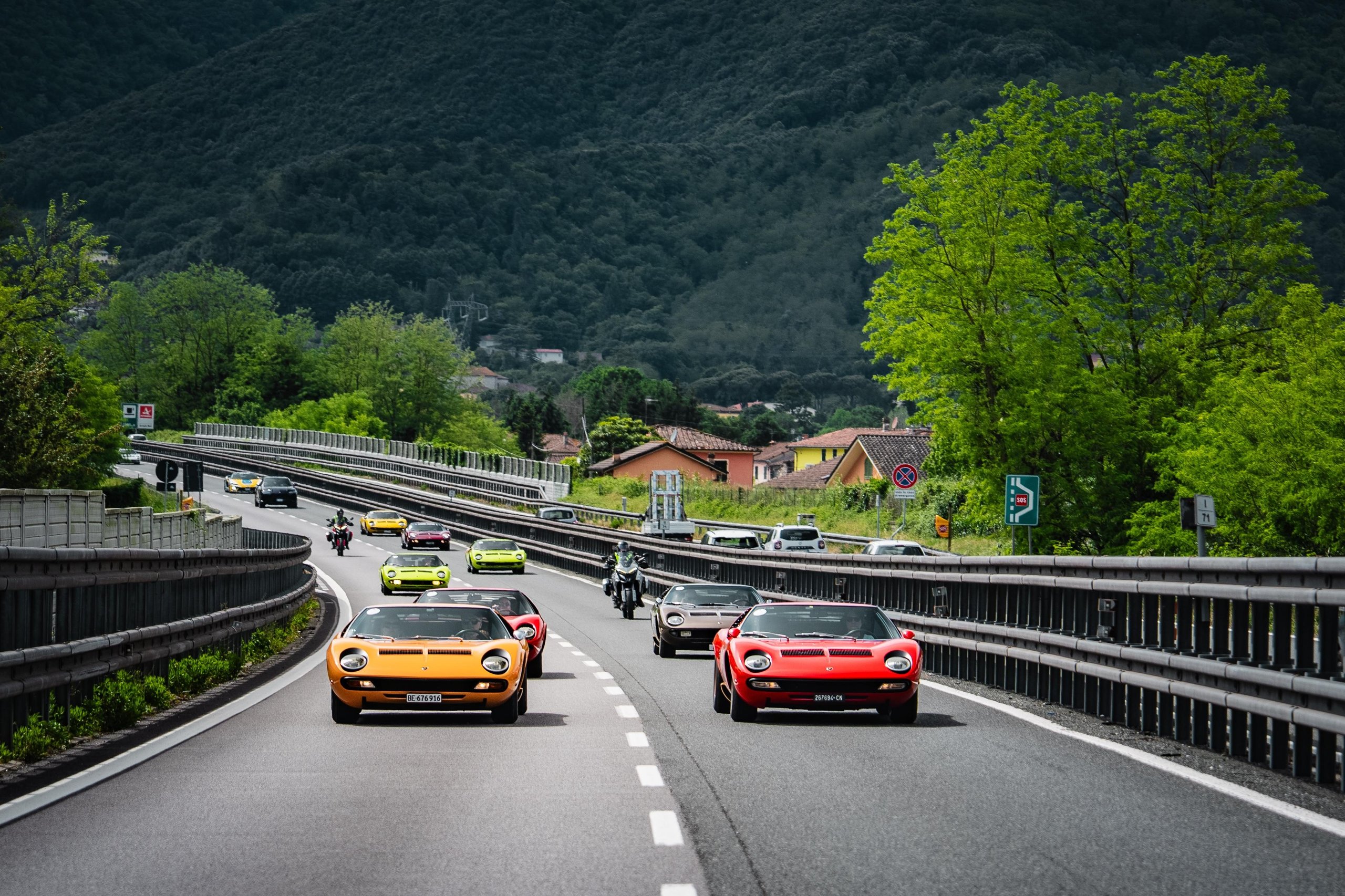
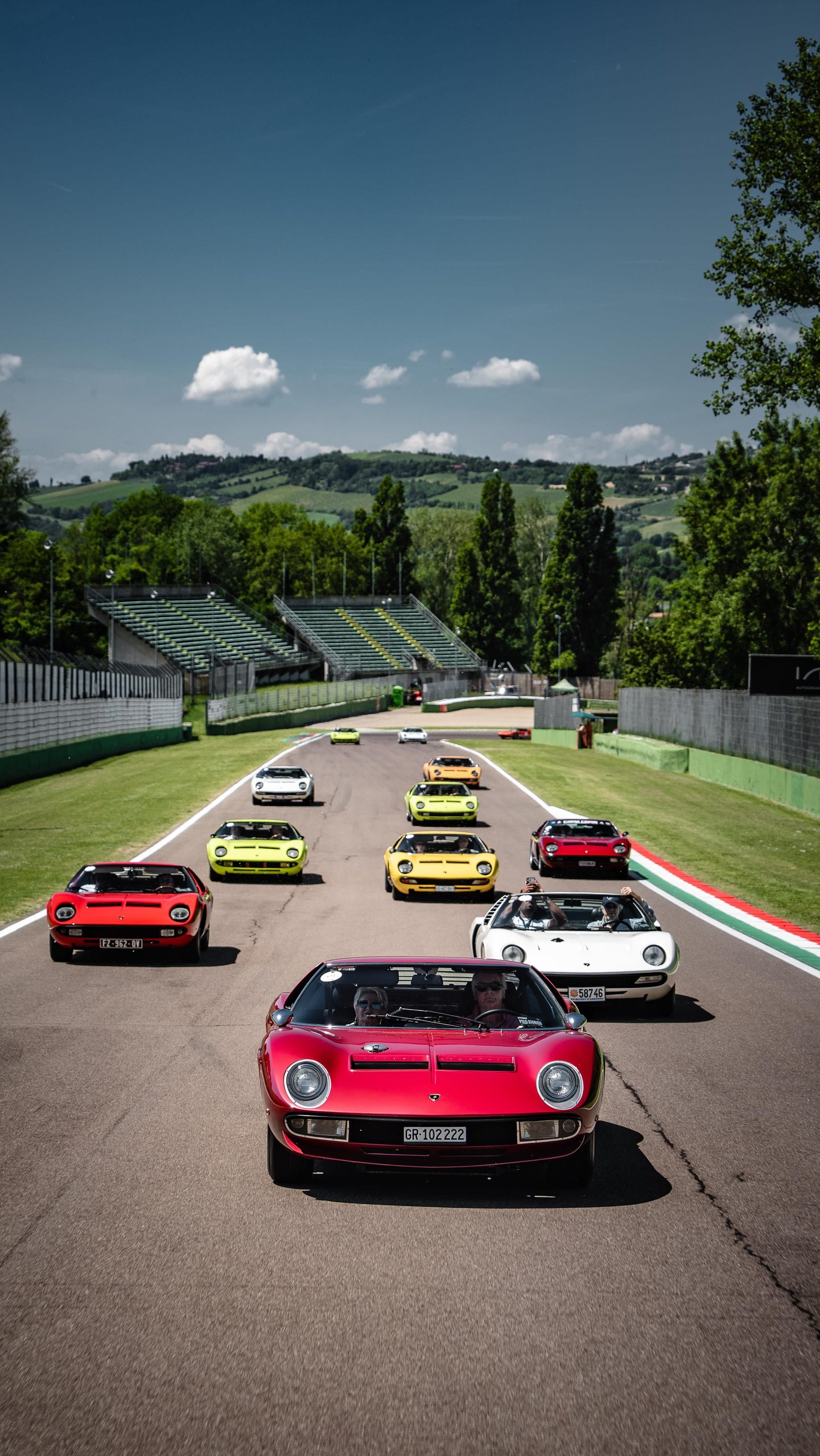
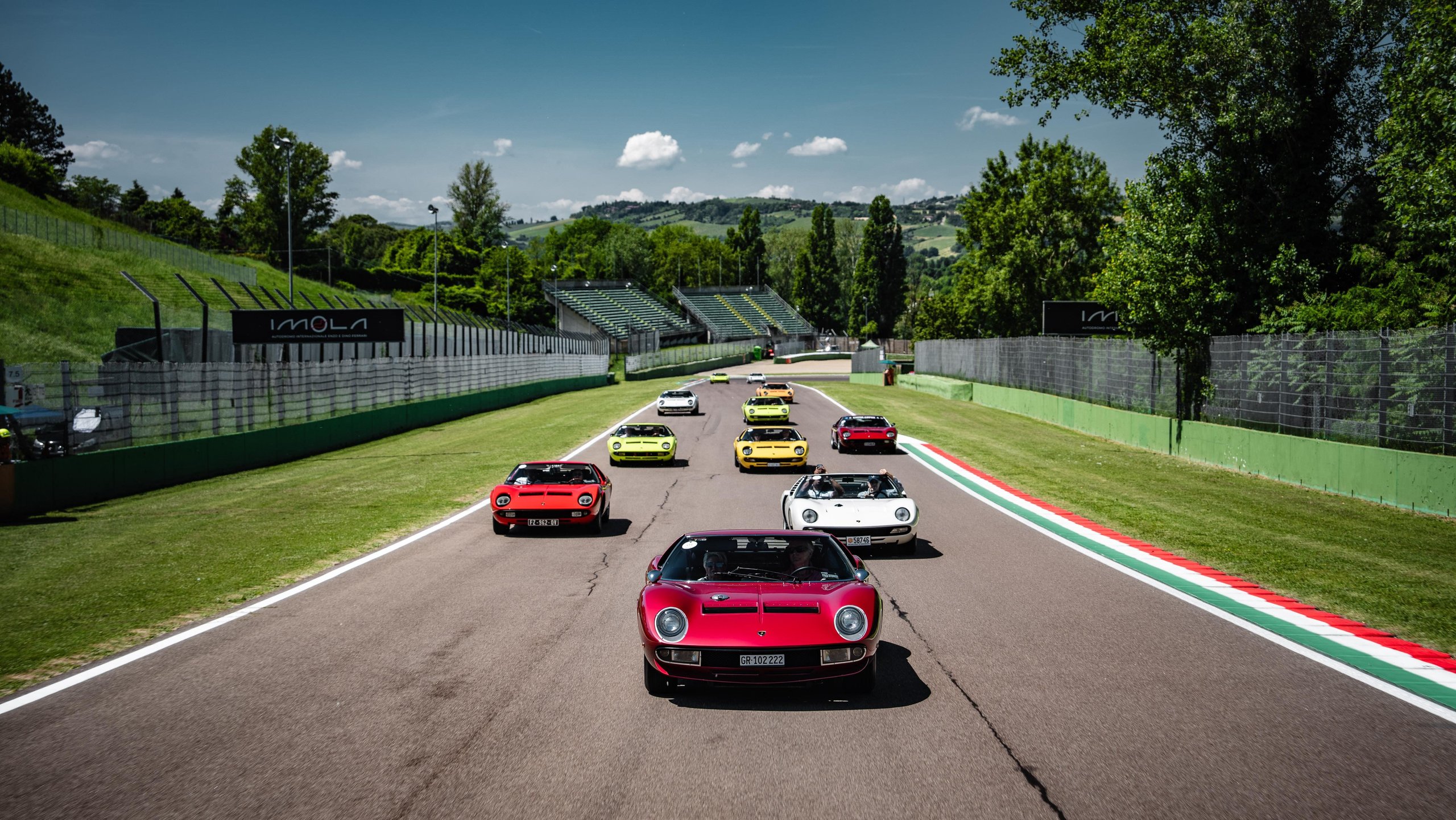
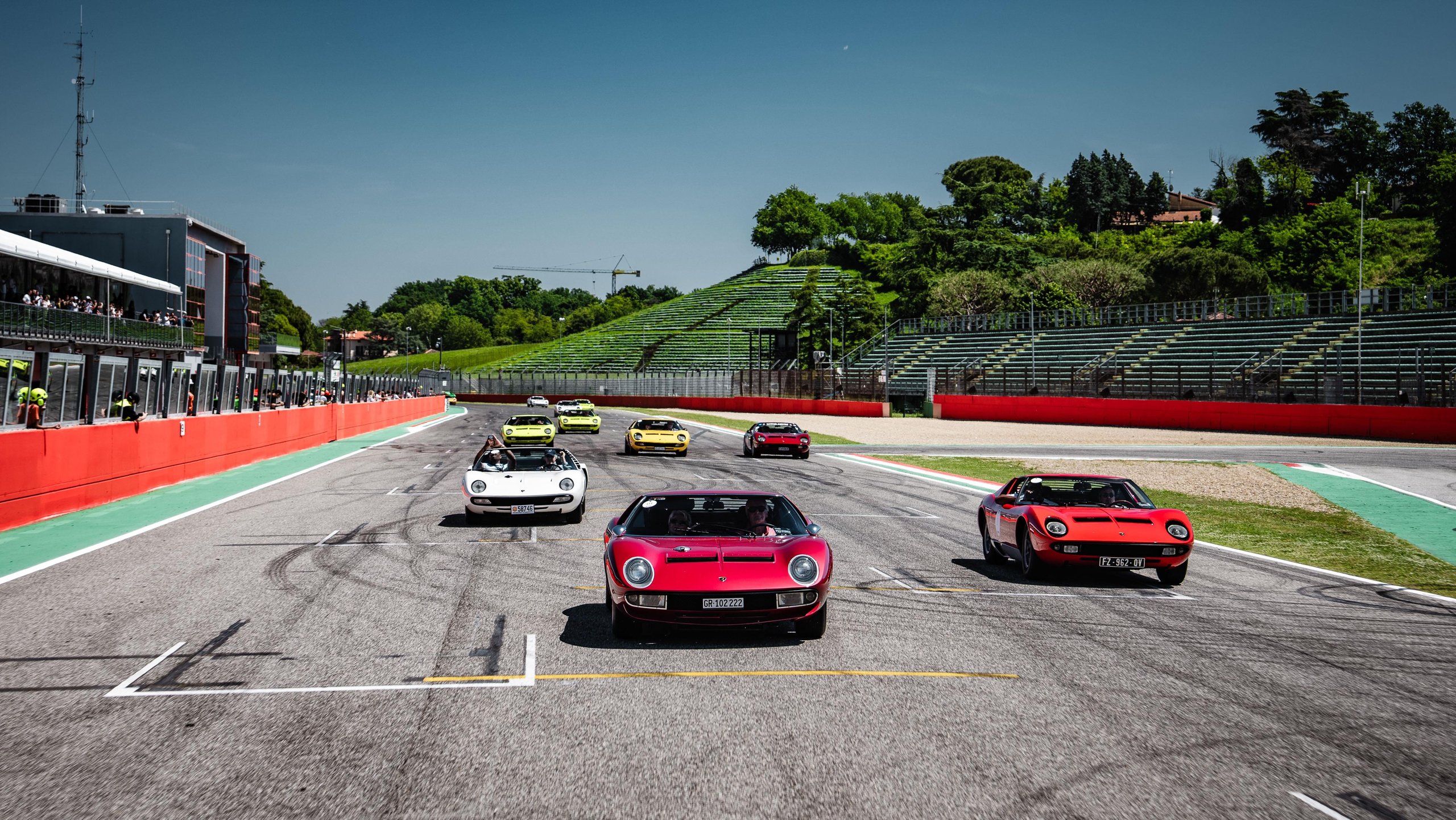
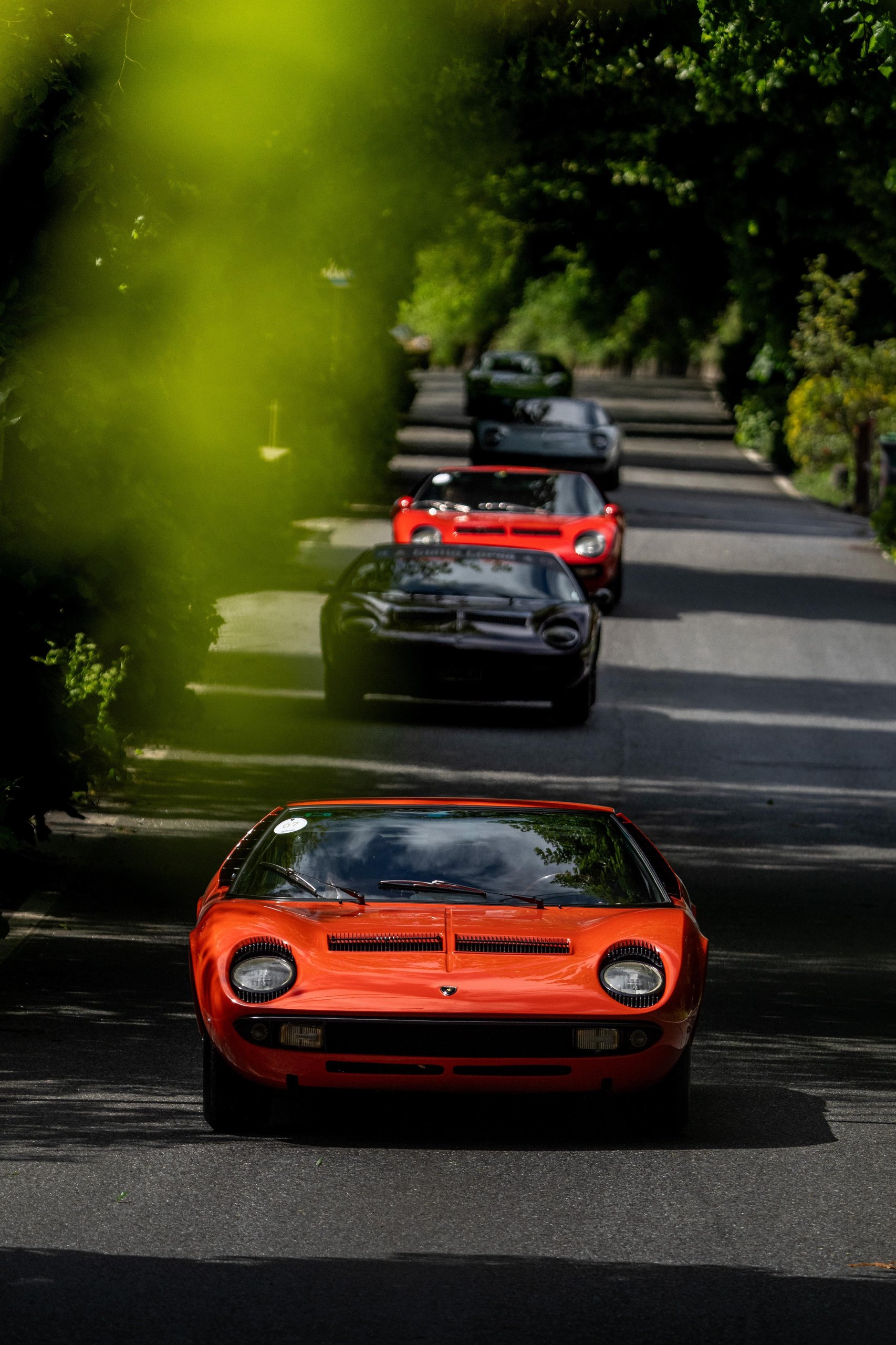
From May 6 to 10, twenty Miura crews from Europe, America, and Asia drove over 500 kilometers across Piedmont, Liguria, Tuscany, and Emilia-Romagna in the 2026 Polo Storico Giro, Lamborghini’s annual heritage driving tour. The occasion was the 60th anniversary of the car that, by most credible accounts, invented the supercar category. The finale unfolded at the Autodromo Internazionale Enzo e Dino Ferrari in Imola, where the convoy rolled into the second edition of the Lamborghini Arena and where the company chose to unveil its newest V12 few-off, the Fenomeno Roadster, at a gala dinner.
That pairing of past and future was no accident. Lamborghini structured the entire week around a single proposition: the Miura’s mid-engine V12 philosophy is not a museum piece but a living thread that runs through every generation of the company’s flagship cars, right up to the hybrid Revuelto and the heritage-inspired Fenomeno Roadster. Every stop on the route, every mountain pass, and the final parade at Imola reinforced that argument.
The Giro represented all production evolutions of the Miura: the original P400, the P400 S, and the SV. Among the rarer participants was one of only two Miura SV prototypes, a development car now certified by Polo Storico, Lamborghini’s in-house heritage division responsible for authenticating, restoring, and documenting the company’s historic vehicles. A Miura SVJ of particular historical weight also attended; Lamborghini says it will join the Museo Lamborghini collection as part of the “Miura: Born Incomparable” exhibition through the end of 2026.
Lamborghini Chairman and CEO Stephan Winkelmann framed the car’s significance in blunt terms: the Miura “gave birth to the very idea of the super car.” That is a large claim. It also happens to be well-supported.

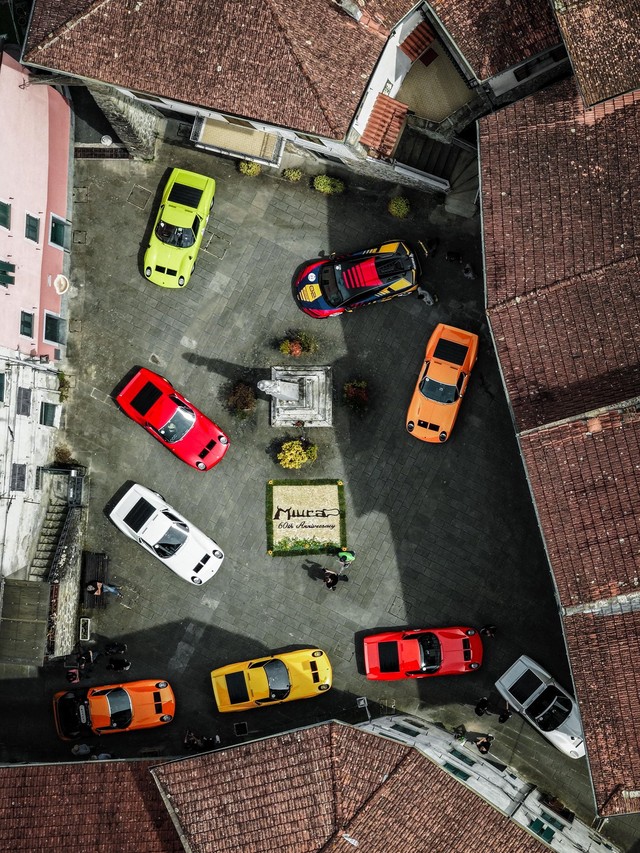
An aerial view captures a vibrant collection of Lamborghini Miuras gathered in a historic town square. Image: Automobili Lamborghini.
Why the Miura Earned the ‘First Supercar’ Title
Before the Miura, fast road cars placed their engines in front. Race cars put them in the middle. Gian Paolo Dallara and Paolo Stanzani, two young engineers at Lamborghini, decided to ignore that convention. Working under the direction of Ferruccio Lamborghini himself, they developed a transverse, mid-mounted V12 for a road car, a layout that gave the Miura a low center of gravity, compact proportions, and weight distribution no front-engine GT could match. The styling came from a 25-year-old Marcello Gandini at Carrozzeria Bertone, and the complete car debuted at the 1966 Geneva Motor Show.
The V12 displaced 3.9 liters and produced 370 hp, a figure that sounds modest today but was extraordinary for a production car in 1966. At 105.5 centimeters tall, the Miura sat lower than nearly anything else on the road. Top speed reached approximately 280 to 285 km/h depending on the source and variant. The 0-100 km/h sprint took 6.7 seconds, roughly what a modern hot hatchback manages, but in the mid-1960s that acceleration belonged to purpose-built racing machinery.
Bob Wallace, Lamborghini’s legendary New Zealand-born test driver, developed and refined the Miura’s handling on road and track. His role extended well beyond simple validation; he pushed each variant harder than any customer would, and his feedback shaped the progressive improvements from P400 through SV. Total production reached approximately 763 units across all variants, though that number remains a point of contention among historians. What nobody disputes is the impact: the Miura proved a mid-engine V12 could be beautiful, livable, and devastatingly fast on public roads. Every supercar since, from the Countach to the Revuelto, descends from that proof of concept.

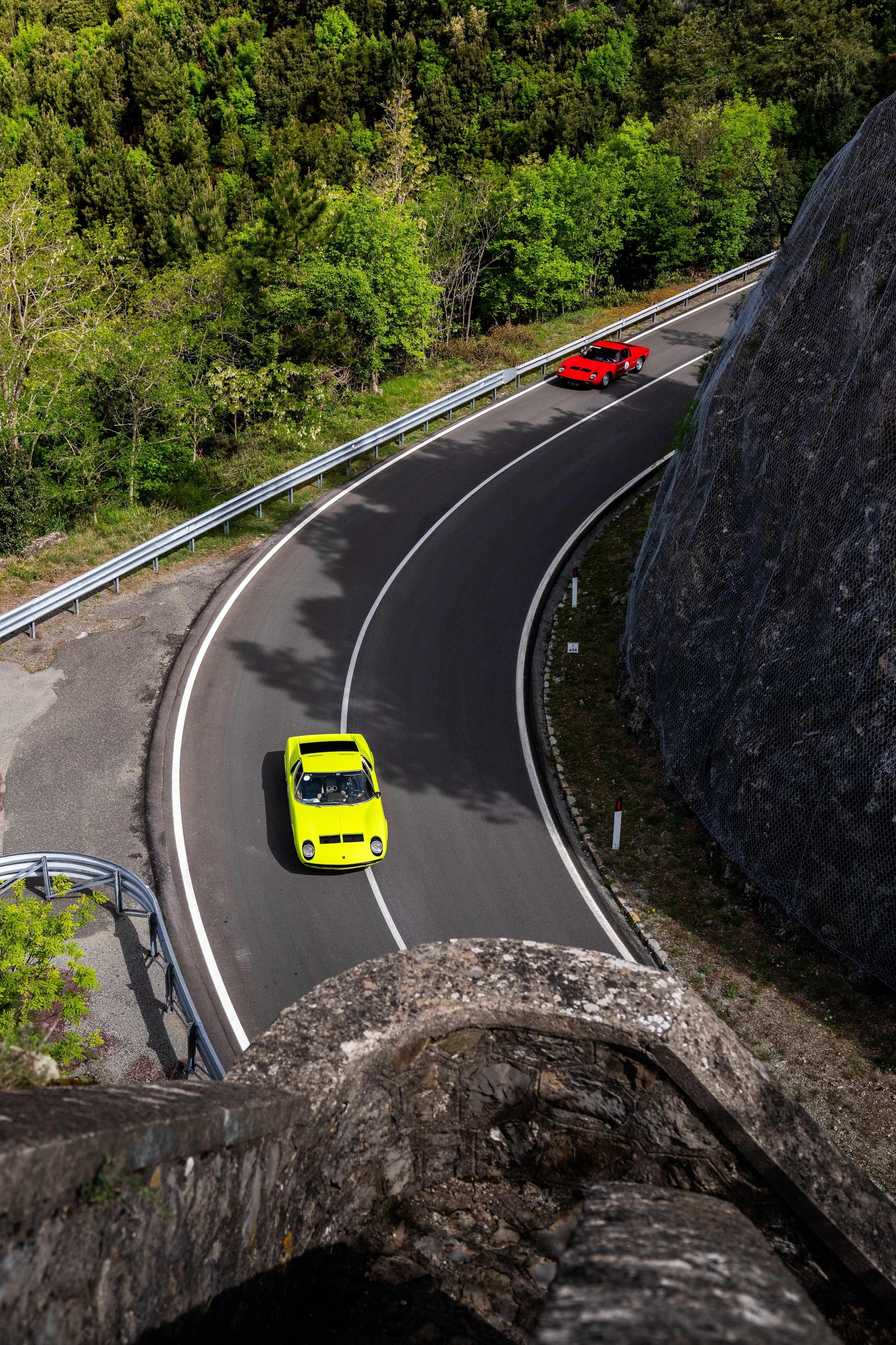
Two iconic Lamborghini Miuras navigate a scenic mountain road with a breathtaking view of Florence in the background. Image: Automobili Lamborghini.
The Route: Portofino, Florence, and Lamborghini’s Own Testing Roads
The Giro started in Cerreto Langhe, a village in the UNESCO-listed Langhe wine region. From there, the route descended toward the Ligurian coast through the hills of Gavi, reaching Rapallo by evening. Participants transferred by sea to Portofino for a Michelin-starred dinner, the kind of detail that distinguishes a factory heritage event from a weekend rally organized by a local car club.
Day three covered roughly 220 kilometers between sea and hills. In Brugnato, the town created traditional infiorate (floral carpets) in its main squares to greet the Miuras, a gesture that speaks to how these cars register with communities that have no particular connection to the automotive world. Lunch at Robot City Carrara placed centuries-old marble quarrying alongside modern robotics, and the convoy reached Florence by afternoon, where dinner at Palazzo Borghese provided the kind of Baroque backdrop that makes a lime-green P400 S look even more improbable.
The final driving day crossed the Futa and Raticosa passes in the Apennines, roads that carry real weight in Lamborghini’s engineering history because they remain active testing routes for current vehicle development. Driving a 60-year-old Miura SV up the same switchbacks that Lamborghini uses to calibrate the Revuelto’s suspension is the sort of experience no amount of concours polish can replicate. It requires the car to work, not merely to exist, and that distinction sits at the heart of what the Giro is designed to prove about the Miura’s enduring relevance.

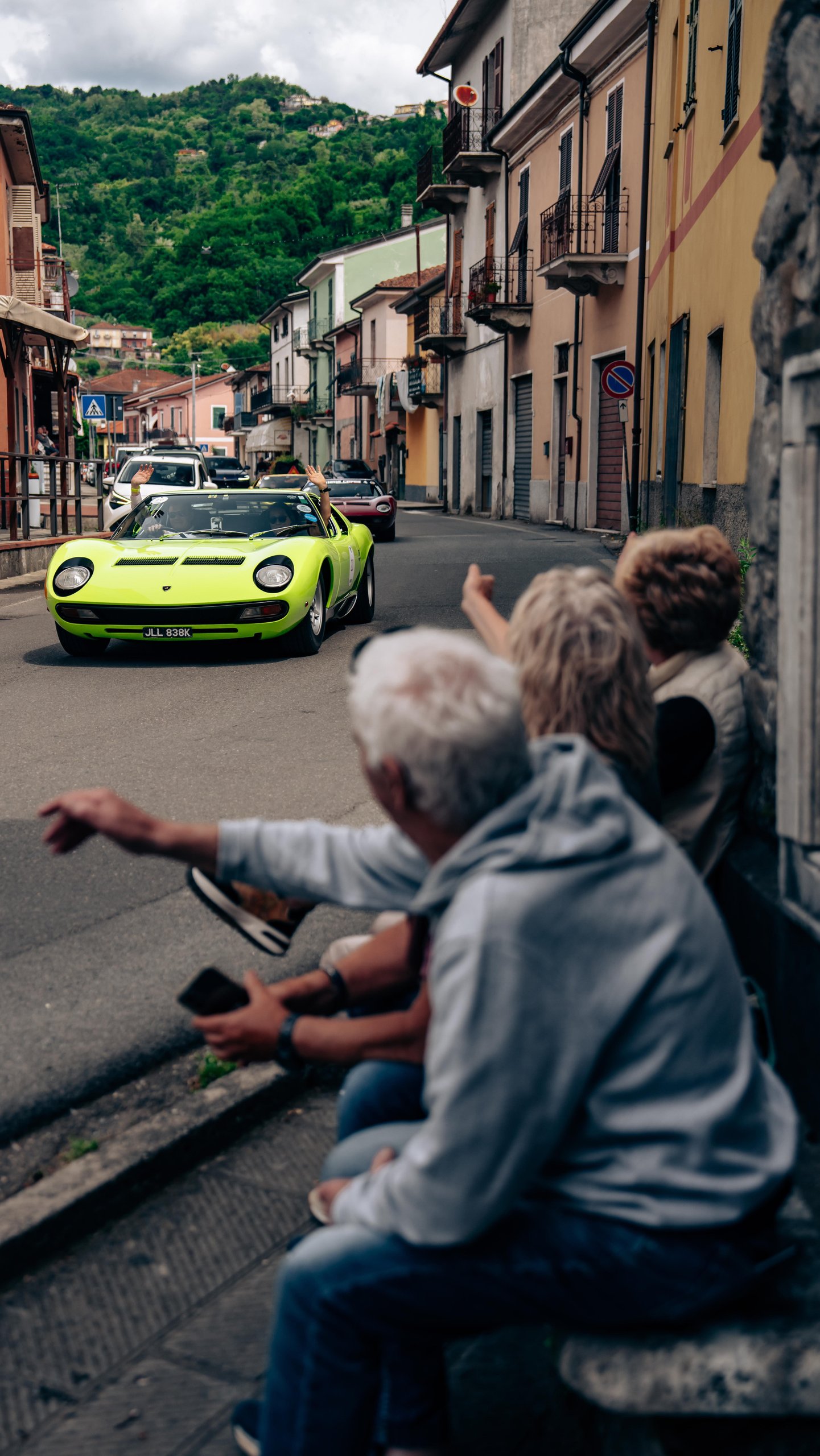
A vibrant lime green Lamborghini Miura is showcased in a lively town square during a special event. Image: Automobili Lamborghini.
Polo Storico’s Real Job: Keeping Million-Dollar Cars on the Road
Giuliano Cassataro, Lamborghini’s Head of After Sales, described Polo Storico’s mission as one that “begins with documentation and extends all the way to the road.” That distinction matters. Many heritage programs authenticate and restore; fewer actively organize events that put priceless cars through 500-kilometer road tours with factory logistical support.
A significant number of the twenty participating Miuras already carried Polo Storico certification, which involves cross-referencing each car against the factory’s original build records, verifying authenticity of components, and issuing formal documentation. Several owners who arrived without certification initiated the process during the event itself. For buyers considering a Miura purchase, Polo Storico certification functions as the closest thing to a factory guarantee of authenticity, and it carries meaningful weight at auction. One report notes that Miuras now routinely command seven-figure prices, with exceptional SVs reaching US$4.67 million at recent sales.
Ferrari Classiche offers a comparable authentication service, but Lamborghini’s approach through Polo Storico leans more heavily on active use. The Giro format, where certified cars are driven hard through mountain passes rather than displayed on a lawn, reinforces the idea that preservation means function, not just appearance. For owners who treat their Miuras as static investments, this distinction is academic. For those who bought them to drive, it is the entire point.

A breathtaking panoramic view of classic Lamborghini Miuras on a terrace, overlooking a stunning green valley. Image: Automobili Lamborghini.
From Miura Roadster to Fenomeno Roadster: Heritage as Product Strategy
The Giro’s climax came on the evening of May 9, when Lamborghini unveiled the Fenomeno Roadster at a gala dinner for the Miura collectors. The new open-top V12 few-off draws its design and color scheme directly from the 1968 Miura Roadster, a one-off show car that remains one of the most celebrated Lamborghini prototypes ever built. Choosing to reveal it specifically to a room full of Miura owners was deliberate: these are the collectors most likely to appreciate, and purchase, a car that threads the Miura’s aesthetic DNA through a modern V12 architecture.
One report describes the Fenomeno Roadster as limited to 15 units, built around the Revuelto’s V12 hybrid powertrain combining a 6.5-liter naturally aspirated V12 with three electric motors and an eight-speed dual-clutch gearbox. The chassis reportedly uses a carbon-fiber “monofuselage” structure, with aerodynamics re-engineered for open-top stability. Lamborghini has not confirmed full specifications or pricing through the Giro’s official materials, so precise figures remain subject to formal announcement.
The reveal confirms a pattern. The Countach LPI 800-4 revisited the Countach. The Fenomeno Roadster now revisits the Miura Roadster. As Jalopnik reported, Lamborghini’s design leadership has stated the company will never produce a direct modern Miura, calling it too sacred to reinterpret wholesale. It sidesteps that constraint: it references the Miura through color and proportion without attempting to replace it. For buyers on the waiting list, this is the closest Lamborghini will come to a new Miura, and the company appears comfortable with that boundary.
Past and Future V12s on the Same Track at Imola
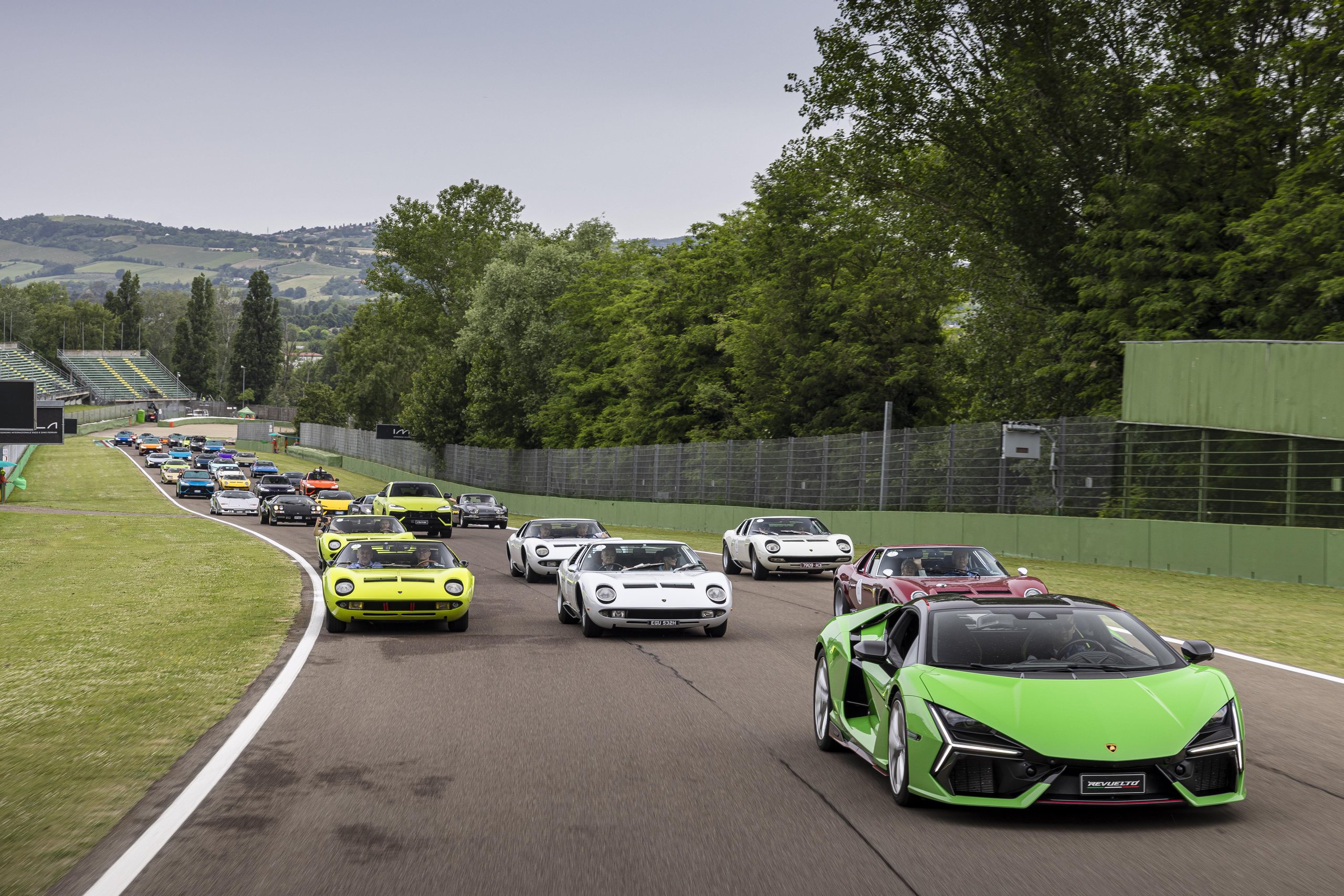
Event images show a green Lamborghini Revuelto leading the Miura convoy onto the Imola circuit during the Lamborghini Arena parade. Lamborghini’s current V12 flagship, a hybrid producing over 1,000 combined horsepower through its naturally aspirated engine and three electric motors, pacing a procession of 370 hp classics from the 1960s and early 1970s. The Revuelto’s angular, Y-shaped daytime running lights and sharp carbon-fiber bodywork make the Miura’s flowing Gandini lines look like they belong to a different species, which, in engineering terms, they do.
The strategic message, though, is unmistakable. Lamborghini wants its collector base to see the Revuelto as a direct descendant of the Miura’s mid-engine V12 philosophy, not as a departure from it. The hybrid system adds electric torque at low rpm and enables all-wheel drive through front-mounted motors, but the naturally aspirated 6.5-liter V12 at its core traces its conceptual lineage to the engine Dallara and Stanzani first mounted transversely in Sant’Agata Bolognese six decades ago.
For prospective Lamborghini buyers weighing the Revuelto against competitors like the Ferrari SF90 or the forthcoming McLaren W1, the Imola parade offered a subtle argument: only Lamborghini can park its current hybrid flagship next to the car that started the supercar category and claim a continuous V12 thread between them. Ferrari’s V12 heritage is equally deep, but Maranello did not invent the mid-engine supercar format. That remains Lamborghini’s founding contribution, and the Polo Storico Giro exists, in part, to make sure nobody forgets it.

The new Revuelto leads a magnificent parade of classic Miuras, bridging generations of Lamborghini excellence. Image: Automobili Lamborghini.
Gallery