The Urus SE Crowns a Lineage Most Rivals Cannot Claim
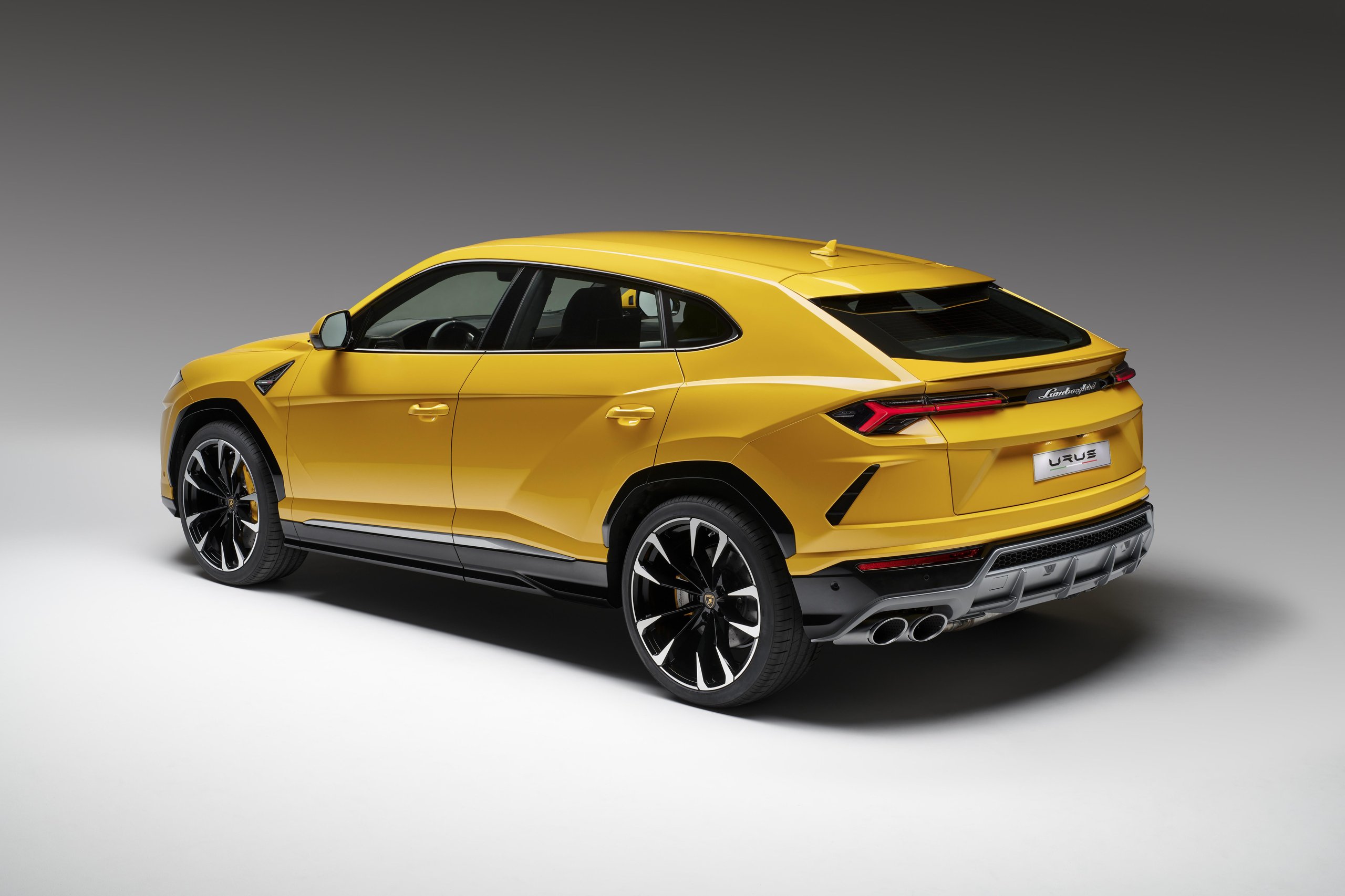
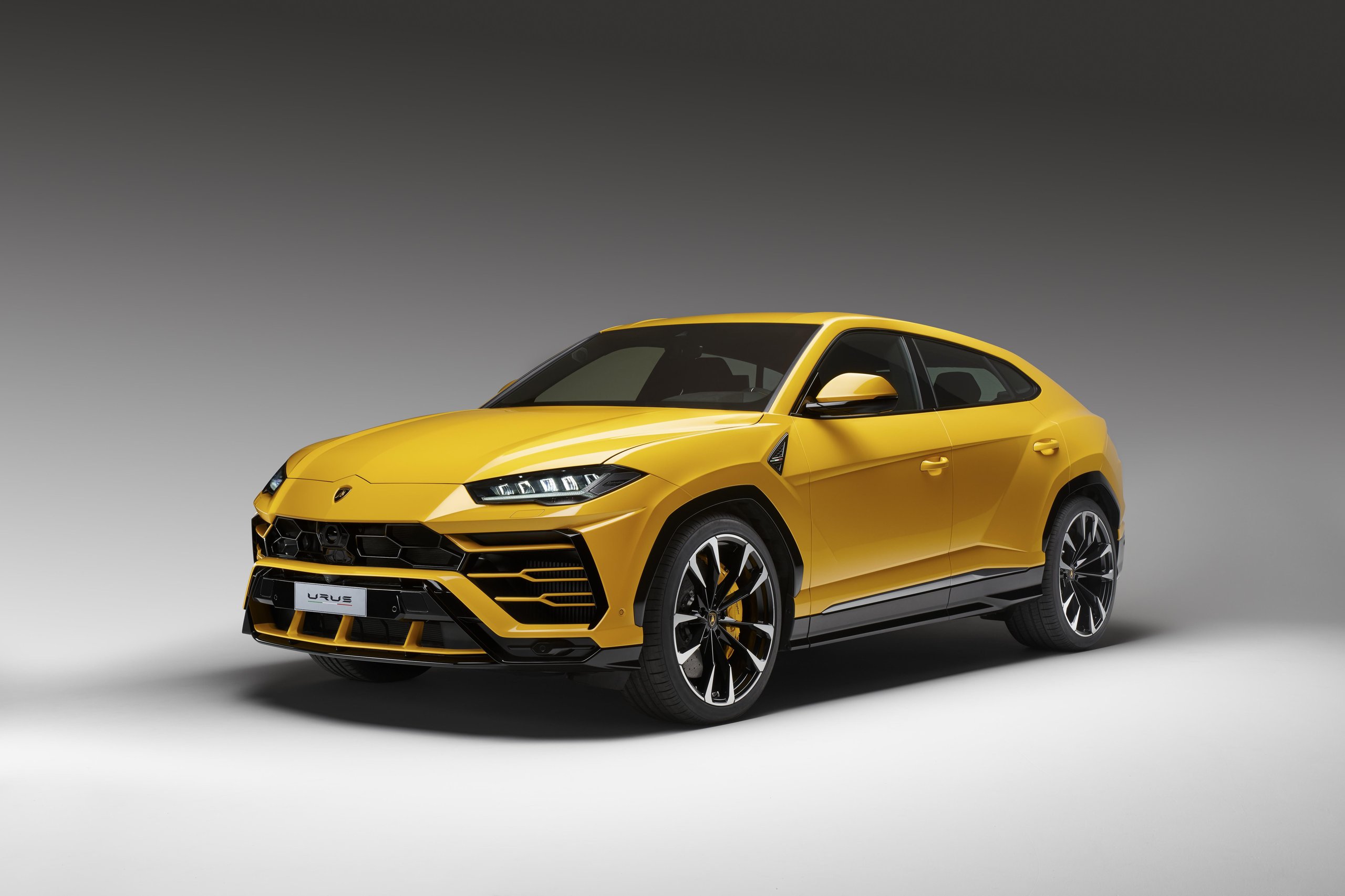
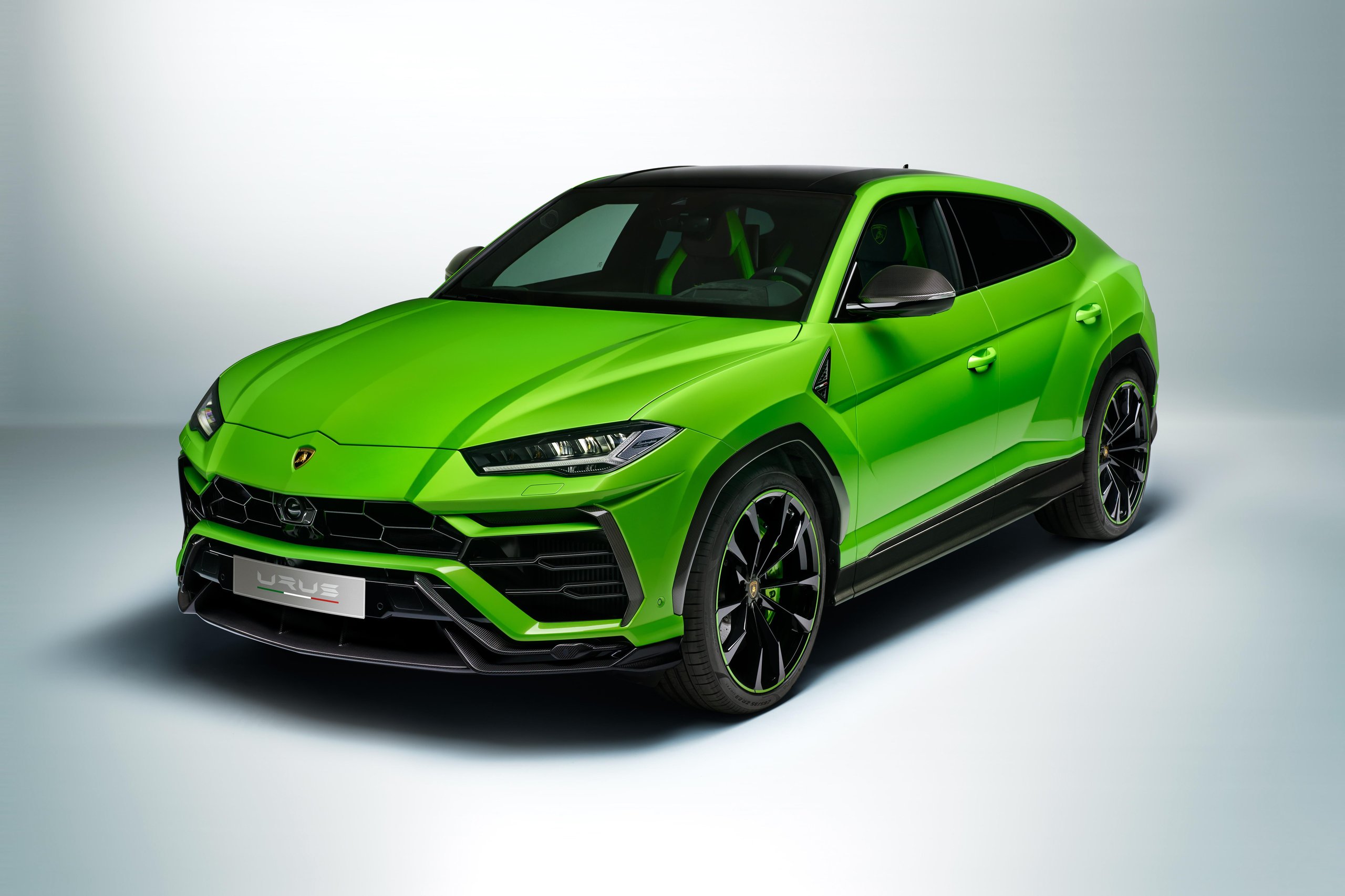
Lamborghini unveiled the Urus SE in 2024 and now frames it as the culmination of nearly fifty years of building SUVs no focus group would have predicted. Ferrari’s Purosangue arrived in 2022 as the brand’s first high-riding four-door. Porsche’s Cayenne earned its stripes over two decades. Lamborghini traces its Super SUV story back to a military prototype shown at the 1977 Geneva Motor Show, and the Urus SE sits at the apex of that lineage as the most powerful Urus ever produced: a combined output of its twin-turbo V8 and 141 kW electric motor reaching 800 CV and 950 Nm of torque, enough for a claimed 3.4-second sprint to 100 km/h and a top speed of 312 km/h.
Those numbers make the SE the second model in Lamborghini’s Direzione Cor Tauri electrification roadmap, following the Revuelto. Rather than simply listing specs, though, Lamborghini is making a deliberate case with this media package that it invented the segment everyone else now wants a piece of. Whether that argument holds up depends on how seriously you take a 2.7-ton, V12-powered desert truck from 1986 as the spiritual ancestor of a plug-in hybrid luxury SUV. The answer, for anyone who appreciates audacity in automotive engineering, is: quite seriously.
The Cheetah, the LM001, and the Engineering Dead Ends That Led Somewhere
Lamborghini’s SUV story begins with the Cheetah, a prototype conceived for military applications and built in collaboration with the American company MTI. It featured a rear-mounted Chrysler V8, a tubular steel chassis, and an open fiberglass body. The project failed to win its intended government contract, but it planted an idea in Sant’Agata Bolognese that refused to die.
The Cheetah evolved into the LM001, which swapped the Chrysler engine for Lamborghini’s own Countach-derived V12 while keeping the rear-engine layout. Desert testing exposed a fundamental problem: weight distribution was wrong, and the vehicle handled poorly in the sand it was supposed to conquer. Engineer Giulio Alfieri’s solution was elegant and radical. He moved the entire powertrain to the front, creating the LMA prototype (Lamborghini Militaria Anteriore) with a five-speed ZF manual gearbox and the option to disengage front-wheel drive. Along the way, Lamborghini also experimented with the LM003 (VM turbodiesel) and the LM004 (a 7.0-liter marine-derived V12), neither of which reached production.
This willingness to iterate through failure is the thread that connects the Cheetah to the Urus SE. Most supercar manufacturers would have abandoned the project after losing a military bid. Lamborghini kept rethinking the architecture until it worked, establishing a pattern of stubborn reinvention that would repeat itself across the next five decades.

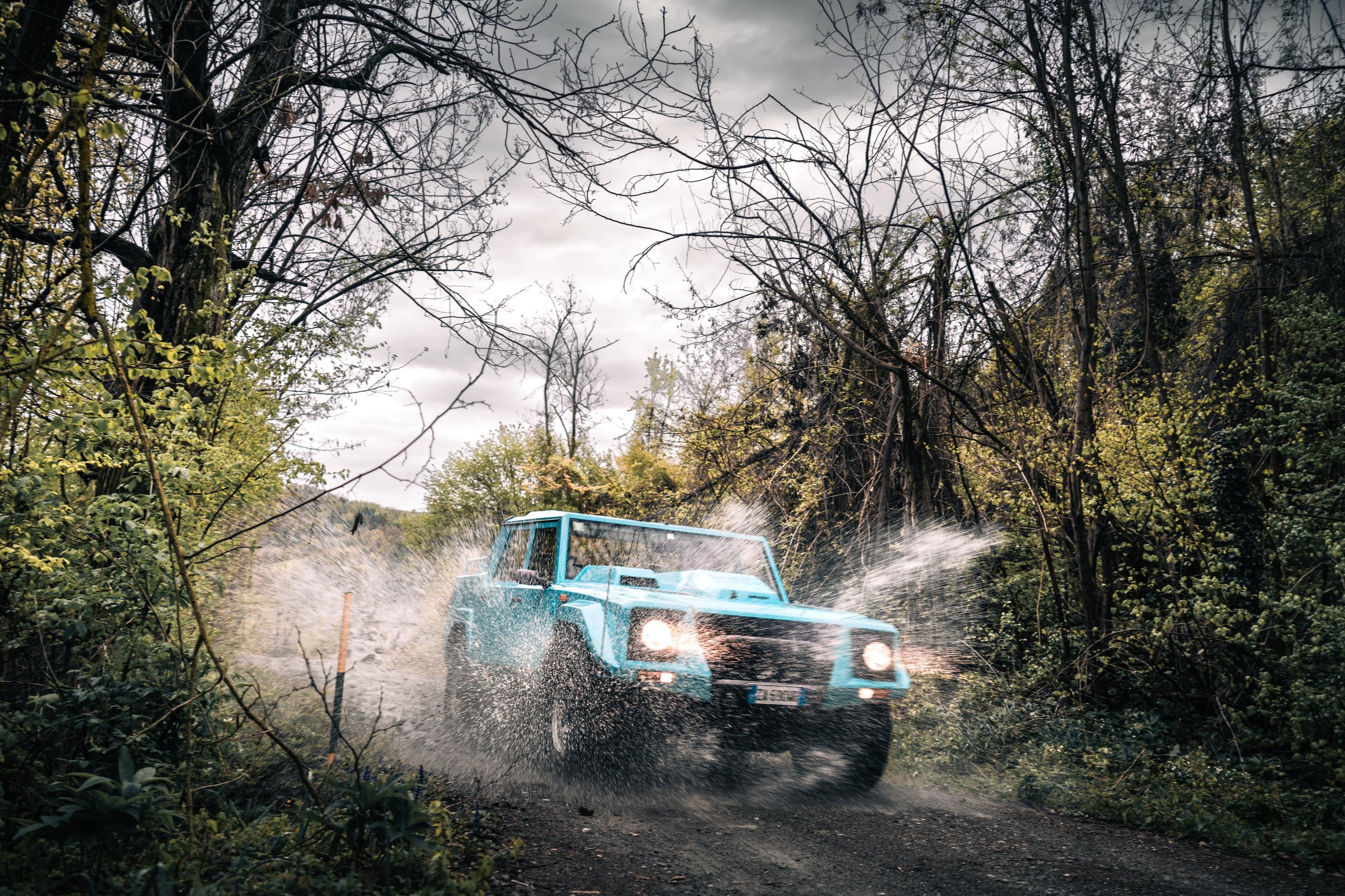
The iconic Lamborghini LM002 in a vibrant teal hue navigates a scenic winding road with dynamic motion. Image: Automobili Lamborghini.
The LM002: A Countach V12 in a Desert Truck
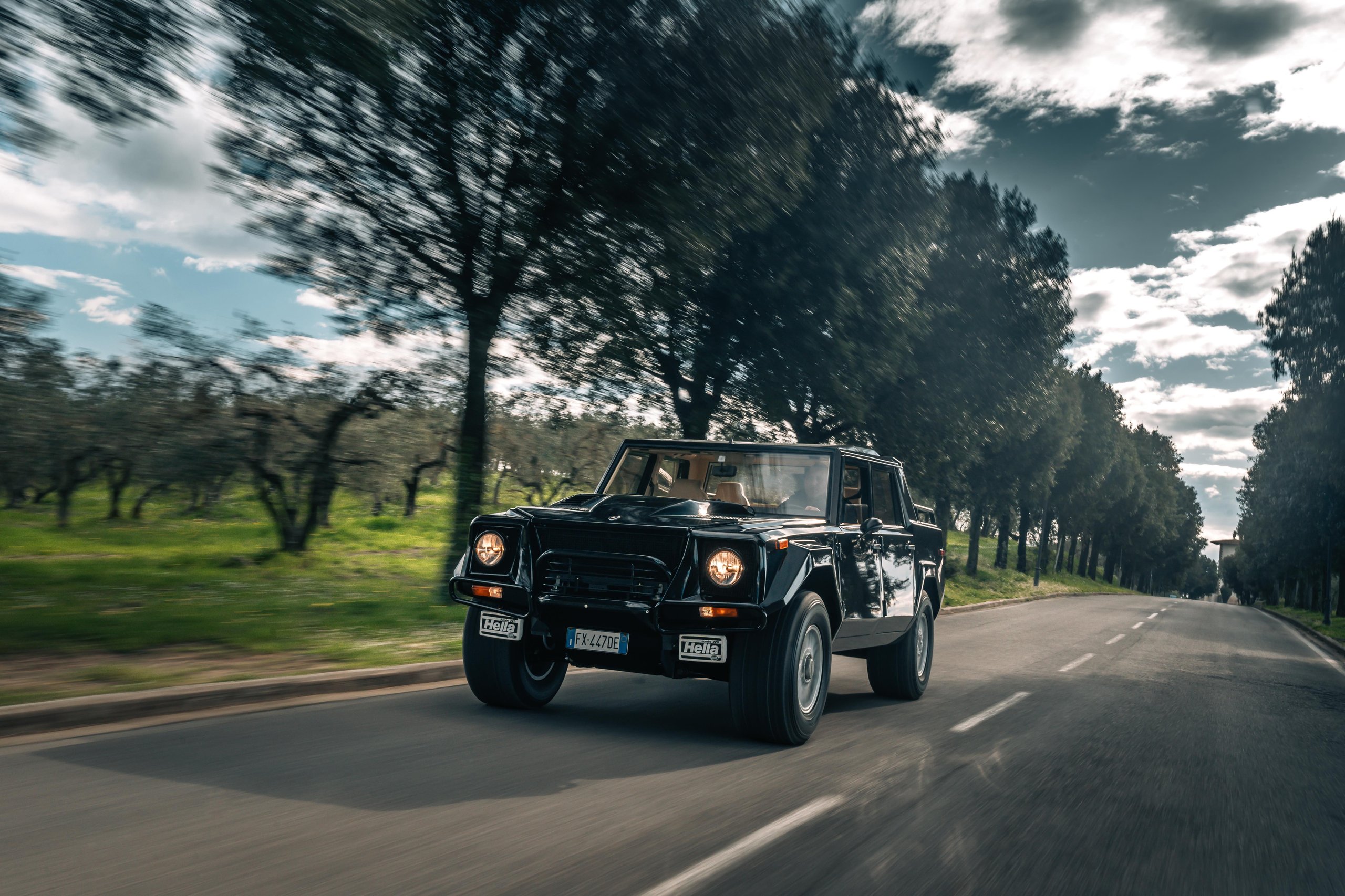
The LM002 debuted at the 1986 Brussels Motor Show, and it remains one of the most improbable production vehicles any supercar company has built. Powered by the 5.2-liter V12 from the Countach Quattrovalvole, producing 450 CV, the LM002 could push its 2.7-ton mass beyond 200 km/h. Pirelli developed the Scorpion BK tires specifically for the vehicle, engineered to handle both highway speeds and deep sand.
Inside, the cabin offered leather upholstery, wood trim, air conditioning, and appointments that belonged in a luxury sedan rather than a military-inspired off-roader. Production ran until 1992, with 301 units built, including the LM/American version introduced in 1989 for the U.S. market. The “Rambo Lambo” nickname stuck for a reason: this was a vehicle that combined brute force with handcrafted Italian luxury in a way nobody else attempted.
Collectors now treat the LM002 as a blue-chip investment, and clean examples rarely surface without commanding serious premiums. Its cultural footprint extends well beyond those 301 units. The LM002 proved that Lamborghini could build something absurd, luxurious, and genuinely capable all at once. That template, the fusion of supercar powertrain with go-anywhere body, is precisely what the modern Urus follows more closely than most people realize.

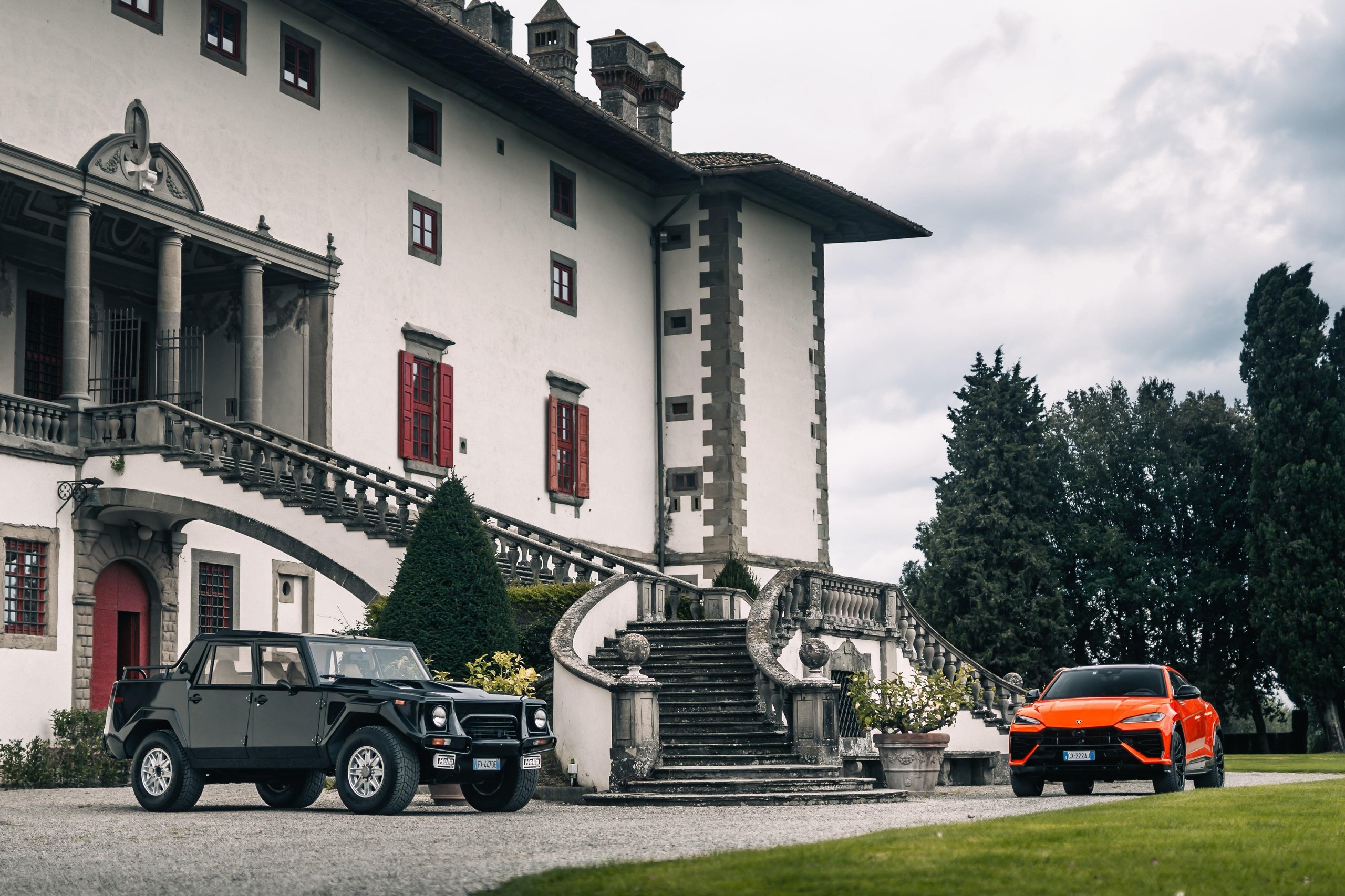
The imposing Lamborghini LM002 in black stands proudly before a magnificent historic estate. Image: Automobili Lamborghini.
The Modern Urus: Twin-Turbo V8 and a Sales Phenomenon
Twenty-five years separated the end of LM002 production and the Urus’s 2017 debut. When it arrived, Lamborghini introduced its first twin-turbo V8: a 4.0-liter unit producing 650 CV and 850 Nm of torque. The original Urus reached 100 km/h in 3.6 seconds and topped out at 305 km/h, with a carbon-ceramic braking system featuring 440 mm front discs, the largest fitted to a production vehicle at the time of launch.
The Urus shares the Volkswagen Group MLB Evo platform with vehicles like the Bentley Bentayga and Porsche Cayenne, a fact that drew predictable criticism. Skeptics called it a rebadged Audi. Lamborghini’s execution told a different story. The Tamburo driving dynamics selector (with Strada, Sport, Corsa, Neve, Terra, and Sabbia modes), rear-wheel steering, and active anti-roll bars created a driving experience distinct enough to silence most of those complaints. The car became Lamborghini’s best-selling model almost immediately, doubling the company’s production footprint from 80,000 to 160,000 square meters at Sant’Agata Bolognese.
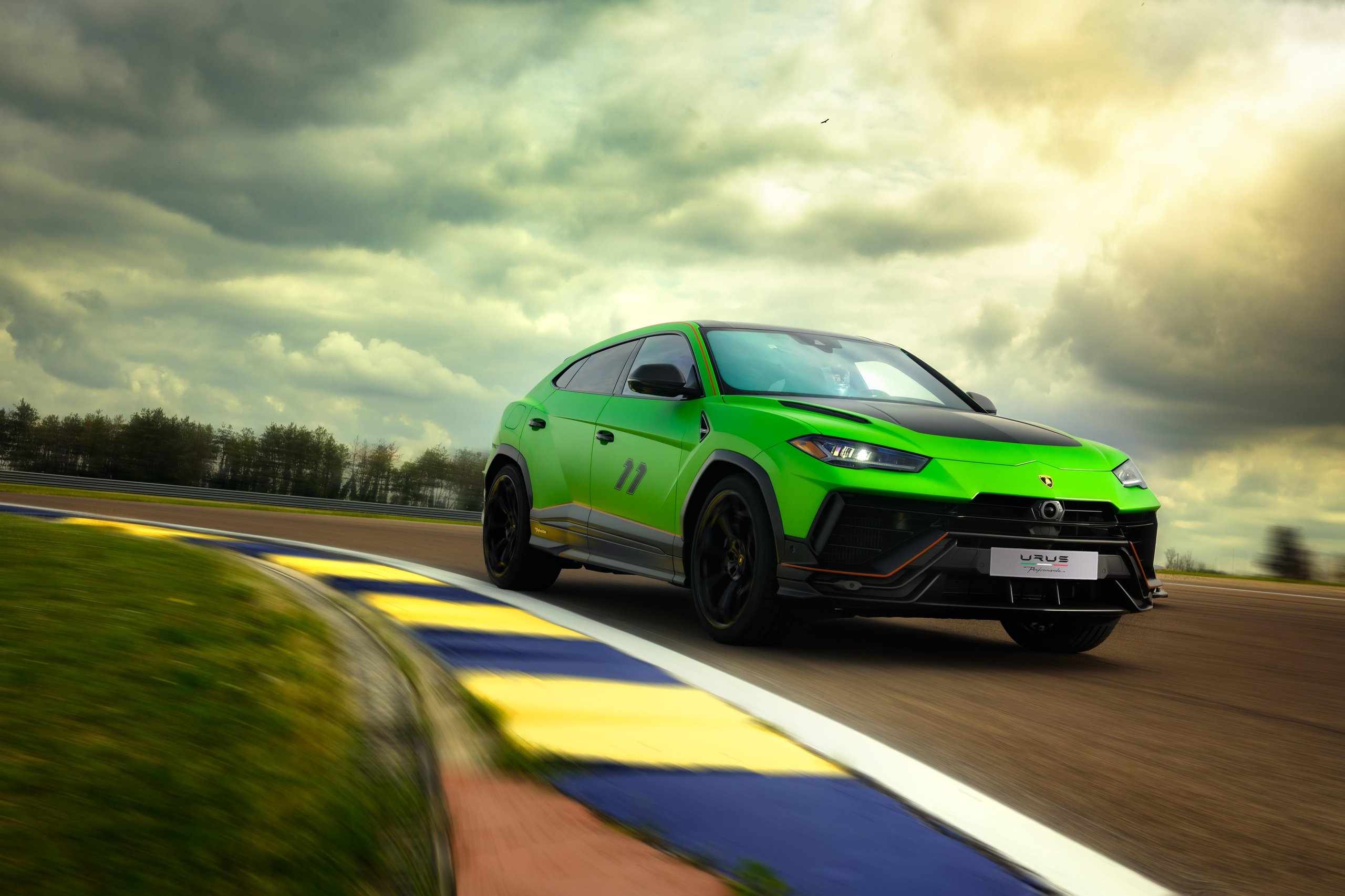
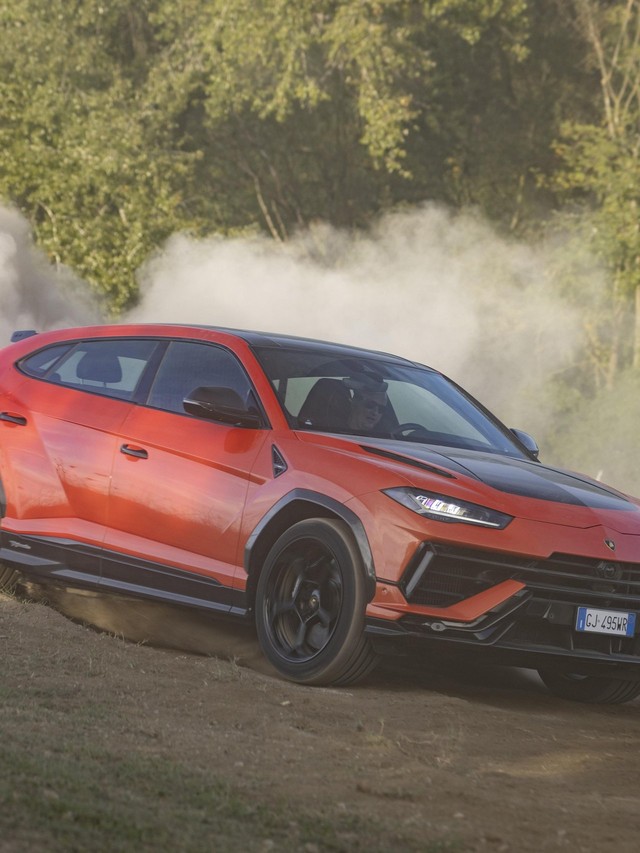
The Urus Performante, introduced alongside the Urus S in 2022, pushed the concept further still. Both share a 666 CV version of the twin-turbo V8, but the Performante swaps adaptive air suspension for dedicated steel springs, sheds weight through carbon fiber, and wears Pirelli P Zero Trofeo R tires. It set the production SUV record at the 2022 Pikes Peak International Hill Climb with a time of 10:32.064. The Urus S retains air suspension and leans toward comfort, positioned as the more versatile daily driver. Each variant refined the same core argument the LM002 had made decades earlier: a Lamborghini SUV should feel like nothing else on the road.

The green Urus leads the teal LM002 on a winding mountain road under a dramatic sky. Image: Automobili Lamborghini.
Electrification as a Performance Tool: What the Urus SE Actually Changes
The Urus SE’s hybrid system pairs the re-engineered twin-turbo V8 with a 141 kW electric motor integrated within the 8-speed automatic transmission. Lamborghini says the V8 alone produces 620 CV and 800 Nm, with the electric motor contributing an additional 192 CV and 483 Nm. A 25.9 kWh battery enables over 60 km of pure electric driving.
The more revealing engineering story, though, lies in the chassis. The SE introduces an electronic center torque splitter and an electronically controlled rear limited-slip differential, replacing the mechanical torque-tube setup of the previous Urus. In practical terms, the car can redistribute torque between axles and across the rear wheels with far greater speed and precision than any mechanical system allows. For a vehicle of this mass, that kind of torque vectoring capability transforms corner entry and mid-corner behavior. The electric motor also fills torque gaps during gear changes and provides instant low-speed response, addressing one of the few dynamic complaints owners voiced about the original Urus: slight turbo lag from standstill.
Aerodynamics received a complete overhaul. The floating bonnet draws design cues from the Revuelto, and a new rear diffuser increases downforce at high speeds. Redesigned cooling pathways serve both the powertrain and the braking system, a necessity given the additional thermal demands of a battery pack and electric motor.
For buyers weighing the Performante against the SE, the question comes down to character. Multiple Urus owners on enthusiast forums describe the Performante as the sharper, more visceral choice and the SE as the more technologically sophisticated one. Steel springs and Trofeo R tires deliver analog directness; the SE offers a broader capability envelope, including the ability to roll through your neighborhood on electric power alone. Lamborghini supports the SE with Pirelli P Zero tires featuring Elect technology, developed specifically for hybrid models to manage the higher instantaneous torque loads. In the context of Lamborghini’s fifty-year SUV arc, the SE represents the most complete answer yet to a question the Cheetah first posed: how much capability can you pack into a single vehicle before it stops making sense?

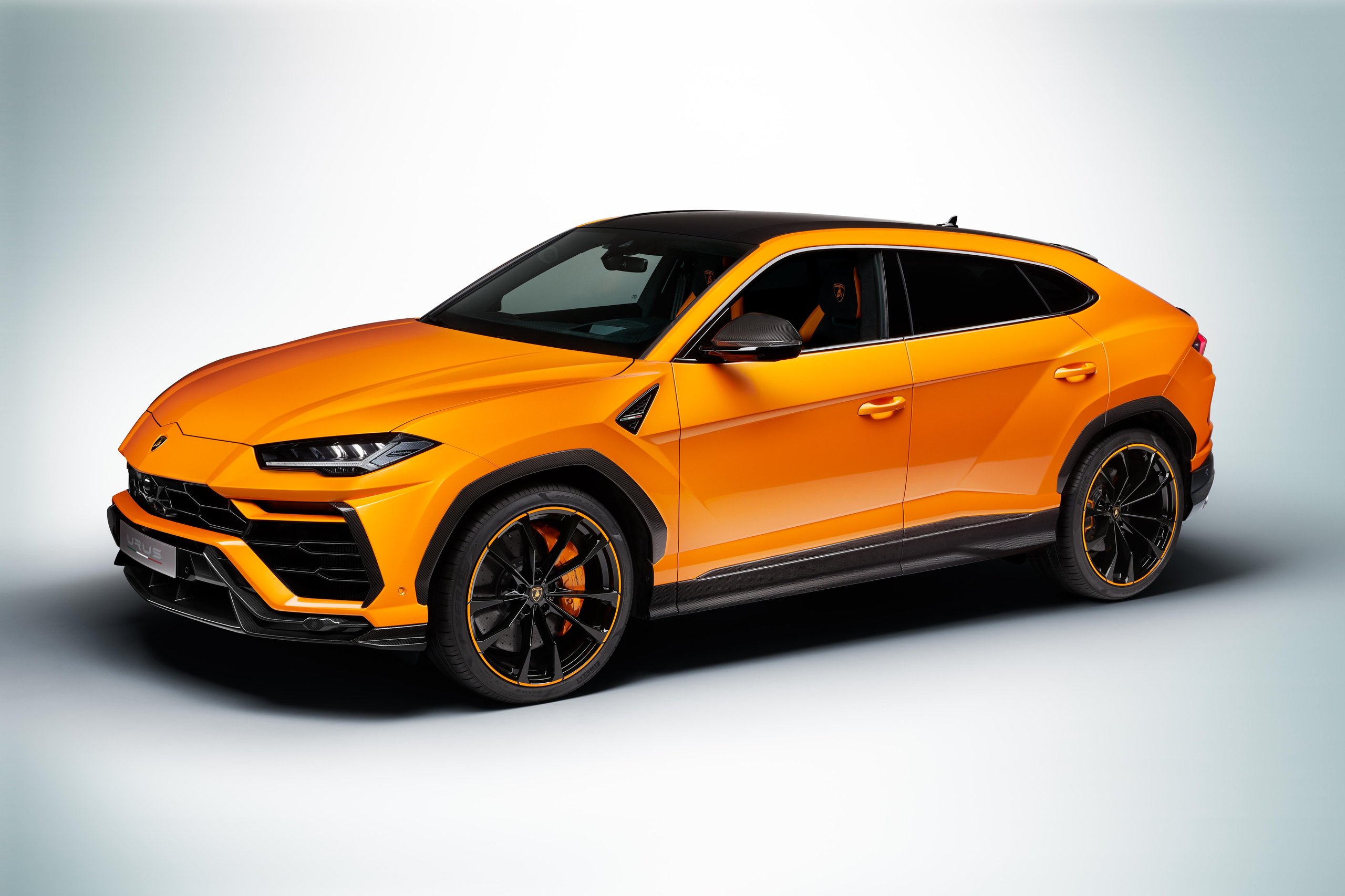
The Lamborghini Urus SE stands out with its unique graphic livery and powerful presence in a controlled studio environment. Image: Automobili Lamborghini.
Personalization, Special Editions, and the Competitive Picture
Lamborghini says the Urus SE offers over 100 body color options and 47 interior combinations through the Ad Personam program, a substantial expansion over the Urus S’s palette of around 60 exterior and interior shades. Special editions reinforce the exclusivity angle: the Art Basel Miami Beach 2024 edition added 230 hours of handcrafted detailing, and the recent Urus SE “Tettonero” Capsule, revealed during Milan Design Week 2026, is limited to 630 units with a contrasting glossy black roof treatment.
The competitive picture deserves honest examination. Ferrari’s Purosangue uses a naturally aspirated 6.5-liter V12 producing 725 CV, a fundamentally different philosophy that prioritizes engine character over hybrid flexibility. It costs significantly more and does not offer electric-only driving. Porsche’s Cayenne Turbo E-Hybrid occupies similar PHEV territory but approaches the segment from a grand-touring perspective rather than Lamborghini’s supercar-adjacent positioning. One source reports an MSRP of $252,007 for the 2026 Urus SE PHEV, which, if accurate, would place it well below the Purosangue and in direct competition with the top-tier Cayenne.
The practical takeaway for prospective buyers: the Urus SE is faster than the Performante in a straight line (3.4 seconds versus 3.3 to 100 km/h, though the SE reaches a higher top speed of 312 km/h versus 306), it can run errands silently on electric power, and its torque-vectoring chassis should make it more composed in corners despite the added battery weight. Lamborghini still does not publish the SE’s curb weight, an omission that speaks volumes about the engineering tradeoff every hybrid must make. What the company does confirm is that fifty years of building SUVs nobody asked for has produced, in the Urus SE, one that answers questions most competitors are still figuring out how to phrase.
Gallery