Rétromobile 2022: A Heritage Showcase Loaded with Strategic Intent
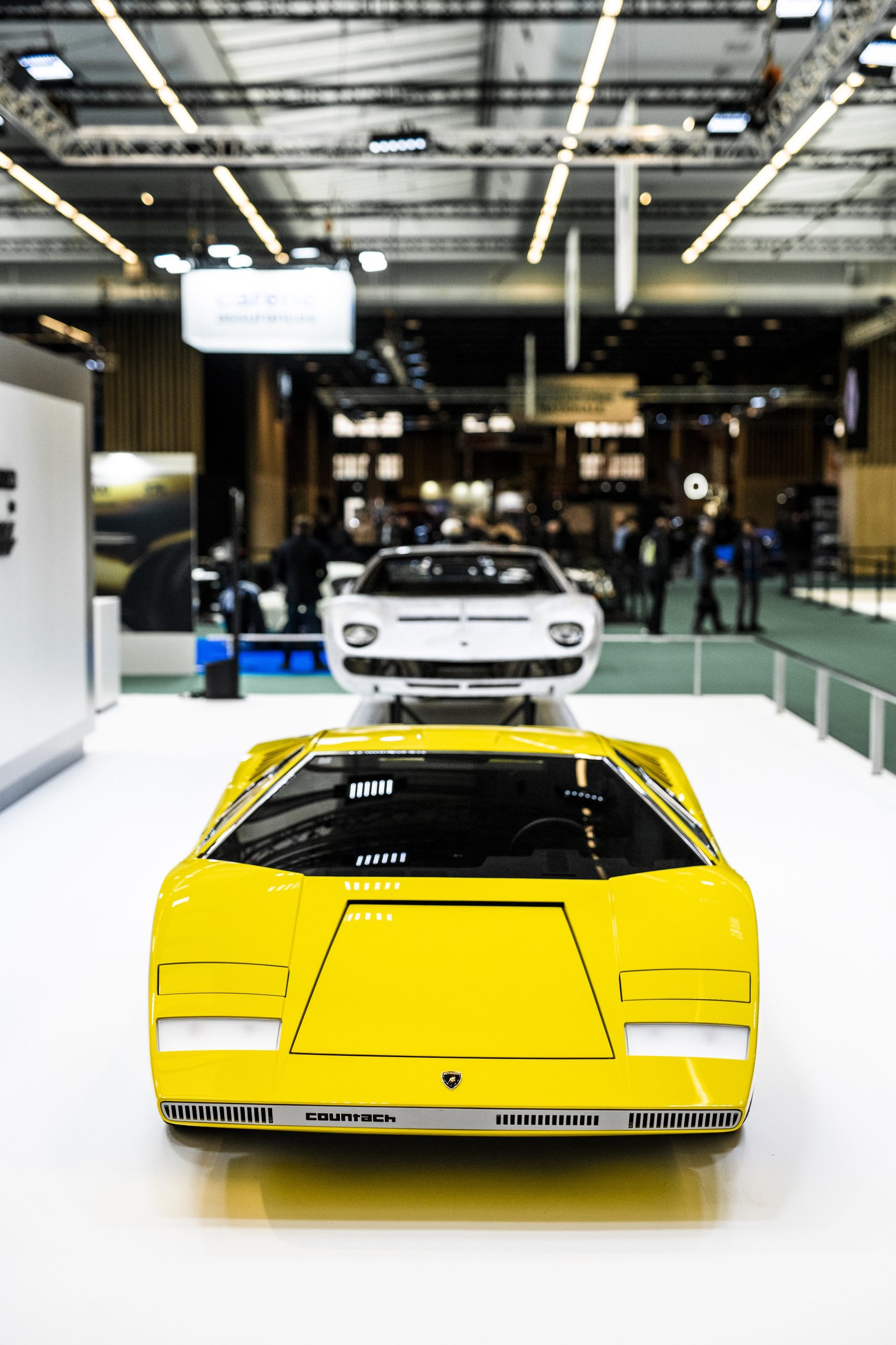
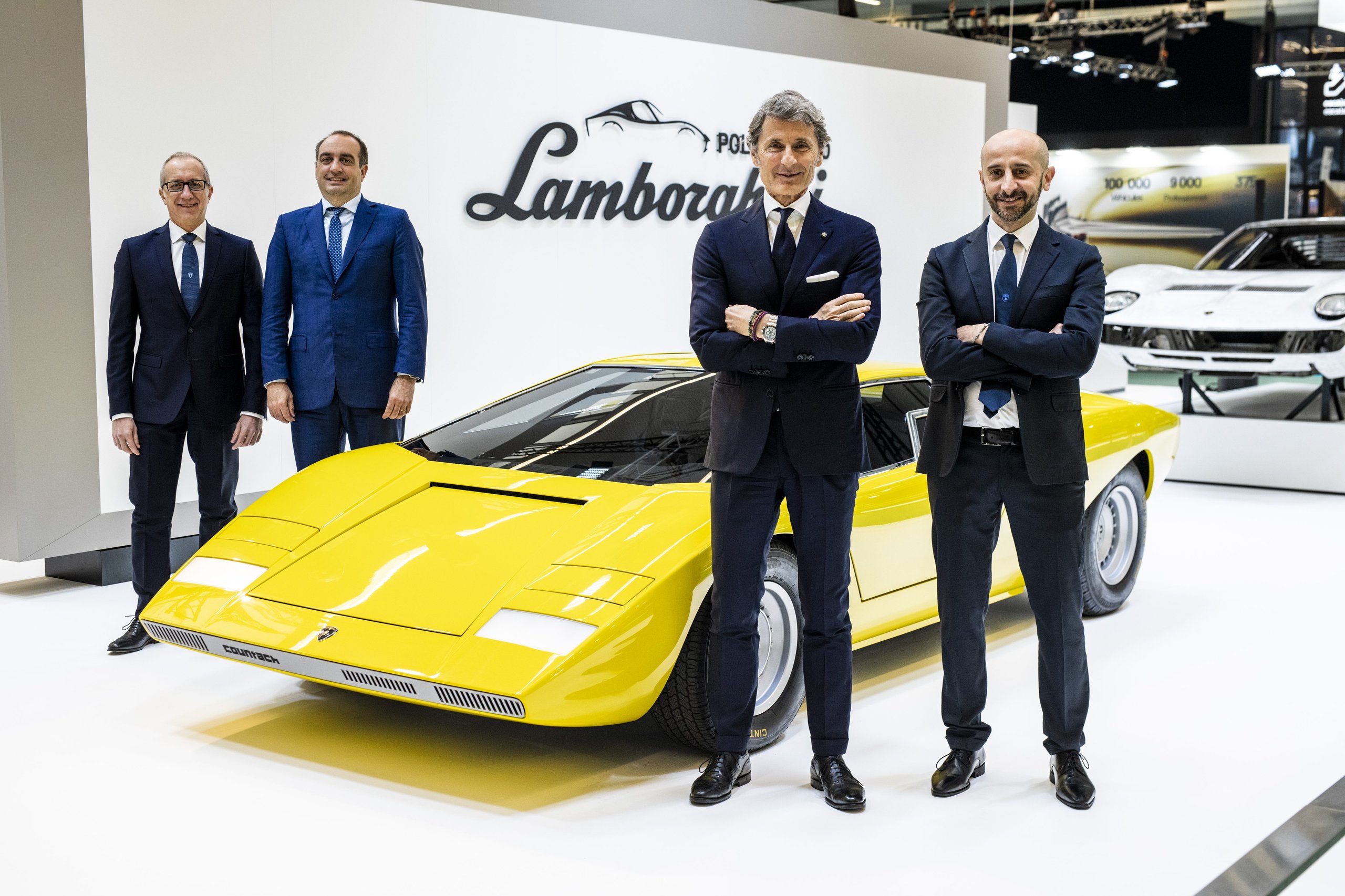
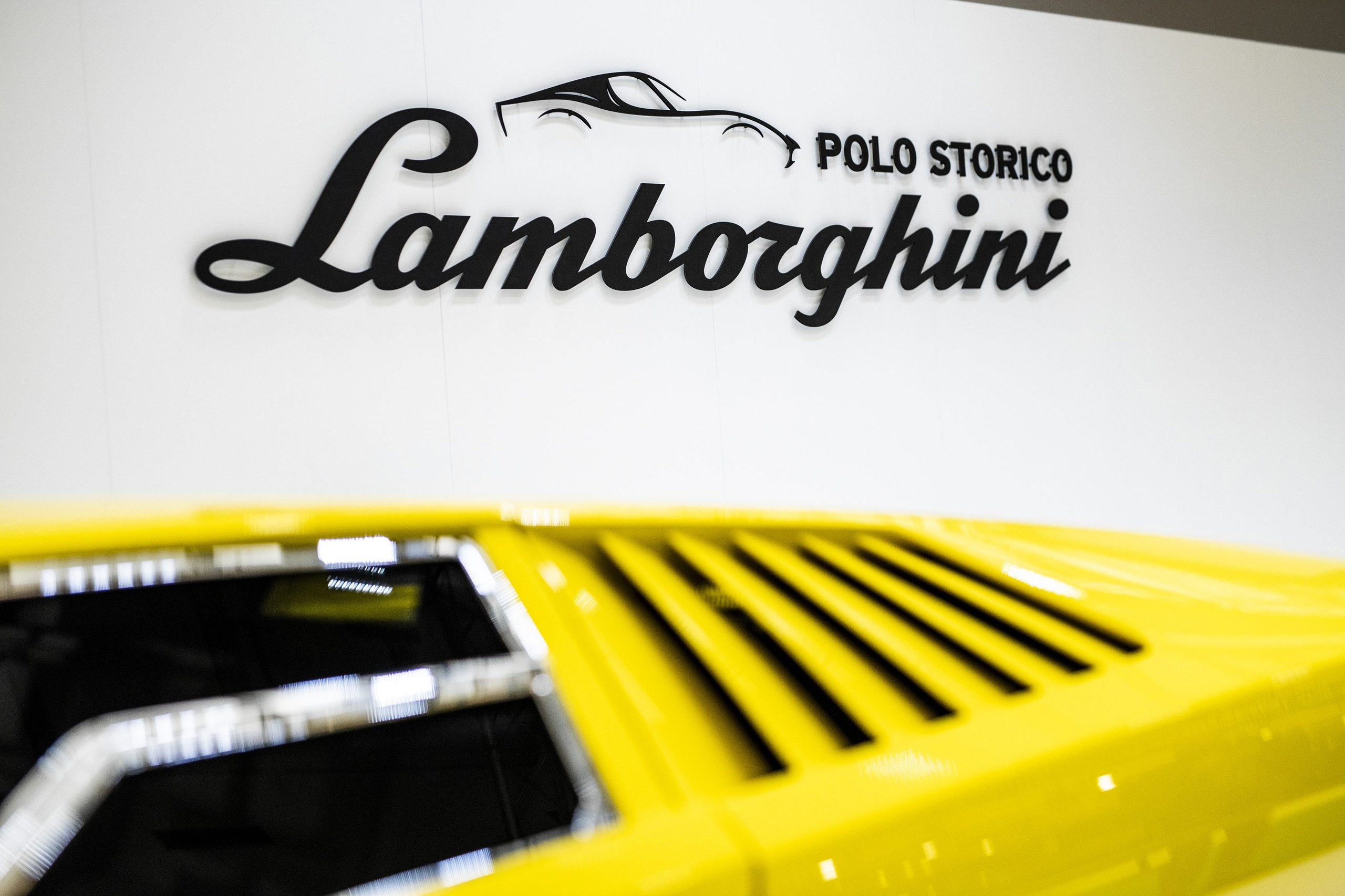
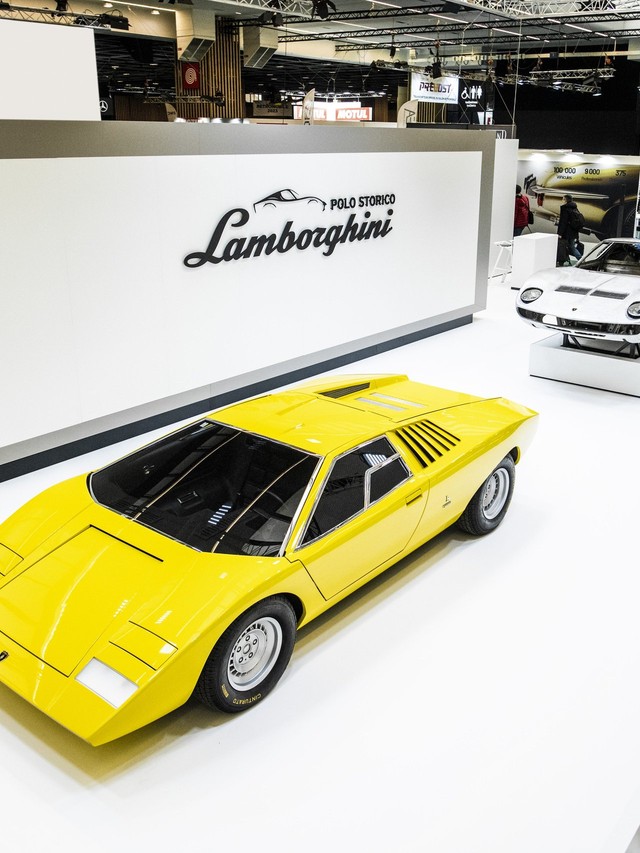
Between March 15 and 20, 2022, Lamborghini Polo Storico occupied a stand at the Rétromobile classic car show in Paris with two extraordinary machines: a painstakingly reconstructed Countach LP 500 prototype, finished in its original Giallo Fly Speciale yellow, and the bare metal body of a Miura P400 SV undergoing conservation restoration. Chairman and CEO Stephan Winkelmann attended the preview evening, and the display officially opened what Lamborghini positioned as a year-long tribute to its legendary V12 engine.
The staging carried unmistakable purpose. Placing these two icons under the Polo Storico banner at one of Europe’s most respected classic car gatherings was Lamborghini’s way of asking its audience to absorb the full weight of the V12’s six-decade lineage before the company pivoted to hybridization. Lamborghini announced that its first hybrid production model would arrive in 2023, with the successor to the Aventador carrying hybrid technology as the opening phase of its Direzione Cor Tauri electrification plan. This was not a generic auto show reveal. It was a carefully orchestrated farewell to the naturally aspirated twelve-cylinder engine that built the brand’s identity, and a promise that the engine’s spirit would endure in a new form.

A yellow Countach LP500 and a silver Miura chassis are prominently displayed at the Lamborghini Polo Storico exhibition stand.
The 25,000-Hour Resurrection: Rebuilding a Car That No Longer Existed
The original Countach LP 500 prototype debuted at the Geneva Motor Show in March 1971 and rewrote the rules for what a supercar could look like. Marcello Gandini’s wedge design, penned after he succeeded Giorgetto Giugiaro as Bertone’s head stylist in 1968, launched an era of angular, confrontational automotive sculpture. The car stunned Geneva. Three years later, Lamborghini destroyed it in a crash test for type approval purposes in March 1974, and the prototype simply ceased to exist.
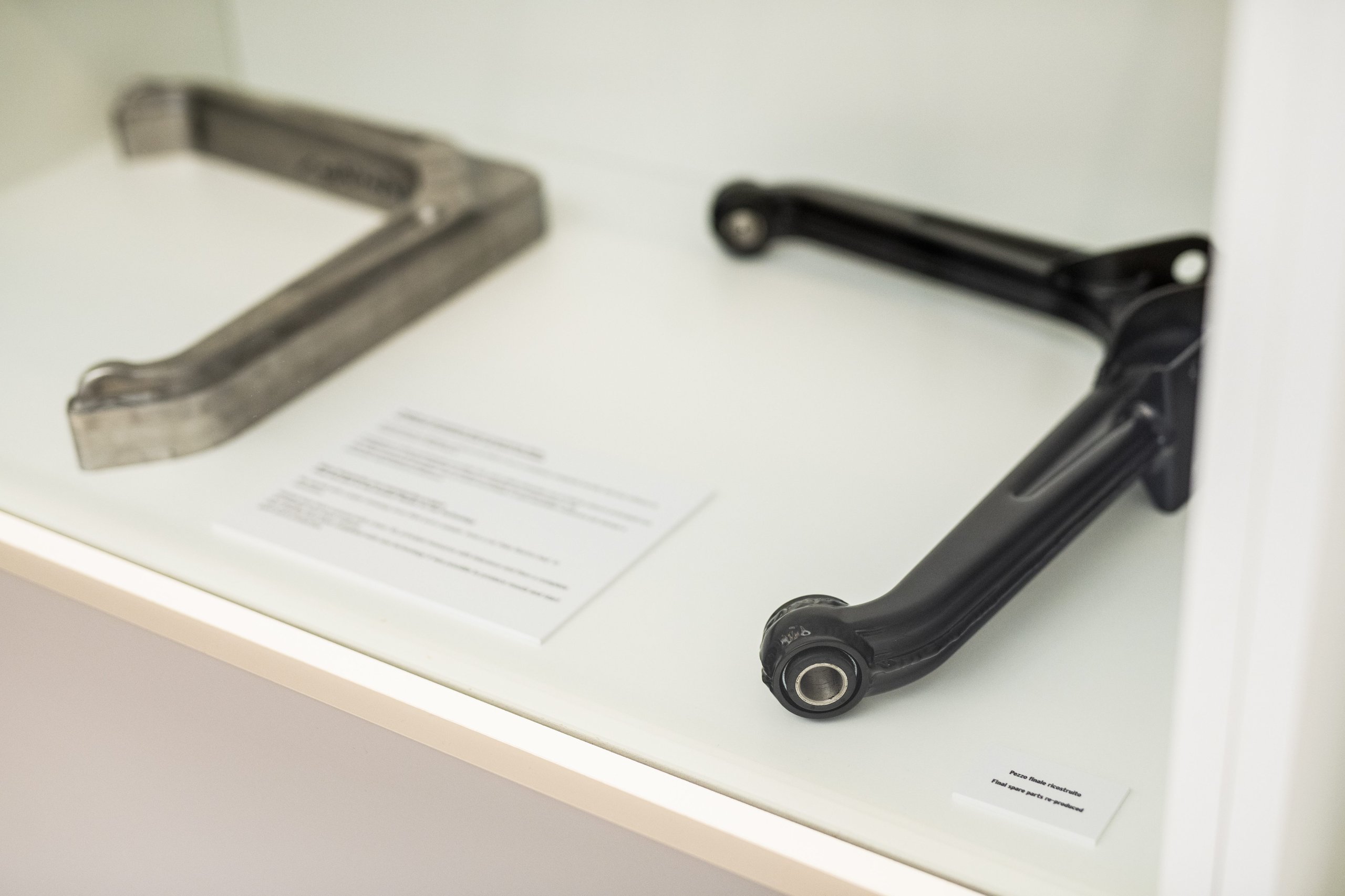
What Polo Storico accomplished for a private collector amounted, in practical terms, to building the car from scratch. Lamborghini says the reconstruction consumed approximately 25,000 hours of work, a figure that dwarfs a standard factory restoration of a vintage Lamborghini. Centro Stile oversaw the bodywork outline, ensuring every surface matched the original design language, while expert panel beaters shaped the bodywork and chassis entirely by hand. Mechanical components were either sourced from period-correct restored parts or remanufactured when originals proved unavailable. Pirelli collaborated as well, drawing on its Foundation’s historical archives to produce tires matching the original dimensions and period design, then certifying them for road use.
The LP 500 designation itself tells part of the engineering story: Longitudinale Posteriore for the engine layout, 500 for the five-liter displacement. Chief engineer Paolo Stanzani chose a longitudinal engine orientation to improve handling and stability over the Miura’s transverse arrangement, and the prototype’s V12 was bored and stroked to 4,971cc with an 85mm bore and 73mm stroke. That ambitious five-liter configuration, packed with magnesium in the engine, gearbox, and differential, proved too problematic for production. Development challenges forced the production Countach to adopt the Miura’s 3,929cc unit instead. The reconstruction captures the prototype as it was meant to be, not as production realities later dictated. That distinction matters, because the LP 500 embodies the purest expression of Lamborghini’s V12 ambition, the same ambition the company was now asking its audience to trust would survive hybridization.

The iconic yellow Lamborghini Countach LP500 prototype shines brightly at the Polo Storico exhibition.
Polo Storico: Guardians of the V12 Legacy
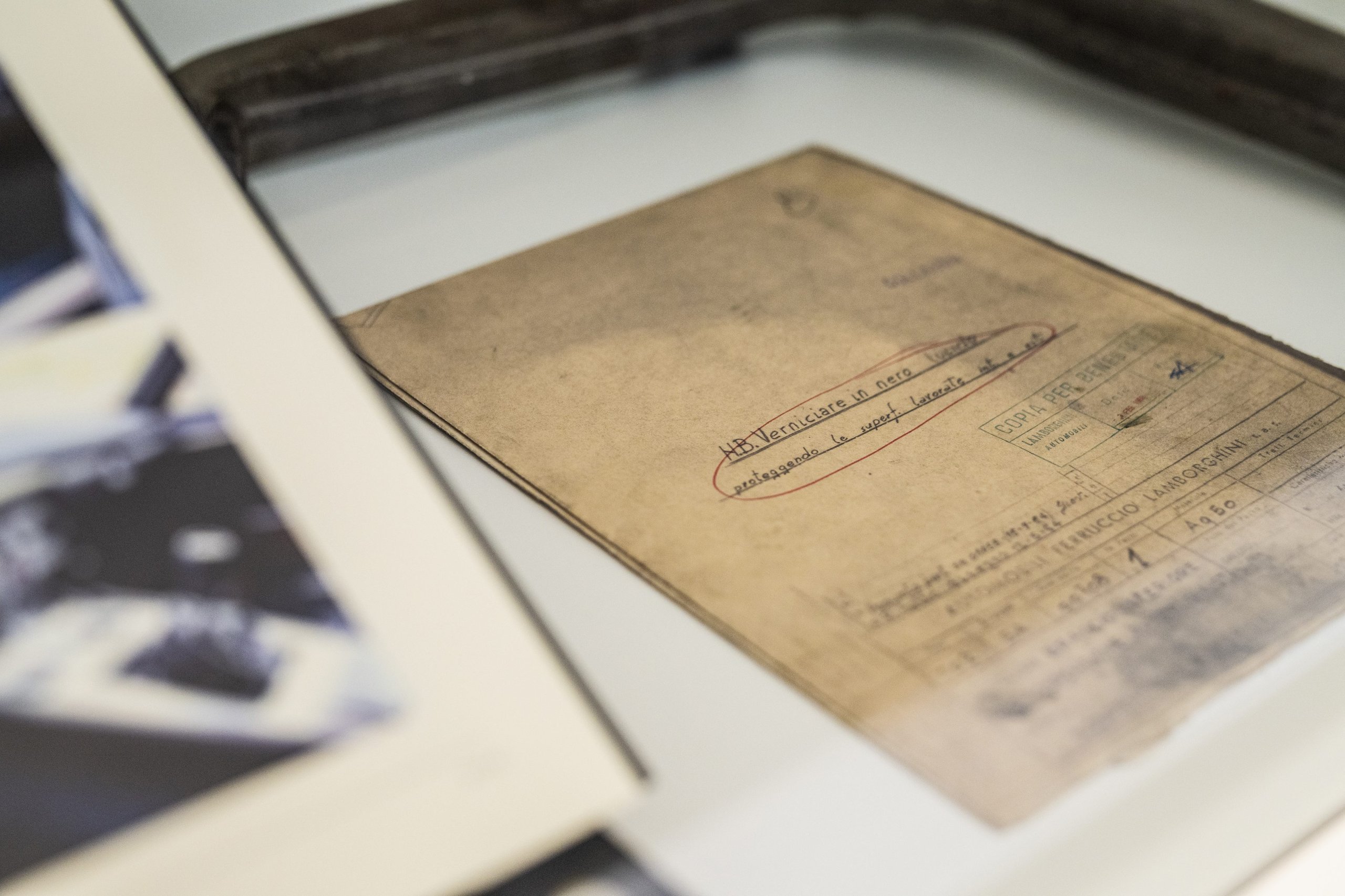
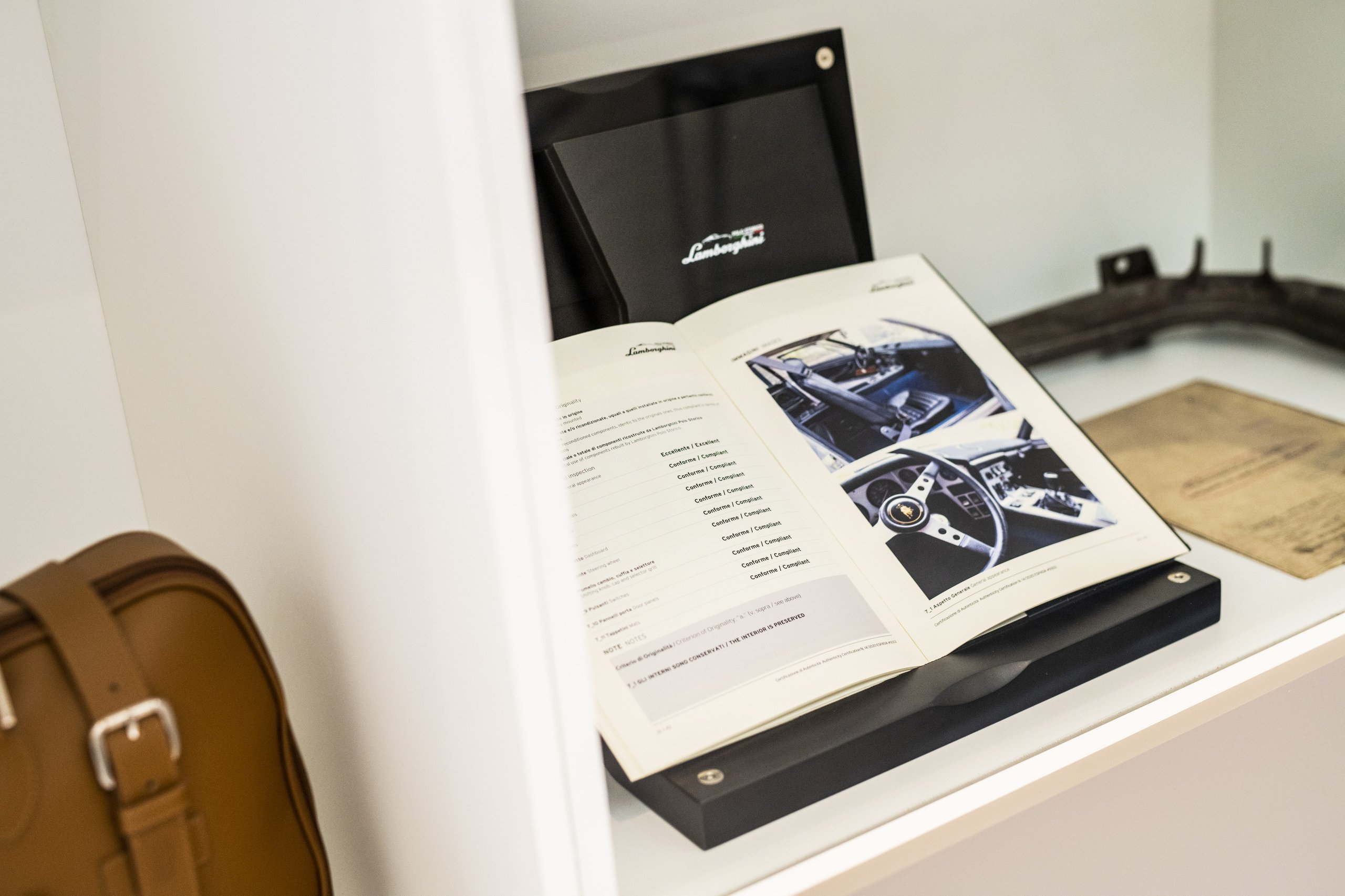
Lamborghini’s heritage department opened in 2015 with a mandate to certify and restore all Lamborghini models produced up to 2001. The scope goes beyond turning wrenches. Polo Storico manages the preservation and expansion of the company’s archives, acquiring new historical sources to ensure that future restorations draw on verifiable factory documentation rather than guesswork.
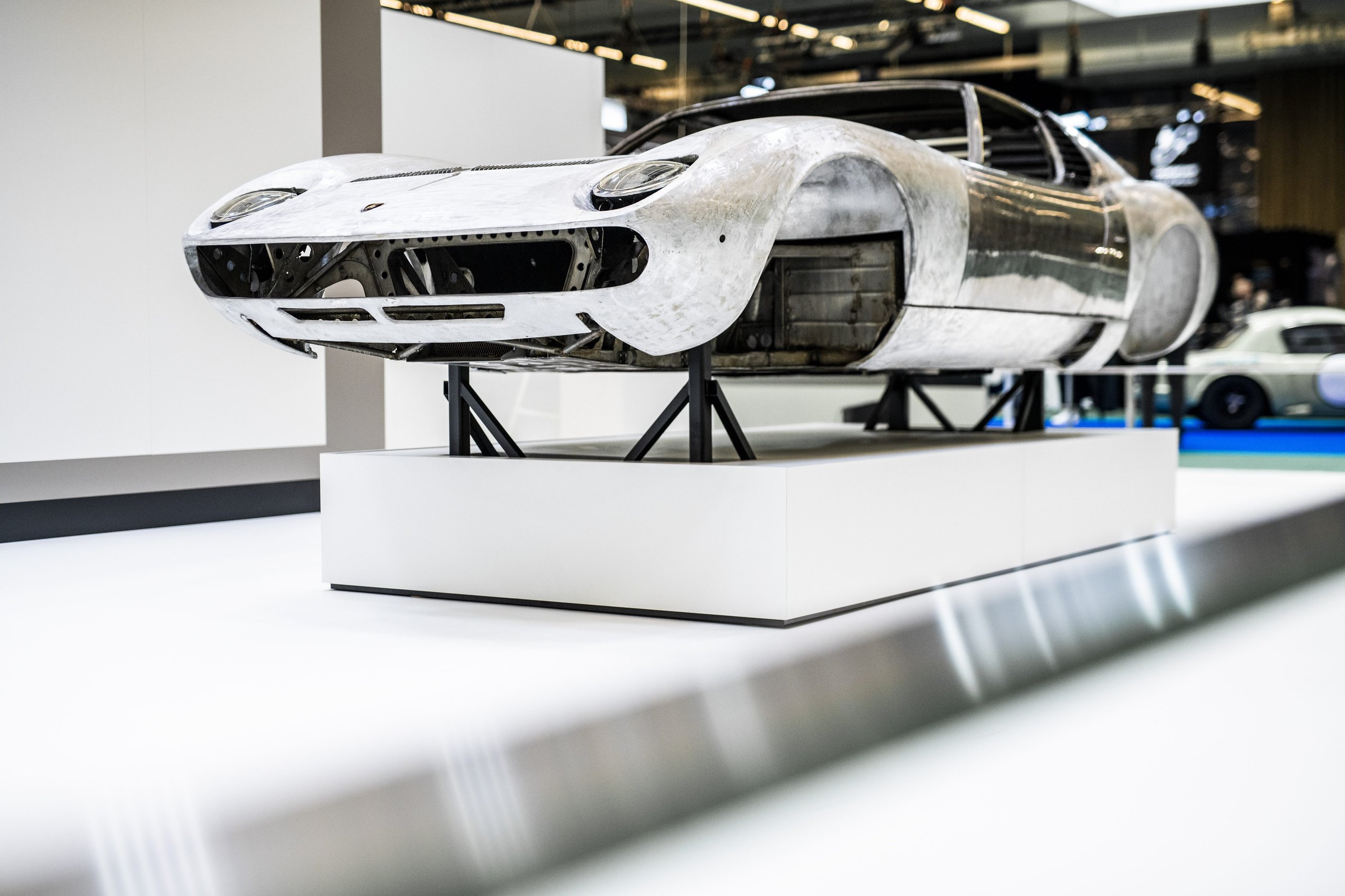
The Miura P400 SV body displayed at Rétromobile illustrated this philosophy in raw form. Stripped to bare metal for a conservation restoration commissioned by a private collector, the unpainted shell revealed the sculptural complexity of the Miura’s bodywork. Lamborghini confirmed the car will be repainted in its original Arancio Miura orange before the interior and mechanical components, currently under restoration, are reinstalled. Showing the car in this vulnerable, mid-process state was a bold curatorial choice, one that invited visitors to appreciate the hand-formed surfaces beneath the paint that define one of the most beautiful automobiles ever produced.
Few heritage programs in the supercar world operate with this level of archival rigor. Ferrari Classiche certifies and restores its own classics, and Porsche Classic maintains a formidable parts operation, but neither competitor recently undertook anything comparable to reconstructing a destroyed prototype from period documentation and hand-formed metal. The 25,000-hour Countach LP 500 project stands alone as a statement of institutional commitment. For collectors considering a Polo Storico restoration, the practical takeaway is straightforward: the department’s access to factory archives and its willingness to remanufacture unobtainable components offer a level of authenticity that independent restorers simply cannot replicate. At a moment when Lamborghini was preparing to transform its V12 for the hybrid era, Polo Storico’s work served as proof that the company understood the weight of what it was inheriting and what it was about to change.

The raw, unpainted body of a Lamborghini Miura SV showcases its iconic form at the Polo Storico event.
Direzione Cor Tauri: The V12’s Hybrid Evolution
Winkelmann’s remarks at the preview evening framed the transition with characteristic precision. The Aventador Ultimae, he noted, closes the chapter on Lamborghini’s pure internal combustion V12. Its successor would arrive with hybrid technology under the Direzione Cor Tauri plan, which maps out the company’s path to 2030.
“Enthusiasts of automotive culture will be able to join us at Rétromobile, where we are paying tribute to our cherished heritage and the vast engineering expertise of our past and present technicians.”
The name Direzione Cor Tauri, meaning “towards Cor Tauri” (the brightest star in the Taurus constellation, the heart of the bull), carries obvious brand symbolism. The plan itself, however, is structured with industrial seriousness. One report indicates the strategy is backed by more than €1.5 billion in investment over four years, making it the largest capital commitment in Lamborghini’s history. The first phase celebrated the combustion engine through 2021 and 2022. The second phase introduced hybridization across the lineup, beginning with the Aventador’s successor.
Beneath the carefully lit prototype and the stripped Miura, Lamborghini was telling its audience that the V12 would survive. It would change, absorb electric motors, gain new capabilities, but the architecture itself would persist. Reports indicate Lamborghini plans to retain the V12 beyond 2030 in hybridized form. The engine Giotto Bizzarrini designed in 1963, which first appeared as a 3.5-liter unit producing 280 horsepower in the 350 GT, has grown through 3.9, 4.8, 5.2, 5.7, and 6.0-liter displacements before the entirely new second-generation L539 architecture debuted in the Aventador in 2011. Hybridization, in Lamborghini’s telling, is the next chapter of that same evolutionary story, not a rupture from it.

A speaker addresses the audience beside the striking yellow Lamborghini Countach LP500 prototype.
Competitive Landscape: Lamborghini’s Hybrid V12 vs. Ferrari and McLaren
Lamborghini was not the first Italian supercar maker to hybridize. Ferrari launched the SF90 Stradale in 2019 and followed with the V6-powered 296 GTB, while McLaren introduced the Artura with its hybrid V6 architecture. Both competitors moved earlier, but neither staged their transitions with the same overt reverence for what was being left behind.
Ferrari’s approach leaned on performance justification: hybrid technology made the SF90 faster, and that was sufficient argument. McLaren framed the Artura as a clean-sheet engineering exercise, emphasizing weight savings and packaging efficiency. Lamborghini chose a different path entirely, spending a year publicly mourning and celebrating the pure combustion V12 before introducing its replacement. The Rétromobile display was the opening act of that campaign.
This difference in strategy reflects a difference in brand vulnerability. Ferrari sells a broader range of engine configurations and can absorb the loss of any single one. McLaren built its road car identity on turbocharged V8s, so adding electric motors felt like a natural extension. Lamborghini’s identity rests more heavily on one specific engine type. The V12 is not merely the top of the lineup; it is the emotional and cultural core. Losing it, even partially, required more careful brand management. Investing 25,000 hours in reconstructing a destroyed prototype to parade it at a classic car show is not restoration for its own sake. It is a company telling its most devoted customers: we understand what this engine means to you, and we are not walking away from it carelessly.
What the Hybrid Future Means for Lamborghini’s Sound and Soul
Bizzarrini’s original V12 featured an aluminum alloy head and block, dual overhead camshafts per bank, and two valves per cylinder, with an over-square design (82mm bore, 62mm stroke) and a 10.5:1 compression ratio. Those specifications describe the founding architecture, but the design philosophy they represent, a naturally aspirated engine optimized for high-revving response and linear power delivery, defined the Lamborghini driving experience for generations. Multiple owners on enthusiast forums describe the V12’s sound and throttle response as the single most important attribute separating Lamborghini from its competitors. That emotional connection explains why Lamborghini chose Rétromobile, and not a technology conference, as the venue to begin discussing hybridization. The audience in Paris already understood what was at stake.
The Countach LP 500 prototype sitting under the lights represented the most ambitious version of the V12 vision: Stanzani’s original plan for a five-liter engine targeting 200 mph. Development problems prevented that engine from reaching production, but the ambition it embodied carried forward through every subsequent V12 Lamborghini. The Rétromobile display asked a pointed question: can that same ambition survive the addition of electric motors and battery packs?
Lamborghini’s answer, delivered through engineering rather than marketing, would arrive with the Revuelto. In March 2022, though, the company was still building its case, and it chose to build it not with spec sheets or lap times but with a hand-beaten yellow prototype that took three years to reconstruct and a bare aluminum Miura body that showed the world what Italian craftsmanship looks like before the paint goes on. For buyers watching the hybrid transition unfold, honest questions remained unanswered at Rétromobile: what would the hybrid V12 sound like, how would the additional weight of batteries and motors affect driving dynamics, and would the visceral, unfiltered character of the naturally aspirated engine translate through electrification? The company left those questions open. But the argument it did make was clear enough: a company willing to invest 25,000 hours in preserving the past is not about to squander the future.

Two generations of Lamborghini icons, the Countach LP500 and Miura SV, are showcased side-by-side.
Gallery