Lamborghini’s Smallest Workforce: 600,000 Bees Monitoring the Air Around Sant’Agata
Tucked inside the seven-hectare park at Lamborghini’s Sant’Agata Bolognese headquarters, 600,000 honeybees occupy 13 hives and perform a task no exhaust analyzer or satellite sensor can replicate. They fly a three-kilometer radius around the factory, collecting nectar, pollen, and water from agricultural fields, the industrial zone, and the town itself, then carry it all back for laboratory analysis. The program, initiated in 2016, functions as a biological early-warning network for environmental quality, and its latest technological upgrades, detailed by the company to coincide with World Bee Day on May 20, reveal something stranger and more rigorous than the word “honey” might suggest.
About 120,000 of those bees actively forage the surrounding territory. Working with entomologists and apiologists, Lamborghini analyzes hive matrices to detect pesticides, heavy metals, polycyclic aromatic hydrocarbons, dioxins, and other pollutants. The bees are not decorative. They are instruments, and the data they produce tells Lamborghini whether its corner of Emilia-Romagna is getting cleaner or dirtier over time. That distinction is the thread running through every layer of this initiative: Lamborghini is not merely measuring what its factory emits, but auditing what the surrounding ecosystem actually absorbs.

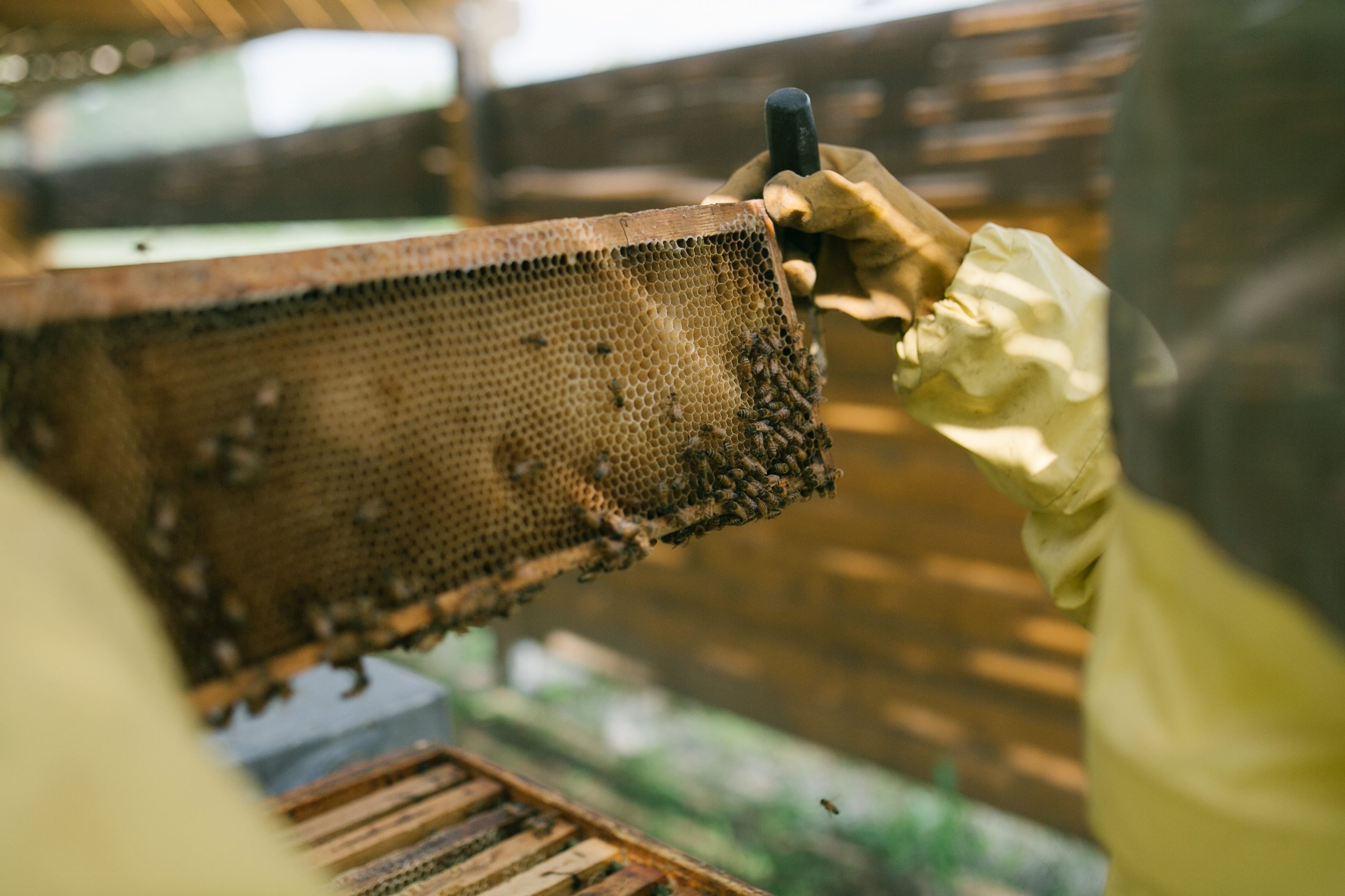
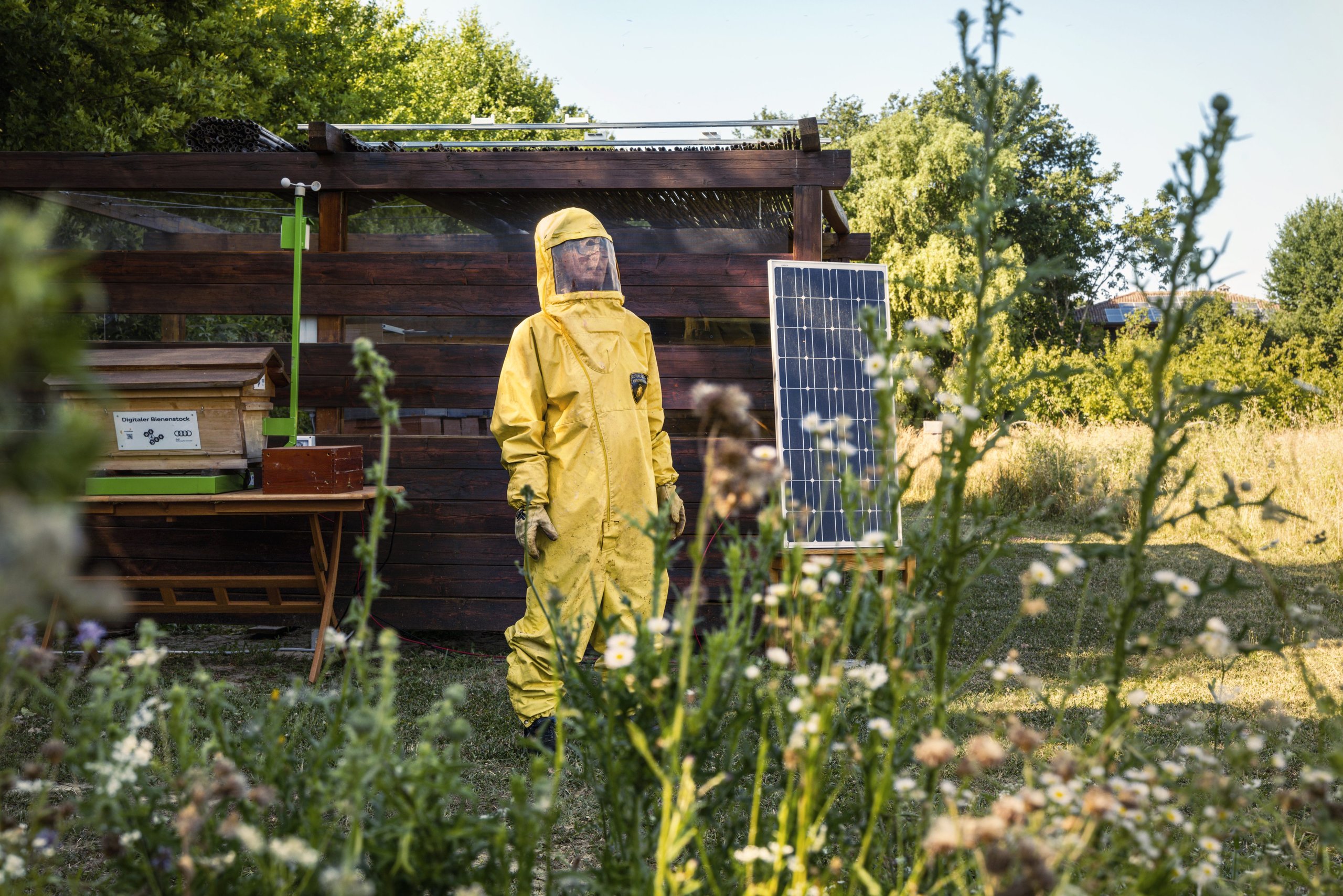
A beekeeper proudly wears a suit featuring the Automobili Lamborghini logo, symbolizing their commitment to nature.
Inside the Digital Hives: SIM Cards, Cameras, and Electronic Bee Counters
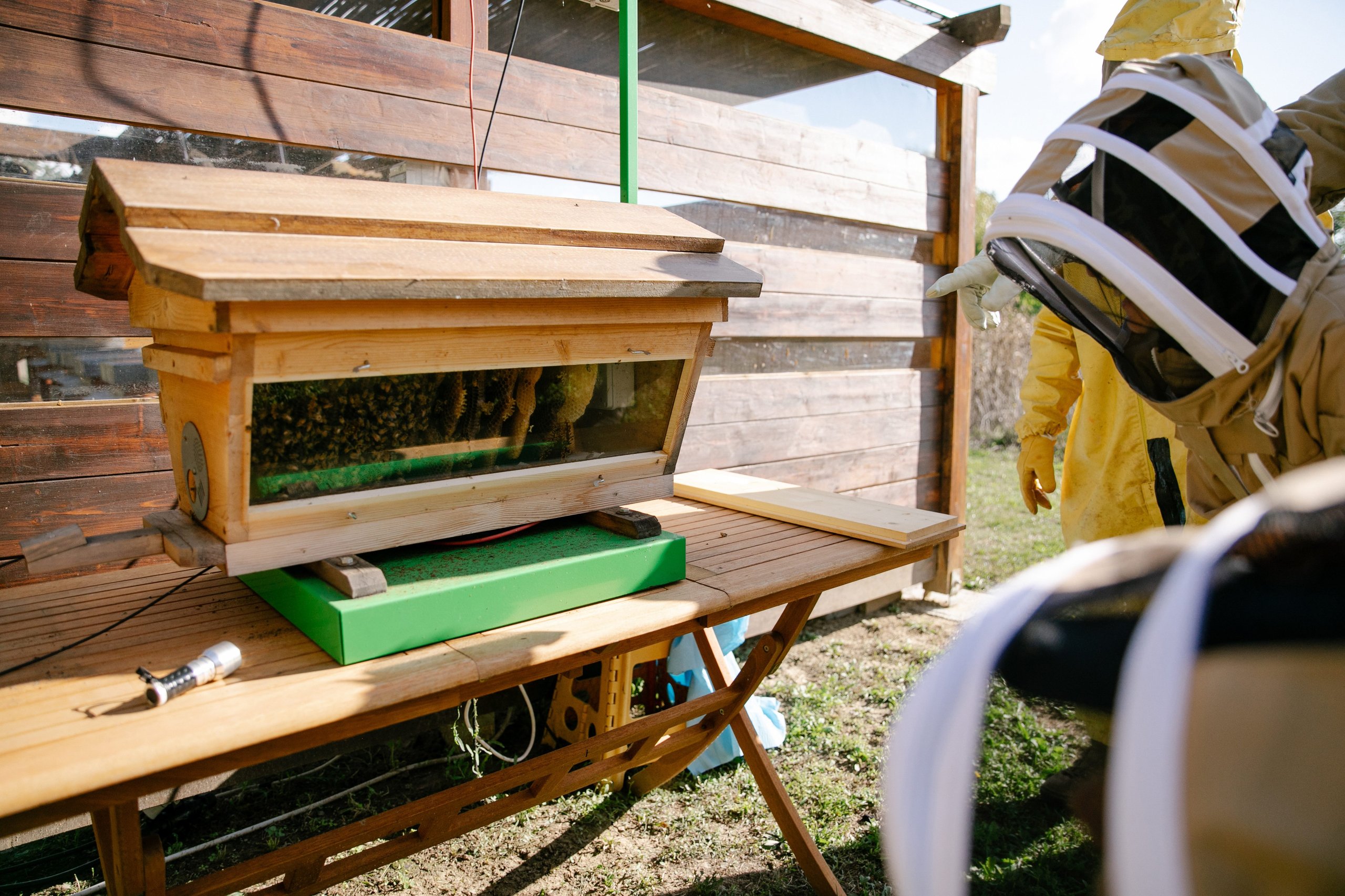
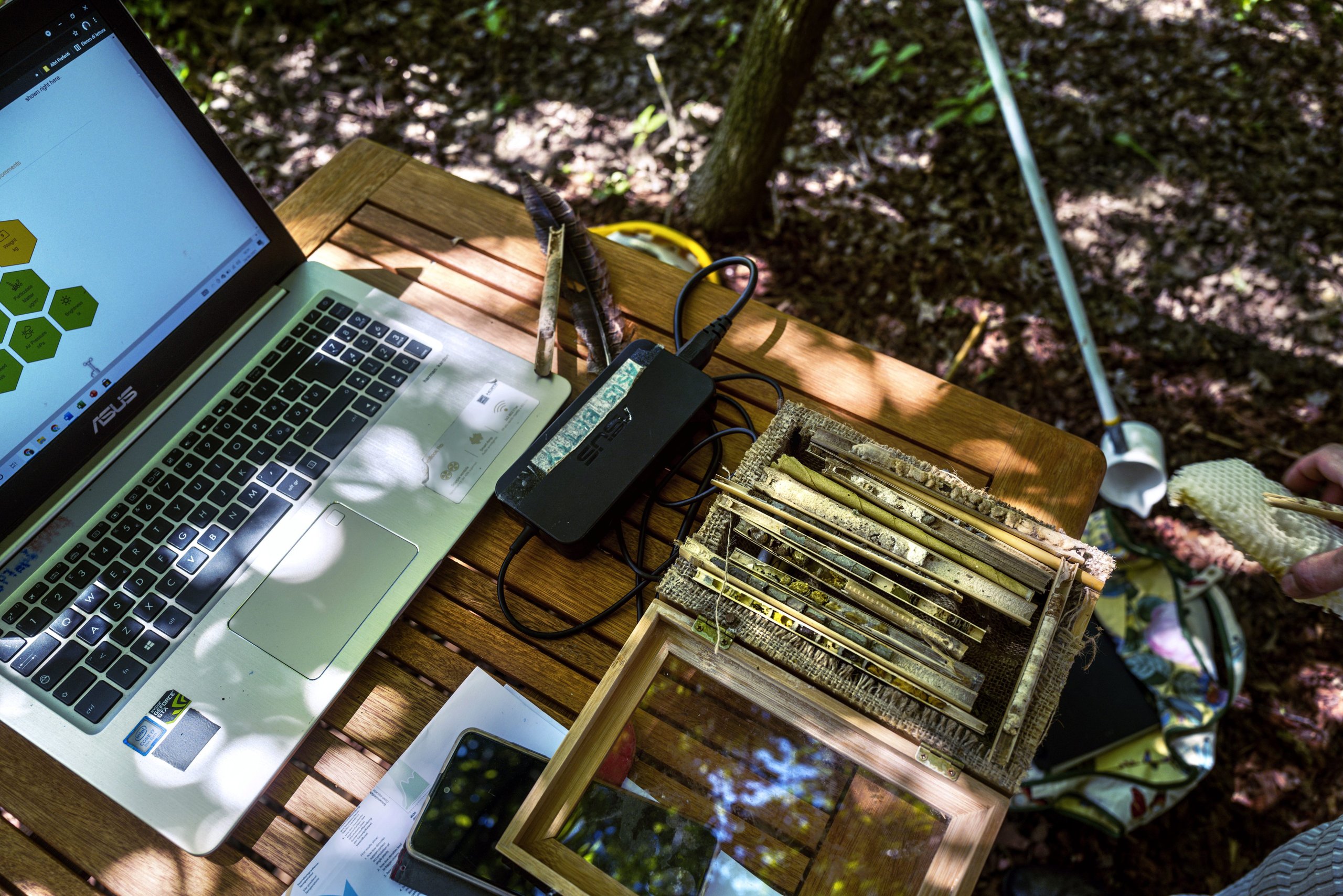
The phrase “technological beehive” sounds like marketing until you examine what Lamborghini and its partner, the Audi Environmental Foundation, actually installed in 2021. Two of the 13 hives carry integrated SIM cards that transmit measured data remotely, eliminating the need for researchers to physically visit the apiary to track conditions. Both hives record internal and external temperature, humidity, and wind speed. Electronic scales weigh each hive continuously, providing a real-time proxy for whether the colony is collecting enough nectar and pollen and whether its population is growing on schedule.
One hive goes further with internal and external cameras filming access points to show whether bees are behaving normally. The second carries an electronic bee counter, generating graphs that cross-reference environmental data with the number of bees entering and exiting. Lamborghini says this information helps researchers understand how climate change affects colony development and enables timely intervention during abnormal seasons. The prolonged drought of 2021, according to the company, reduced the apiary’s annual honey production by roughly 100 kilograms, a tangible demonstration of how local weather events ripple through the hive data.
The science mirrors what precision agriculture operations do with soil sensors and drone imaging, except Lamborghini uses a living organism as the sensor array. A bee returning to the hive with traces of a specific pesticide reveals something a fixed air-quality monitor three kilometers away cannot: exactly which compounds are present in the flowers, water, and soil of a defined territory. That granularity is what transforms the program from a feel-good corporate gesture into a genuine environmental audit.

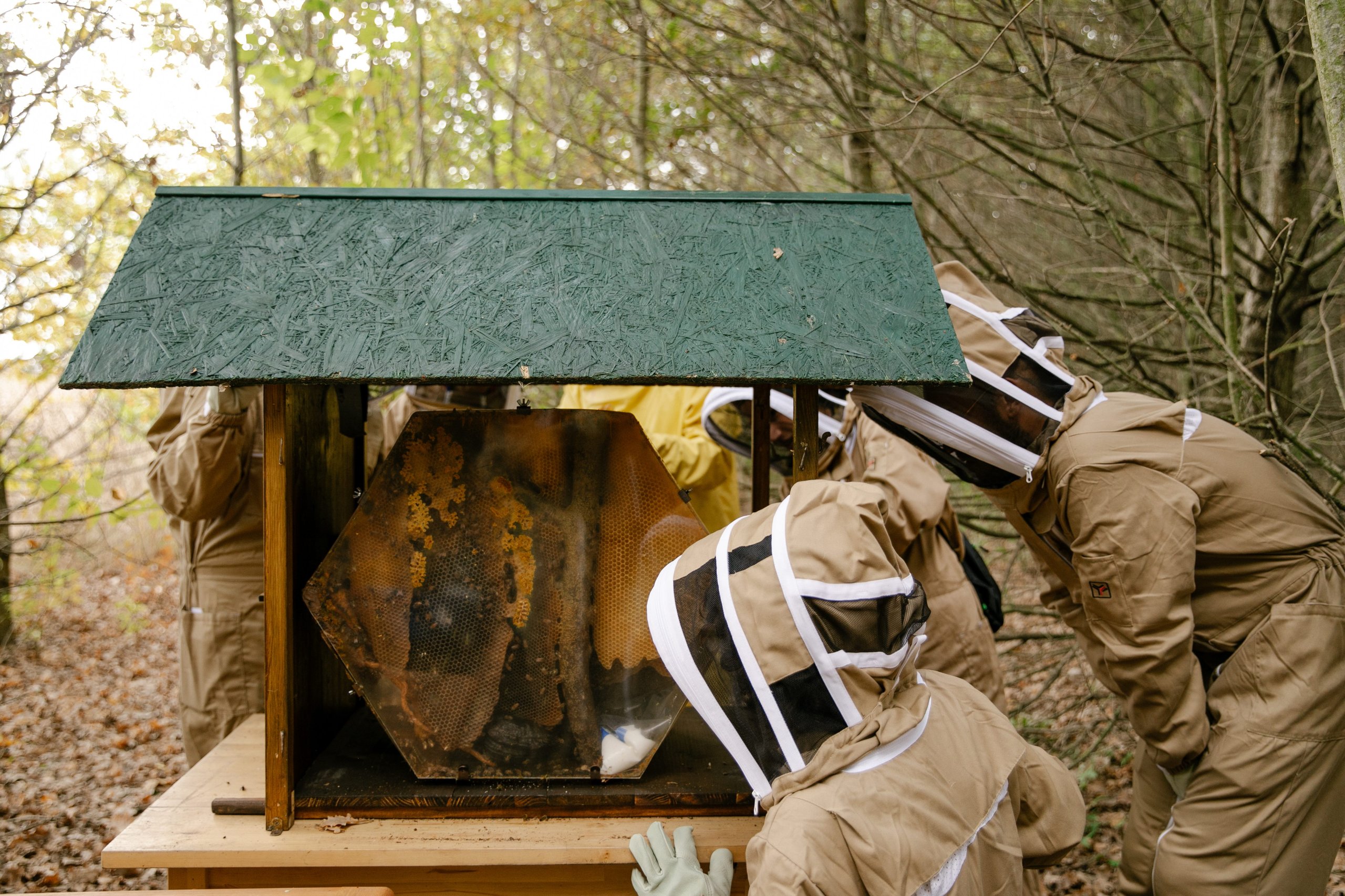
A digital beehive with Audi branding sits on a wooden table, showcasing a commitment to environmental initiatives.
Why a Supercar Company Bothers with Bees
The obvious question remains: why would a company that builds V12 hybrids and twin-turbo supercars invest in apiculture? The answer connects to a sustainability timeline that predates the current industry rush toward electrification. Lamborghini’s Sant’Agata Bolognese factory, covering 160,000 square meters, achieved CO2-neutral certification in 2015 and maintained that certification even after doubling the production site’s footprint. The bee program, launched a year later, was designed to verify that carbon-neutral operations translate into genuinely improved environmental conditions for the surrounding community, not just on paper.
Carbon neutrality certifications measure what a factory emits and offsets. Bio-monitoring measures what the local ecosystem actually absorbs. Lamborghini is effectively auditing its own environmental claims with a biological instrument that cannot be gamed. If the bees start dying, if pollutant traces spike in the wax, or if colony growth stalls, that data tells a story no corporate sustainability report can spin. The bee program is presented as part of Lamborghini’s broader sustainability strategy, and in that context it functions as both a public accountability tool and a research contribution.
Lamborghini Park spans seven hectares with over 10,000 plants, doubling as a biodiversity corridor and a data-collection site open to employees, the local community, and researchers. For a factory that produces some of the most carbon-intensive consumer products on the planet, maintaining a living laboratory next door is a pointed statement about what “responsible manufacturing” means at this end of the market.

A group of beekeepers in protective suits gathers in a shaded apiary, observing the beehives and discussing their work.
Competitive Buzz: How Lamborghini’s Approach Compares to Rival Luxury Brands
Most luxury automakers address sustainability through one of three familiar channels: carbon-offset purchases, factory efficiency improvements, or investments in synthetic fuels. Mercedes-Benz targets net-carbon-neutral new cars across their full value chain by 2039. Aston Martin aims for carbon neutrality at its production sites by 2030. Porsche’s well-publicized e-fuel research in Chile attacks the problem from the fuel side. All are legitimate strategies, and none involve living organisms as monitoring instruments.
Lamborghini’s bee program occupies a different category. Where rivals measure their own outputs, Lamborghini measures the territory’s inputs, using bees as roaming sensors that sample the actual environment shared by factory workers, their families, and the town of Sant’Agata Bolognese. Ferrari, for its part, does not appear to operate a comparable bio-monitoring initiative at Maranello, though the company pursues its own carbon-reduction targets. The distinction reveals a philosophical difference: Lamborghini is not only asking “how clean is our factory?” but “how clean is the place where we build these cars?”
For enthusiasts who follow the brand closely, this is worth noting. The supercar market is moving toward a period where environmental credibility will influence buyer perception as much as lap times. A program that produces verifiable, third-party-auditable biological data gives Lamborghini a narrative advantage that a carbon-offset receipt simply cannot match. Whether buyers care about that today is debatable. Whether they will care in five years, as regulatory scrutiny and generational attitudes shift, seems far less uncertain.
Made in Sant’Agata: Bees, Brand Identity, and the Hybrid Era
Lamborghini’s identity is inseparable from its geography. Every car rolls out of Sant’Agata Bolognese, and the company leans into that provenance the way a Burgundy winemaker leans into terroir. The bee program reinforces this connection in a way that a generic CSR report cannot. By monitoring the health of the ecosystem immediately surrounding the factory, Lamborghini ties its brand story to a specific place, a specific community, and a measurable set of environmental outcomes.
That connection matters more now than it did in 2016. Lamborghini’s entire lineup is transitioning to hybrid powertrains under its Direzione Cor Tauri strategy, and the company’s first fully electric model remains in development. Each step invites skepticism from enthusiasts who worry that electrification dilutes the brand’s character. The bee program, quietly running in the background, offers a different kind of proof: that Lamborghini’s environmental commitments are not reactive concessions to regulation but predate the hybrid era by years.
From a practical standpoint, if you are a current or prospective Lamborghini owner, this program will not change your car’s performance or resale value. What it does is add a layer of credibility to the brand’s sustainability claims that goes beyond marketing. When Lamborghini says its factory is CO2-neutral, the bees provide a biological cross-check. When the company says it cares about its local community, the apiary’s data, shared with researchers and accessible to the public, backs that up with something tangible.
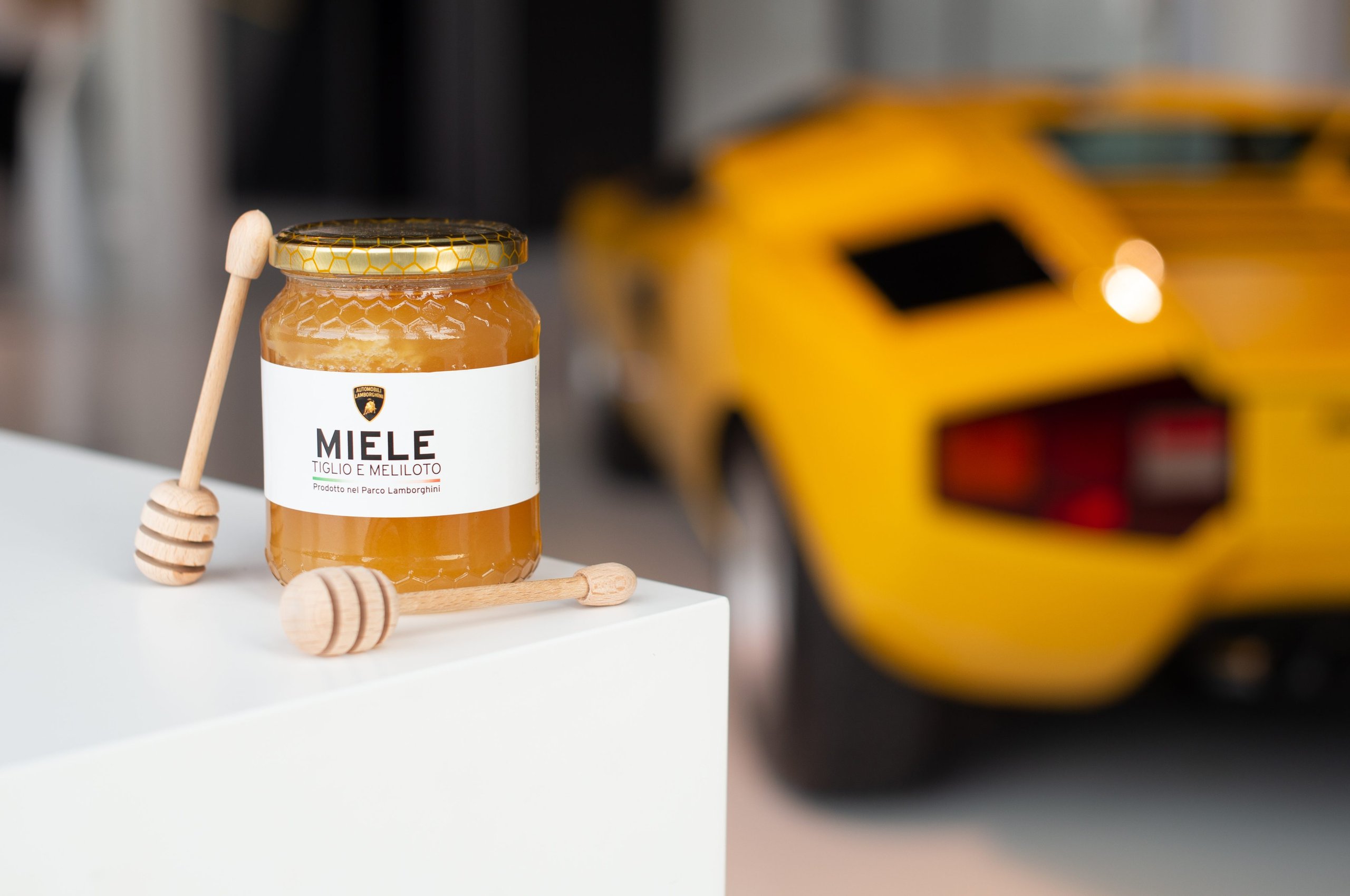
The juxtaposition is deliberate, and Lamborghini knows it. A jar of Lamborghini-branded honey sitting next to a Countach is a visual that sticks precisely because it is unexpected. The company produces roughly enough honey each year to distribute to employees, not to sell commercially, keeping the program grounded in authenticity rather than merchandising. Whether that restraint holds as the story gains attention remains to be seen, but for now, the bees at Sant’Agata are doing exactly what Lamborghini designed them to do: collecting data, producing honey, and quietly proving that the factory next door is a better neighbor than its exhaust note might suggest.

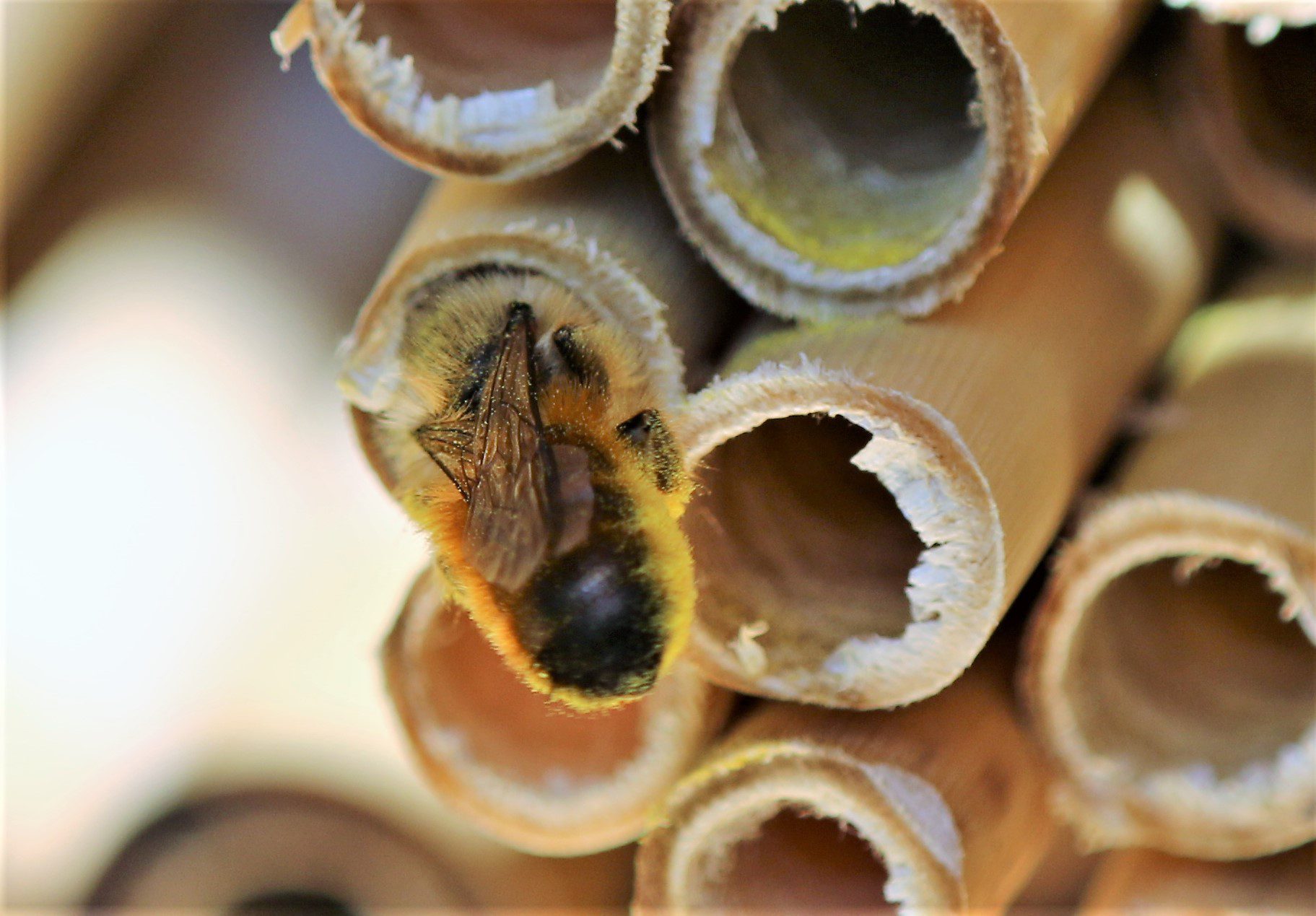
A honey bee with visible pollen sacs diligently collects nectar from a vibrant purple thistle flower.
Gallery