A ‘Diffused Museum’ Across the Factory Floor
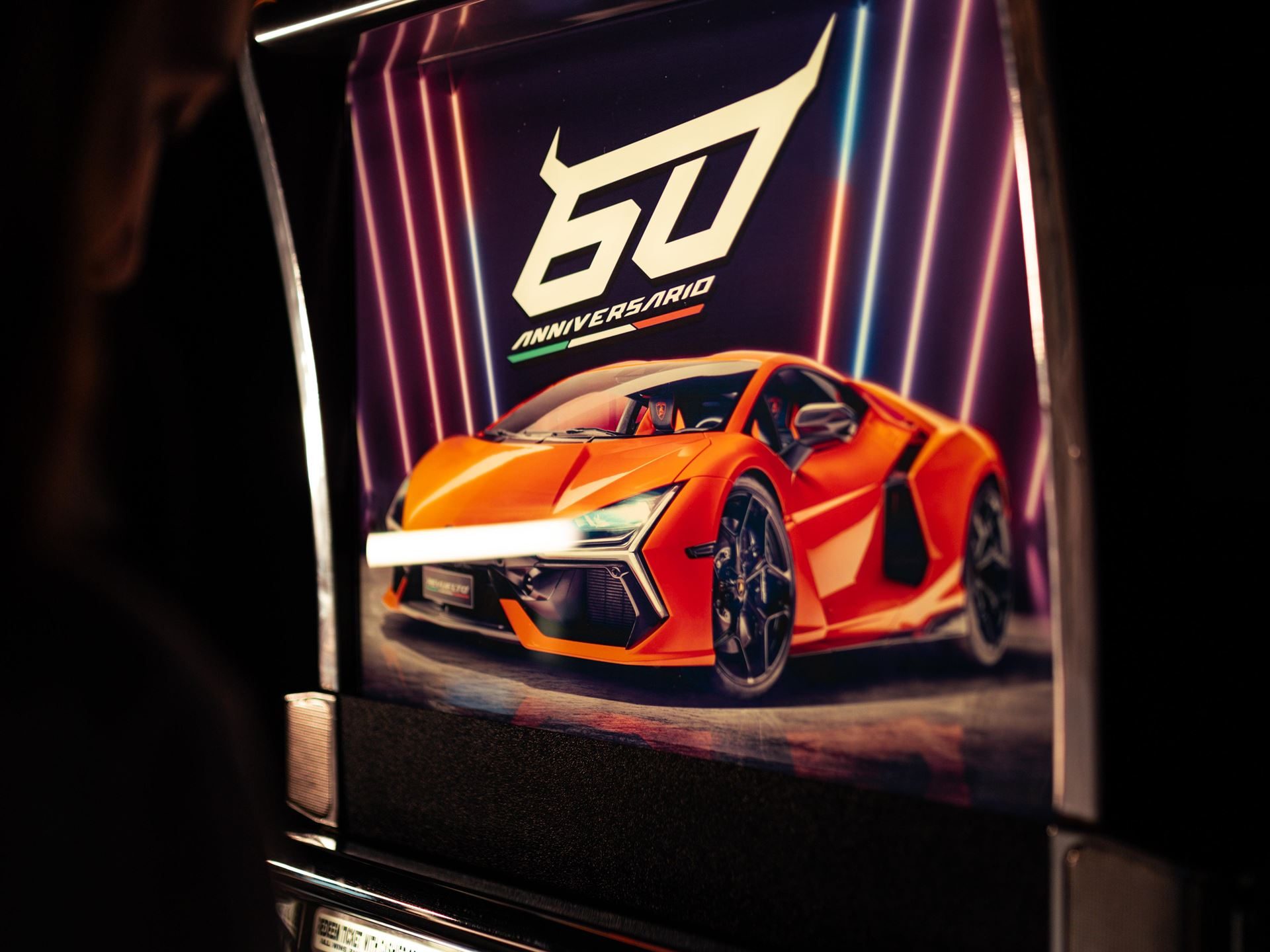
Lamborghini’s 60th-anniversary celebration called Dreamaway does something most automakers would never risk: it scatters more than 100 commissioned artworks across the working headquarters in Sant’Agata Bolognese, placing paintings, sculptures, and photographs not in a sealed-off gallery wing but alongside production lines, engineering departments, and the company museum. Lamborghini describes the result as a “diffused museum,” and the concept is more interesting than the corporate art-speak might suggest.
The works were created during 2023 by internationally recognized artists, commissioned by Lamborghini dealers around the world to mark six decades of the brand. Before arriving at headquarters, many of the pieces had been unveiled at local dealer events tied to the anniversary. Now collected under one roof, or more accurately many roofs, they form an exhibition open to both employees and visitors. The company timed the opening just ahead of International Museum Day on May 18, 2024.
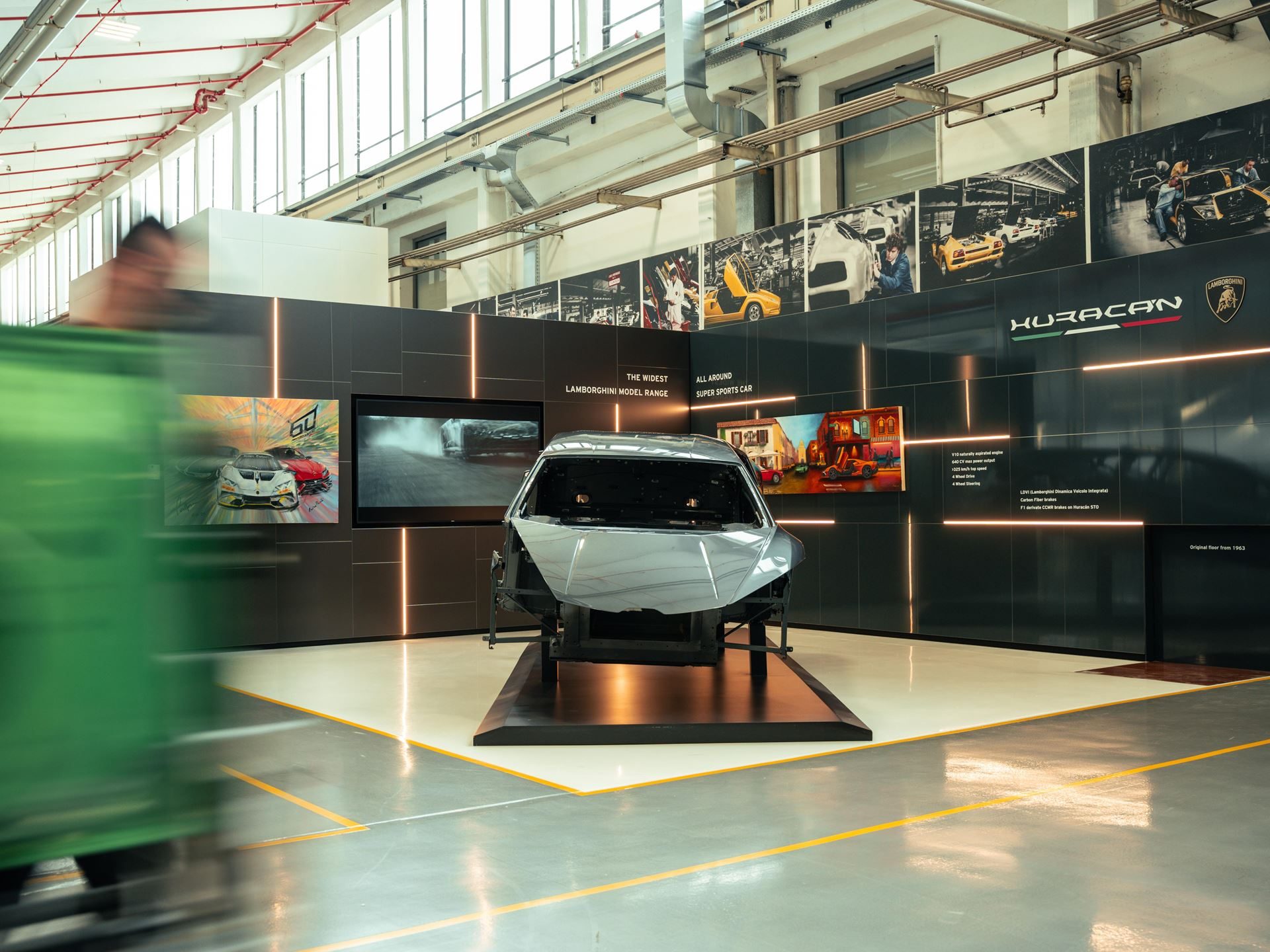
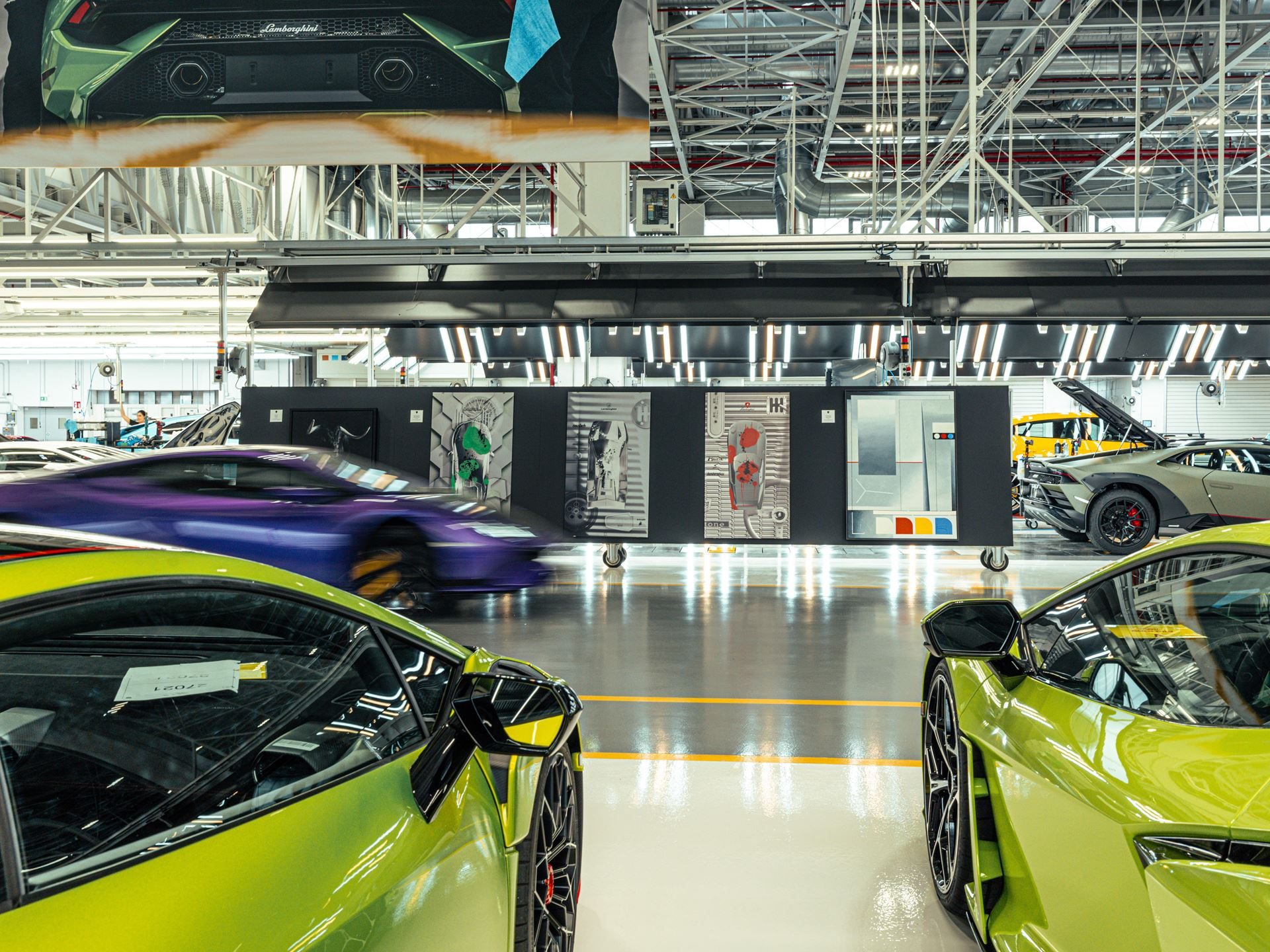
What makes this worth paying attention to is the placement strategy. Carbon-fiber artworks sit inside the composite materials department. A hand-painted hood greets workers at the entrance to the paint shop. A life-size cast bronze bull stands outside the museum. The art occupies the spaces where the cars are actually built, and that deliberate overlap between craft and commerce is the real curatorial statement. It is also the thread that runs through every corner of Dreamaway: the factory floor is not a backdrop for art but an active participant in it.

Why Lamborghini Is Investing in Art, Not Just Horsepower
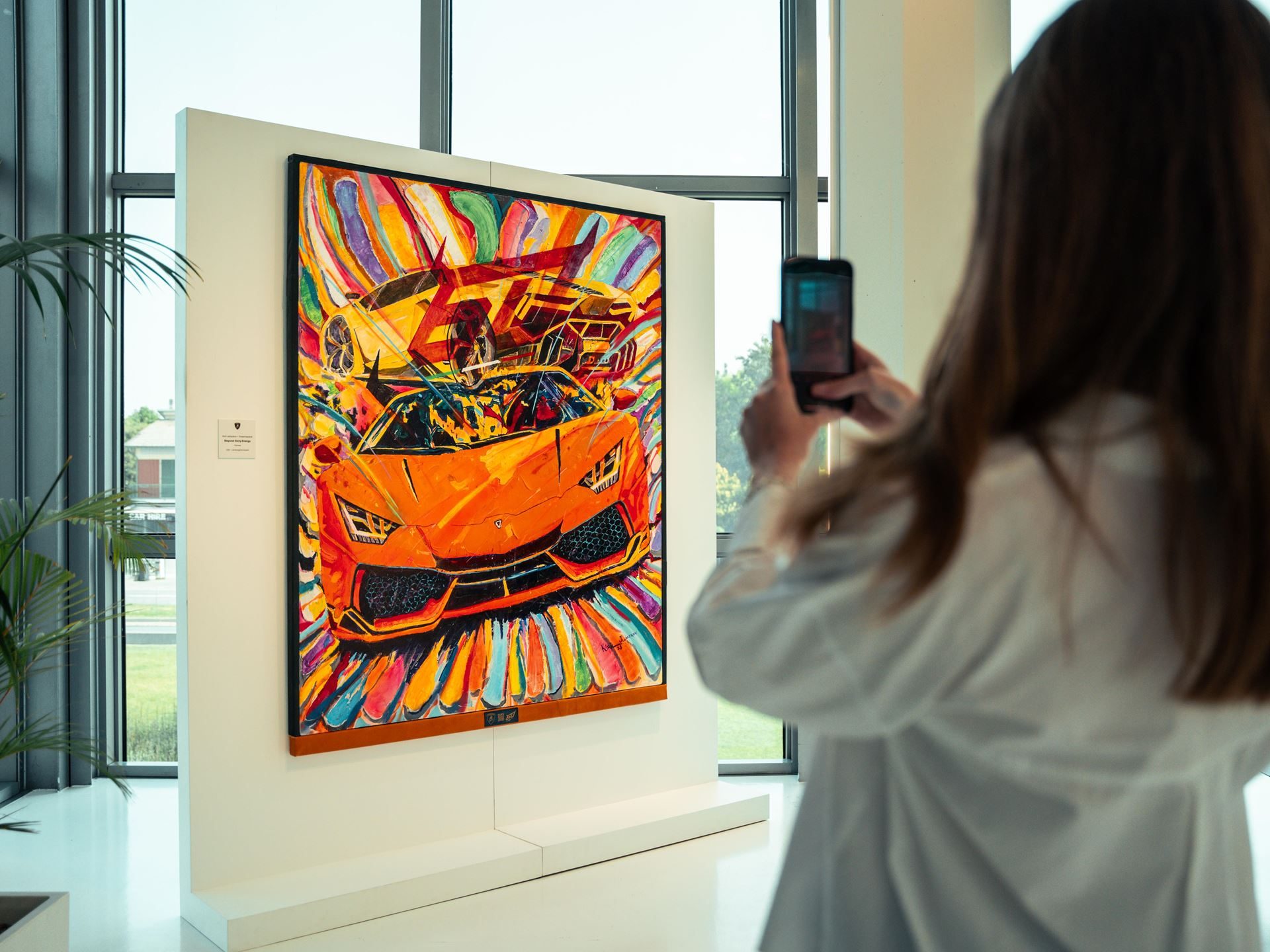
By weaving art through the factory itself, Lamborghini positions Sant’Agata Bolognese as a cultural destination rather than merely an industrial one. The exhibition spans spray paintings, oil on canvas, sculptures, and photographs, and Lamborghini says each piece reflects both the brand’s identity and the cultural background of the artist who created it. That geographic variety is no accident: because the global dealer network commissioned the works, the collection carries the stylistic fingerprints of dozens of countries, turning a single Italian campus into a survey of how the world sees the raging bull.
The broader ambition connects to what Lamborghini calls its “Driving Humans Beyond” philosophy. Stripped of the marketing gloss, the idea is that the company sees itself as more than an engine and chassis builder. Whether you find that convincing or a bit rich coming from a firm that sells supercars, the exhibition at least backs the claim with physical evidence: real art, placed in real working spaces, visible to the people who assemble the cars every day.
For Lamborghini owners and prospective buyers, the signal is worth noting. Ferrari’s museum in Maranello remains a world-class automotive shrine, focused tightly on the cars themselves and their racing pedigree. Lamborghini’s approach with Dreamaway leans in a different direction, treating the factory as a living canvas rather than a trophy case. Neither approach is wrong, but they reveal genuinely different ideas about what a brand owes its audience beyond the product. And it is this willingness to blur the line between workshop and gallery that gives the “diffused museum” concept its real edge.

Exhibition Highlights: Where Engineering and Art Share a Room
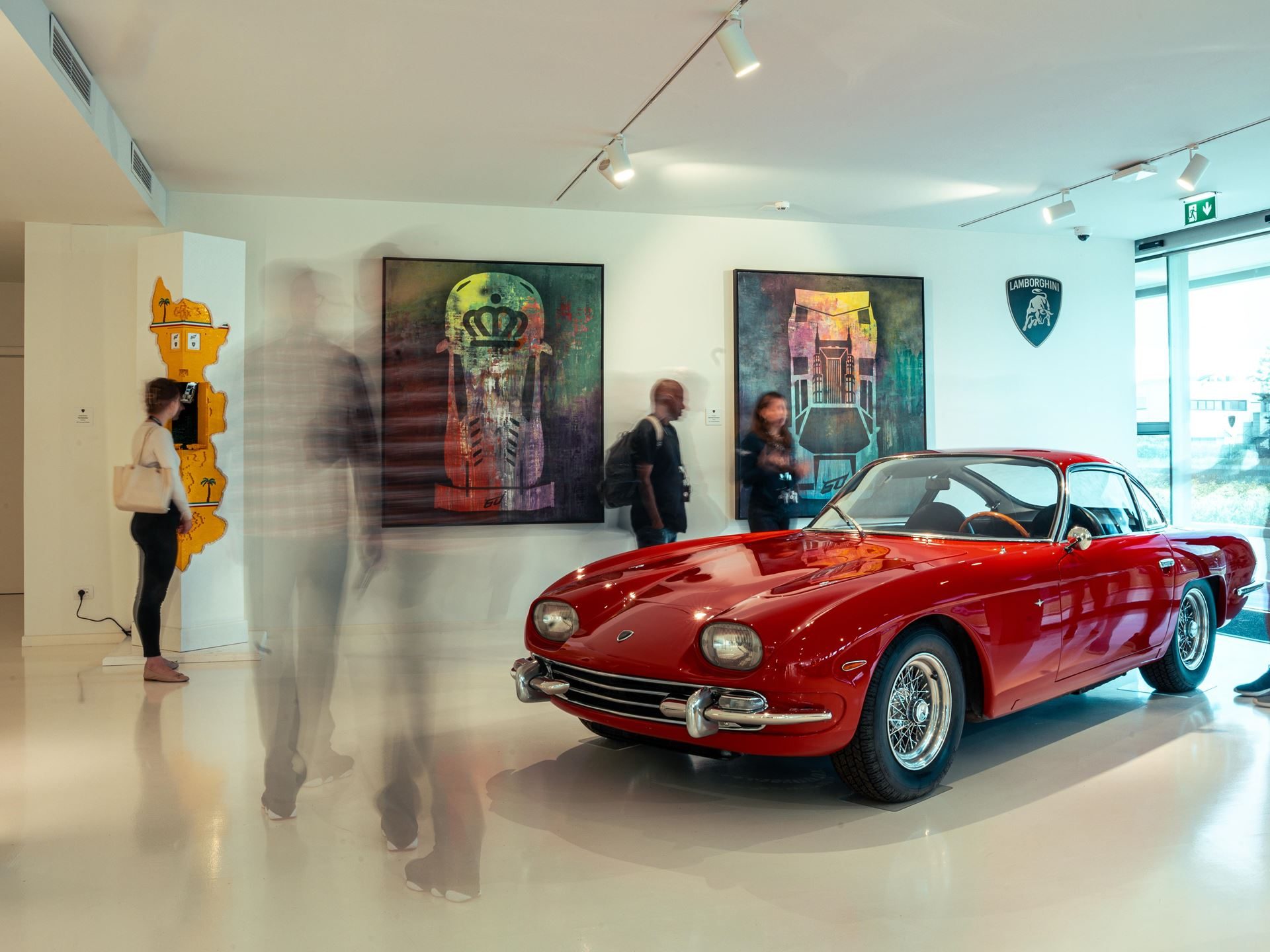
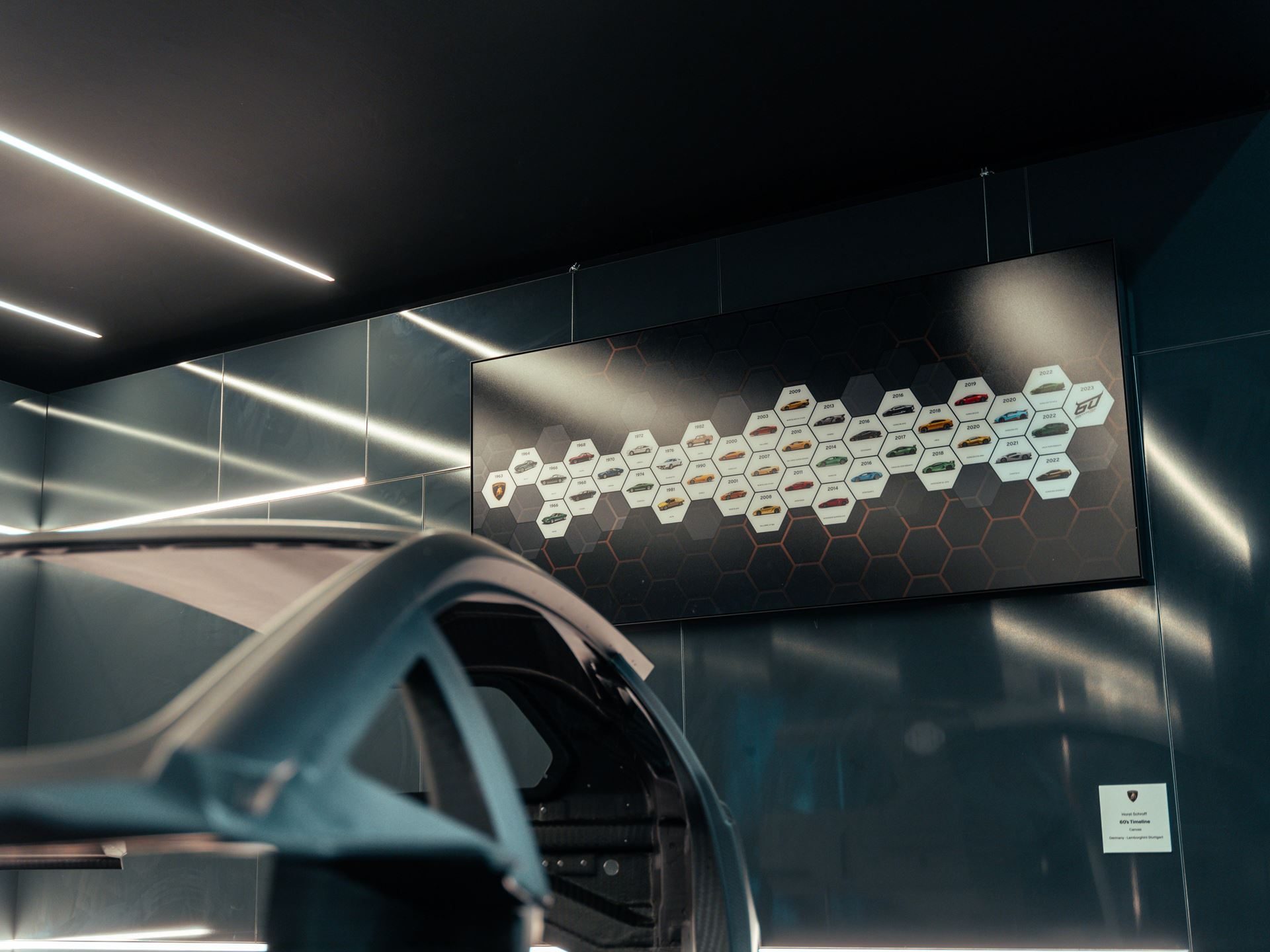
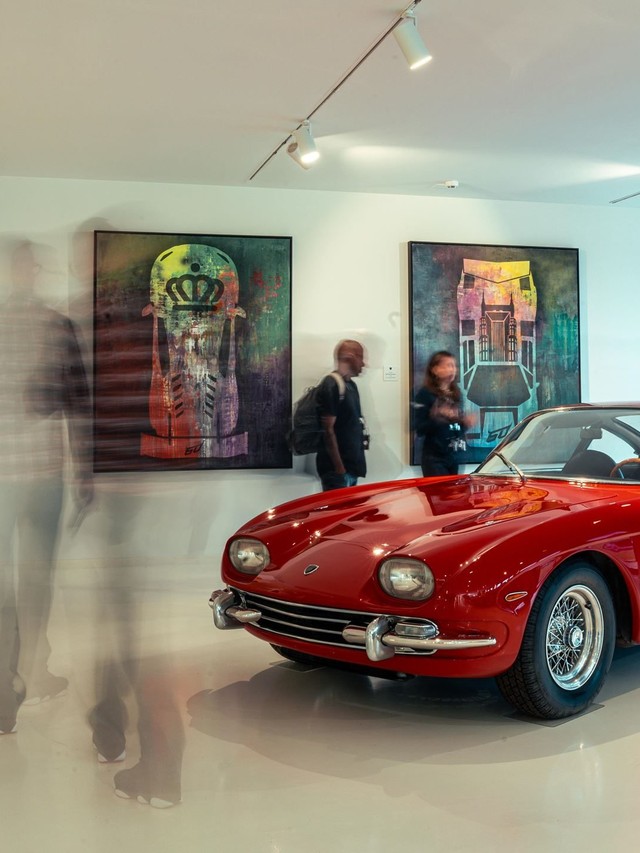
The Automobili Lamborghini Museum houses the main body of the Dreamaway collection, but the pieces that linger in the mind are the ones placed outside conventional gallery settings. Gallery images from the exhibition show a red 350 GT, one of the earliest production Lamborghinis, displayed in a brightly lit hall surrounded by abstract canvases and visitors. Nearby, three wireframe car sculptures labeled L’Inizio, Evoluzione, and Il Futuro trace the brand’s design evolution in skeletal form, mounted on pedestals against a timeline wall.
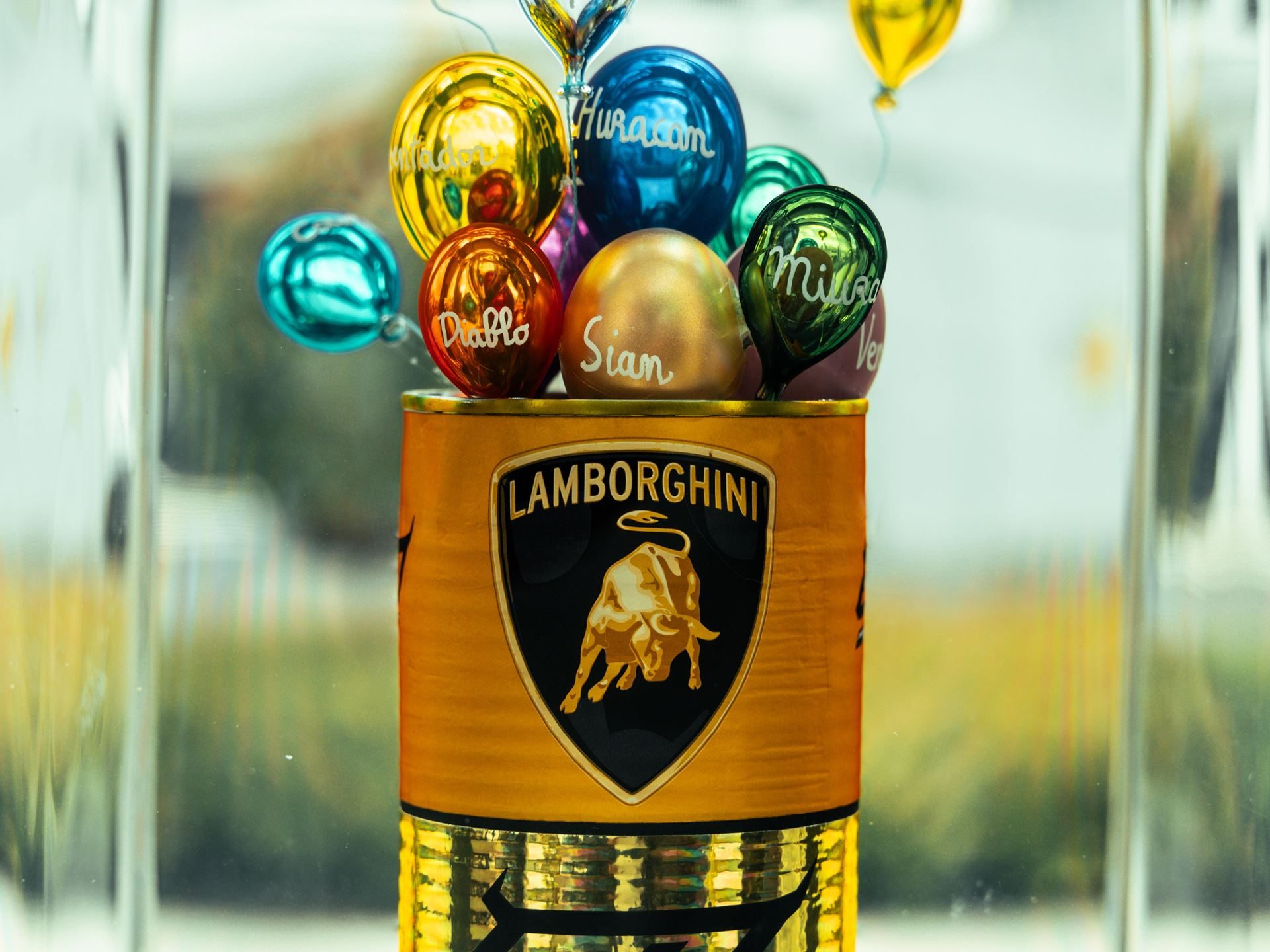
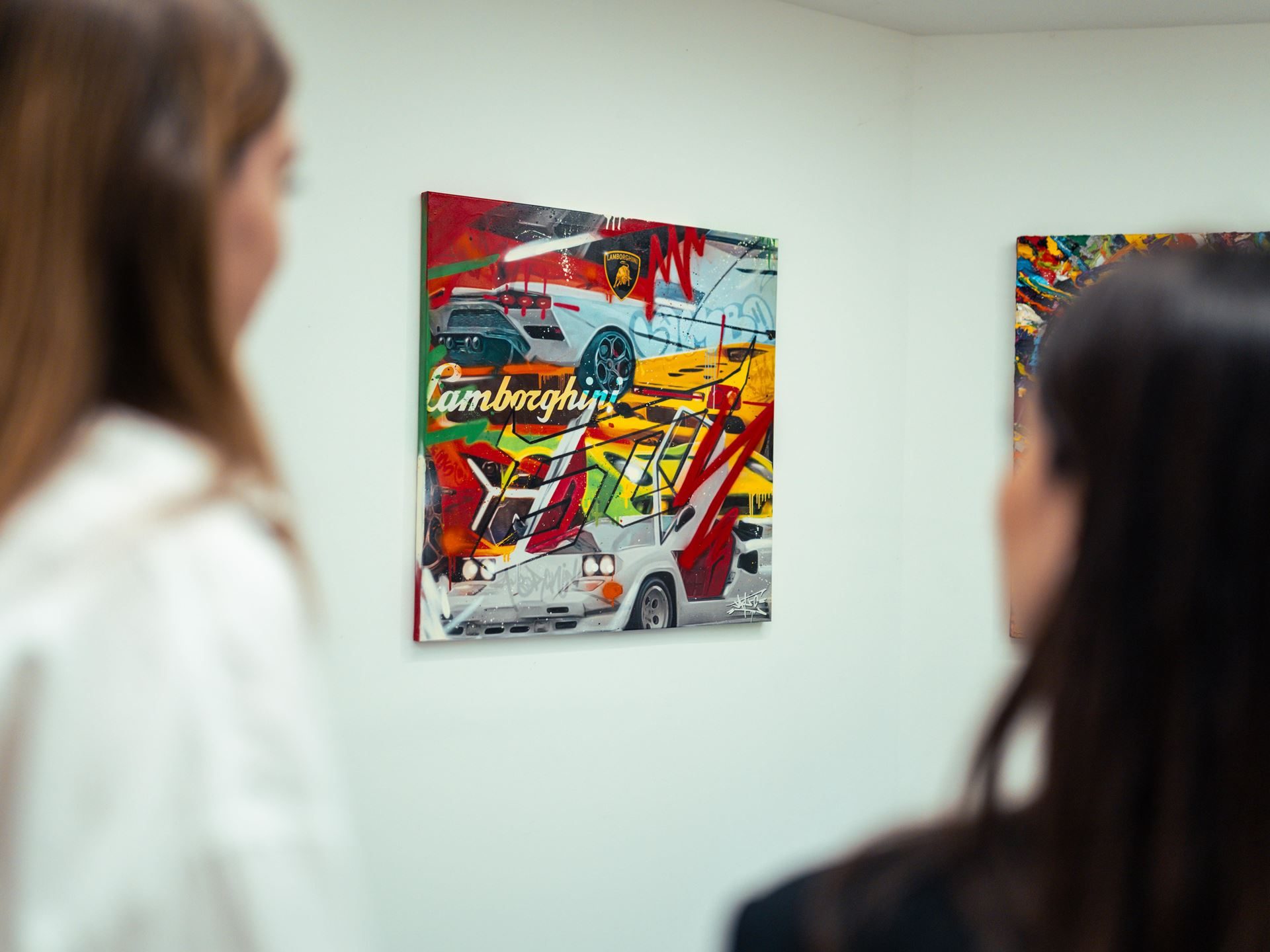
The variety of media on display is deliberately wide. Commissioned surfboards bearing anniversary graphics, graffiti-style canvases depicting Countach and Diablo silhouettes, a mosaic panel, even a sculptural Countach LP400 rendered in intricate lime-green geometric patterns: the collection refuses to settle on a single aesthetic register. That eclecticism reinforces the “diffused museum” idea at every turn. Rather than imposing a house style, Lamborghini let each dealer and artist interpret the brand through their own lens, and the resulting range of voices is what keeps the exhibition from feeling like a corporate vanity project.
One detail that enthusiasts who have toured the factory before will appreciate: the exhibition route follows the factory tour path itself, meaning visitors encounter art as they move through the production environment. You walk past a painting, then past a chassis on a lift, then past another painting. The boundary between showpiece and workplace dissolves, which is clearly the point, and the strongest argument that Sant’Agata Bolognese has become something more than a manufacturing campus.

Visiting Sant’Agata: What Prospective Visitors Should Know
Lamborghini stated the exhibition would remain open to the public until early 2025, with the museum operating daily from 9:30 a.m. to 7:00 p.m. between May and September and closing an hour earlier from October through April. The company directed visitors to lamborghini.com for closure dates and to visit@lamborghini.com for reservations.
Several practical questions remain unanswered. Lamborghini did not specify whether separate tickets or advance booking were required for the Dreamaway portions of the tour, or whether the factory-floor installations were accessible on standard museum visits versus dedicated factory tours. For anyone planning a trip to Emilia-Romagna with Sant’Agata Bolognese on the itinerary, contacting Lamborghini directly is the safest route to confirming access.
Regardless of logistics, the exhibition confirms that Lamborghini views its headquarters as more than a manufacturing site. The “diffused museum” concept, if it proves popular enough to outlast this particular show, could become a permanent layer of the visitor experience. For now, it stands as a 60th-anniversary gesture that tells you something genuine about how the company sees itself: not just a builder of fast, loud, beautiful machines, but a brand that believes the factory floor deserves a gallery wall.

Gallery