Bologna’s Newest Tarmac Escort Packs a V10 and an Orange Light Bar
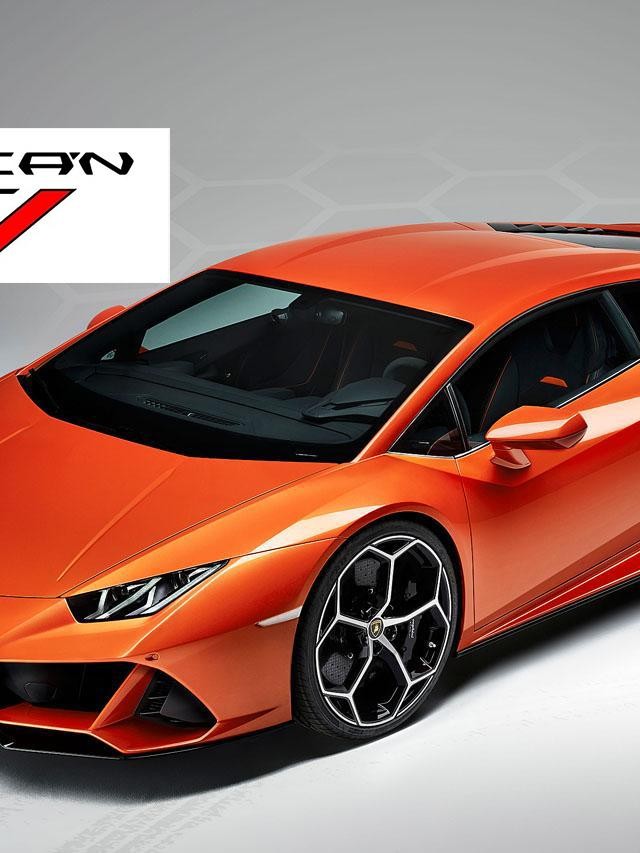
On December 10, 2019, a bright orange Lamborghini Huracán RWD took up one of the more peculiar jobs in aviation: guiding commercial aircraft between parking stands and runways at Bologna’s Guglielmo Marconi Airport. Behind the cabin sits a 5.2-liter naturally aspirated V10 producing 580 horsepower. On the roof sits an orange light bar. Inside, a control-tower radio keeps the driver connected to ground operations, and “Follow me” stickers on the bodywork make the car’s role unmistakable. It is the sixth Lamborghini to serve in this capacity, the latest chapter in a collaboration that stretches back years and has quietly become one of the brand’s most distinctive marketing plays.
The operational speed limit on the tarmac sits at roughly 35 mph, which means this Huracán will spend its working life using approximately six percent of its capability. That contrast is the entire point. Lamborghini did not choose a Huracán RWD for its efficiency at taxiway speeds. It chose one because nothing else on an airport apron looks like a Lamborghini, and every pilot, every passenger peering out a window, and every ground crew member who spots it becomes an involuntary audience for the brand. Six cars into this partnership, the formula has not changed: put something extraordinary in an ordinary setting and let the dissonance do the talking.
Brand Theater at Scale: The Strategic Logic of a Supercar on the Apron
Most luxury automakers channel their marketing budgets into glossy campaigns, track-day experiences, and hospitality suites at Formula 1 races. Lamborghini does all of that too, but the Follow-Me program operates on a different frequency. It places a production supercar in a functional, public-facing role where millions of travelers encounter it each year, not as an advertisement but as a working vehicle with a genuine operational purpose.
That distinction matters. A billboard can be ignored. A Lamborghini physically leading your aircraft to its gate cannot. For a company headquartered just minutes from the airport in Sant’Agata Bolognese, the Follow-Me car is a territorial claim wrapped in Italian flair. Bologna is Lamborghini’s home turf, and the program ensures that every international visitor who lands there knows it before collecting their luggage.
Consider the cost-benefit calculation. A single Huracán RWD, even with a bespoke livery and specialized equipment, represents a tiny fraction of a global marketing budget. The return in organic media coverage, social media posts from surprised travelers, and raw brand impressions dwarfs what any conventional campaign could deliver at the same price point. Lamborghini confirmed nothing about the financial arrangement behind this collaboration, but the fact that the company keeps renewing it, six times now, suggests the math works comfortably in its favor.
Centro Stile’s Tarmac Canvas: Decoding the Livery
Lamborghini’s in-house design studio, Centro Stile, created the livery for this Huracán RWD, and the details reward a closer look. The base color is a high-visibility orange that serves double duty: it meets the practical requirements of an airport operations vehicle while channeling one of Lamborghini’s most iconic color families. Arancio tones run deep in the brand’s history, and applying one to a car that shares tarmac with fuel trucks and baggage carts is a quietly confident choice.
Graphics depicting airport ground support equipment cover portions of the bodywork, a playful acknowledgment of the Huracán’s unlikely colleagues. Italian flag accents appear on both doors, the roof, and the front and rear intakes, reinforcing the national identity angle that Lamborghini leans into heavily with this program. A chequerboard pattern on the front and rear haunches adds a motorsport-adjacent visual cue, as if the car might peel off from its taxiway duties and head for Imola at any moment.
The overall effect is a car that looks simultaneously official and completely out of place. That tension is deliberate. A Follow-Me car painted in anonymous airport yellow would do the job just as well from an operational standpoint, but it would not generate a single photograph or news article. Centro Stile understood the assignment: make the car impossible to overlook, then let the setting supply the story.
Six Cars and Counting: The Follow-Me Fleet Through the Years
The 2019 Huracán RWD joined a lineage that tells its own story about Lamborghini’s evolving model range. The partnership’s documented history includes an Aventador LP700-4 in 2013, timed to coincide with the brand’s 50th anniversary, a statement-level choice that put Lamborghini’s flagship on the tarmac during a milestone year. Huracán LP610-4 models followed in 2014 and 2016, while Huracán RWD variants served in 2015, 2017, and 2018.
The gradual shift from the all-wheel-drive LP610-4 to the rear-wheel-drive RWD for airport duty is a small but telling detail. The RWD variant, with its purer driving character and slightly lower output, aligns better with a role that prizes visual impact over all-weather traction. Nobody is launching this car out of a hairpin in the rain. The rear-drive setup also happens to be the configuration that enthusiasts tend to prefer for its more playful balance, lending the Follow-Me car a subtle credibility boost among the people who know the difference.
For those tracking Lamborghini’s broader trajectory, this fleet history mirrors the company’s product cadence. Each new Follow-Me car arrives roughly annually, functioning as an informal refresh that keeps the airport presence current with whatever sits in Lamborghini’s showrooms. What began as a one-off anniversary gesture in 2013 has matured into a rolling product showcase disguised as public service, and each iteration reinforces the same thesis: spectacle, sustained over time, becomes tradition.
What Other Supercar Brands Are Not Doing
Ferrari, headquartered roughly two hours northwest in Maranello, operates its own museum and theme park but does not station a production car at a regional airport for daily operational use. McLaren and Porsche focus their brand activations on track experiences, hospitality programs, and motorsport sponsorships. None of Lamborghini’s direct competitors maintain anything quite like the Follow-Me program, which occupies a peculiar niche between marketing stunt and genuine civic partnership.
That gap reveals something about Lamborghini’s brand personality. Ferrari cultivates exclusivity and controlled access. Porsche emphasizes engineering sobriety and motorsport legitimacy. Lamborghini has always been comfortable with spectacle for its own sake, with the understanding that spectacle, done well, becomes its own form of legitimacy. Placing a V10 supercar on an airport tarmac where it will never exceed second gear is the kind of move that only Lamborghini would make, and only Lamborghini could make look natural.
For buyers weighing their next supercar purchase, this kind of brand behavior matters more than it might seem. Lamborghini ownership is partly about joining a culture, and the Follow-Me program signals a company that does not take itself so seriously that it cannot put its products in unexpected, slightly ridiculous, and thoroughly charming contexts. That willingness to be playful is part of what makes the ownership experience feel distinct.
The Bigger Picture: Why This Keeps Working
Six iterations into this collaboration, the Follow-Me program qualifies as one of Lamborghini’s most durable and cost-effective brand activations. It generates media coverage every time a new car is introduced, creates thousands of organic social media impressions from travelers, and reinforces Lamborghini’s connection to its home region in Emilia-Romagna. More subtly, it functions as a reminder that Lamborghini builds cars in Italy, for the world, from a small town that most people would never visit if not for the factory.
The Huracán RWD itself represents a particular moment in Lamborghini’s history: the final years of a purely naturally aspirated, non-hybridized entry-level supercar. Future Follow-Me cars will almost certainly carry electrified powertrains, which will change the soundtrack on the tarmac but probably not the visual impact.
Lamborghini confirmed no plans for future Follow-Me vehicles beyond this Huracán RWD at the time of delivery. But the pattern is clear, and the strategic logic remains as sound as ever. As long as planes land in Bologna and Lamborghini builds cars down the road, expect to see a raging bull on the apron.
Gallery


