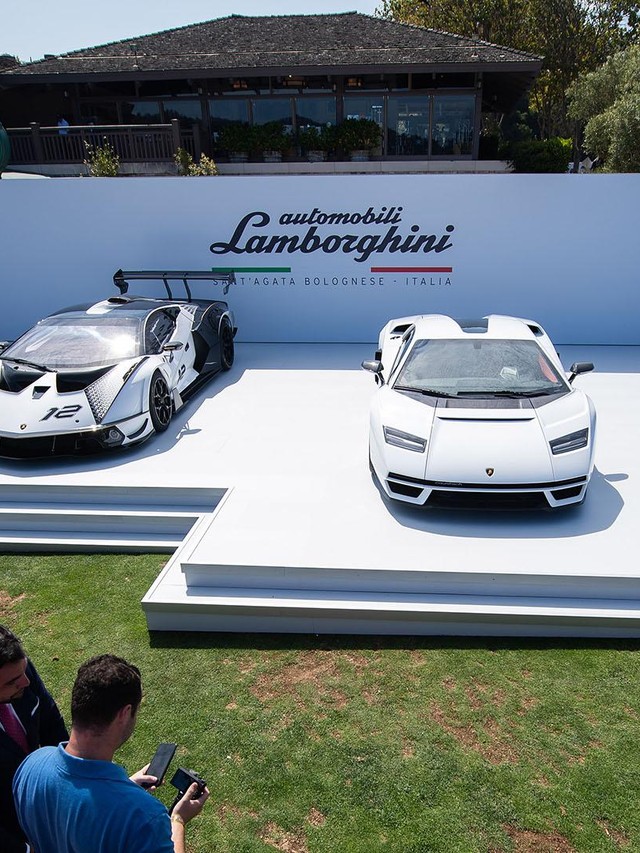
The Symbolic Reopening: MUDETEC Stages a Sold-Out Supercar as Its Welcome Back
On Friday, July 10, 2020, the Lamborghini Museum of Technologies, known as MUDETEC, reopened to visitors in Sant’Agata Bolognese after months of pandemic closure. The centerpiece greeting them was the Sián Roadster, an open-top hybrid super sports car displayed exclusively inside the museum through Sunday, July 12. Advance booking was mandatory, social distancing and disinfection protocols shaped the visitor flow, and the museum operated daily from 9:30 a.m. to 6:00 p.m.
The practical details matter less than the curatorial choice. Lamborghini could have reopened with any car from its permanent collection. Instead, the company placed its newest, most technologically provocative model front and center: a car already sold out in its entire 19-unit production run, sitting where tourists and tifosi could study it up close for exactly three days. That is a very deliberate brand statement, one that reveals how Lamborghini sees its own future and wants the world to see it too.
The museum itself had been renamed MUDETEC the previous April, a rebranding that shifted the emphasis from static heritage display to a living showcase of engineering ambition. Reopening with the Sián Roadster rather than, say, a freshly restored Miura or a Countach anniversary edition reinforced that new identity. The message was unmistakable: this museum now faces forward, and the hybrid Sián is the lens through which Lamborghini wants visitors to read everything else on the floor.
Bridging Eras: Why the Sián Roadster Belongs Between a Miura and a Revuelto
MUDETEC’s permanent collection runs the full arc of Lamborghini’s production history. The 350 GT, Miura, Countach, and LM002 anchor the heritage wing. More recent additions include the Asterion hybrid concept car, the Centenario, and the Aventador SVJ. Lamborghini says the exhibits also cover advanced technologies like ALA active aerodynamics and the predictive LDVI system, giving visitors a sense of how the engineering evolved alongside the bodywork.
Placing the Sián Roadster at the center of this timeline was more than showmanship. The car occupies a genuinely pivotal position in Lamborghini’s product history as the brand’s first series-production hybrid, and it arrived with a powertrain philosophy that rejected the approach taken by nearly every competitor. Where Ferrari’s SF90 Stradale and McLaren’s Artura adopted plug-in hybrid architectures with lithium-ion battery packs, the Sián Roadster used a supercapacitor. That distinction sounds like a footnote. It turned out to be a thesis statement.
The supercapacitor system operates on a 48-volt mild-hybrid architecture. A 34 hp electric motor sits integrated into the gearbox, supplementing the 6.5-liter V12. The entire electric system and motor weigh only 34 kg, a fraction of what a conventional battery hybrid adds. Supercapacitors charge and discharge energy far faster than lithium-ion cells, delivering instant torque fill without the weight penalty or packaging compromises of a large battery pack. They also tolerate millions of charge cycles without degradation, a meaningful advantage in a car designed to be driven hard rather than plugged in.
For anyone following Lamborghini’s subsequent product launches, the Sián’s supercapacitor logic echoes clearly in the Revuelto. The successor to the Aventador kept the naturally aspirated V12 and paired it with a more sophisticated hybrid system, but the underlying philosophy remained the same: electrification should add performance without diluting the mechanical character that defines a Lamborghini flagship. The Sián was the proof of concept. MUDETEC, by positioning it alongside the 350 GT and the Aventador SVJ, made that lineage visible in a single room.
Supercapacitors vs. Batteries: Lamborghini’s Electrification Path Compared to Rivals
Most coverage of the Sián Roadster‘s hybrid system treats it as a curiosity. It deserves more serious attention, because Lamborghini’s choice of supercapacitor technology represents a fundamentally different engineering bet than what Ferrari, McLaren, or Porsche pursued.
A supercapacitor stores less total energy than a lithium-ion battery of comparable size. That is its obvious limitation, and it explains why the Sián cannot drive on electric power alone for any meaningful distance. What a supercapacitor does better is speed: it absorbs and releases energy almost instantaneously. In practice, the Sián’s electric motor delivers its power boost the moment the driver demands it, with no lag, no thermal management concerns, and no gradual depletion curve. Every brake application fully recharges the system through regenerative braking, thanks to the symmetric power flow that supercapacitors enable.
The weight savings are equally significant. At 34 kg for the complete electric system, Lamborghini added hybrid capability without the 150-to-200 kg penalty that battery-based systems typically impose. For a car built around a naturally aspirated V12, preserving that power-to-weight relationship was non-negotiable.
Ferrari’s SF90 Stradale, by contrast, carries a 7.9 kWh lithium-ion battery and three electric motors. The system delivers substantially more electric-only capability, including short-range zero-emission driving. McLaren’s Artura uses a smaller battery but still relies on conventional lithium-ion chemistry. Both approaches add weight and complexity in exchange for greater electric range and regulatory compliance. Lamborghini’s supercapacitor route sacrificed range for response, weight savings, and durability. Whether that trade-off proves prescient depends on where electrification regulations and buyer preferences land over the next decade, but it gave Lamborghini a distinct identity in the hybrid supercar conversation.
The practical takeaway for buyers and collectors: the Sián Roadster’s hybrid system was designed to enhance the V12 experience, not replace it. Owners who spec these cars for driving pleasure rather than electric commuting range got exactly what the engineering prioritized. With only 19 Roadsters produced, all sold before the car was publicly shown, the market clearly agreed.
MUDETEC’s Evolving Role: Architecture Competitions and a French Exhibition
The reopening coincided with two new collaborations that signal where Lamborghini wants to take MUDETEC as a cultural institution rather than just a car museum, and both reinforce the forward-looking identity that the Sián Roadster display established.
The first is the Architecture for Exhibition project, developed in partnership with Young Architects Competitions (YAC), a Bologna-based academy that runs international design competitions for emerging architects. Lamborghini says young architects will contribute to MUDETEC’s 2021 design under the supervision of Giuseppe Zampieri, founder of the David Chipperfield Architects branch in Milan. The ambition is to treat the museum’s physical space as a design object in its own right, evolving its layout and presentation with fresh architectural thinking rather than defaulting to the standard glass-case-and-plinth formula that most automotive museums rely on.
The second collaboration sent pieces from the MUDETEC collection to the Cite de l’Automobile in Mulhouse, France, the world’s largest automobile museum. Lamborghini says this special exhibition ran from July 9, 2020, to January 10, 2021, marking the first time the Cite de l’Automobile dedicated a focused display to the brand. Archive materials accompanied the vehicles, giving French audiences a deeper look at Lamborghini’s design and engineering history than a rotating showroom display would allow.
The YAC partnership in particular suggests that Lamborghini views MUDETEC as a long-term brand experience platform, one that can attract visitors who care about design culture broadly, not just horsepower figures. For a brand whose buyers increasingly value exclusivity and cultural capital alongside performance, investing in the museum’s architectural identity makes strategic sense. Ferrari operates two museums in the Modena region. Porsche’s museum in Stuttgart draws hundreds of thousands of visitors annually. Lamborghini’s MUDETEC is smaller and less trafficked, but these collaborations indicate an effort to compete on curatorial ambition rather than scale.
The Enthusiast’s Pilgrimage: What the Reopening Signals for Lamborghini Culture
Visitor discussion on enthusiast forums paints a consistent picture of MUDETEC: small, focused, and best experienced alongside a factory tour arranged through a dealer. Multiple visitors describe the museum as compact compared to Ferrari’s two-site operation or the Porsche Museum, but praise the quality of the cars on display and the proximity to the production line. The factory tour, by most accounts, is the real draw, with the museum serving as either a warm-up or a complement.
Lamborghini’s decision to stage the Sián Roadster display as a three-day exclusive fits that dynamic perfectly. The company created a reason for enthusiasts already planning a Sant’Agata visit to accelerate their timing, and it gave MUDETEC a moment of genuine scarcity: a sold-out, 19-unit halo car available for public viewing nowhere else on earth, for 72 hours. That kind of event-driven programming transforms a museum from a static archive into a destination with urgency, which is exactly what the MUDETEC rebranding was designed to achieve.
For Lamborghini owners and prospective buyers, the broader signal is worth noting. The brand is investing in physical touchpoints at a time when much of the automotive industry leans toward digital configurators and virtual experiences. A museum that rotates its centerpiece exhibits, commissions young architects to rethink its spaces, and lends its collection to major international institutions is building a cultural infrastructure around the ownership experience. That matters if you care about the long-term prestige and collectibility of the cars themselves.
The Sián Roadster’s brief MUDETEC appearance also underscored a pattern that the Revuelto and subsequent limited editions would continue: Lamborghini builds scarcity into every layer of the brand, from production numbers to viewing opportunities. If you missed those three days in July 2020, the car returned to its owners and the moment passed. The museum kept evolving. The hybrid technology the Sián introduced kept developing. And the brand kept reinforcing the idea that showing up matters, whether you are buying a car or simply standing in front of one.
Gallery


