Three Crises in Two Years, Zero Production Gaps
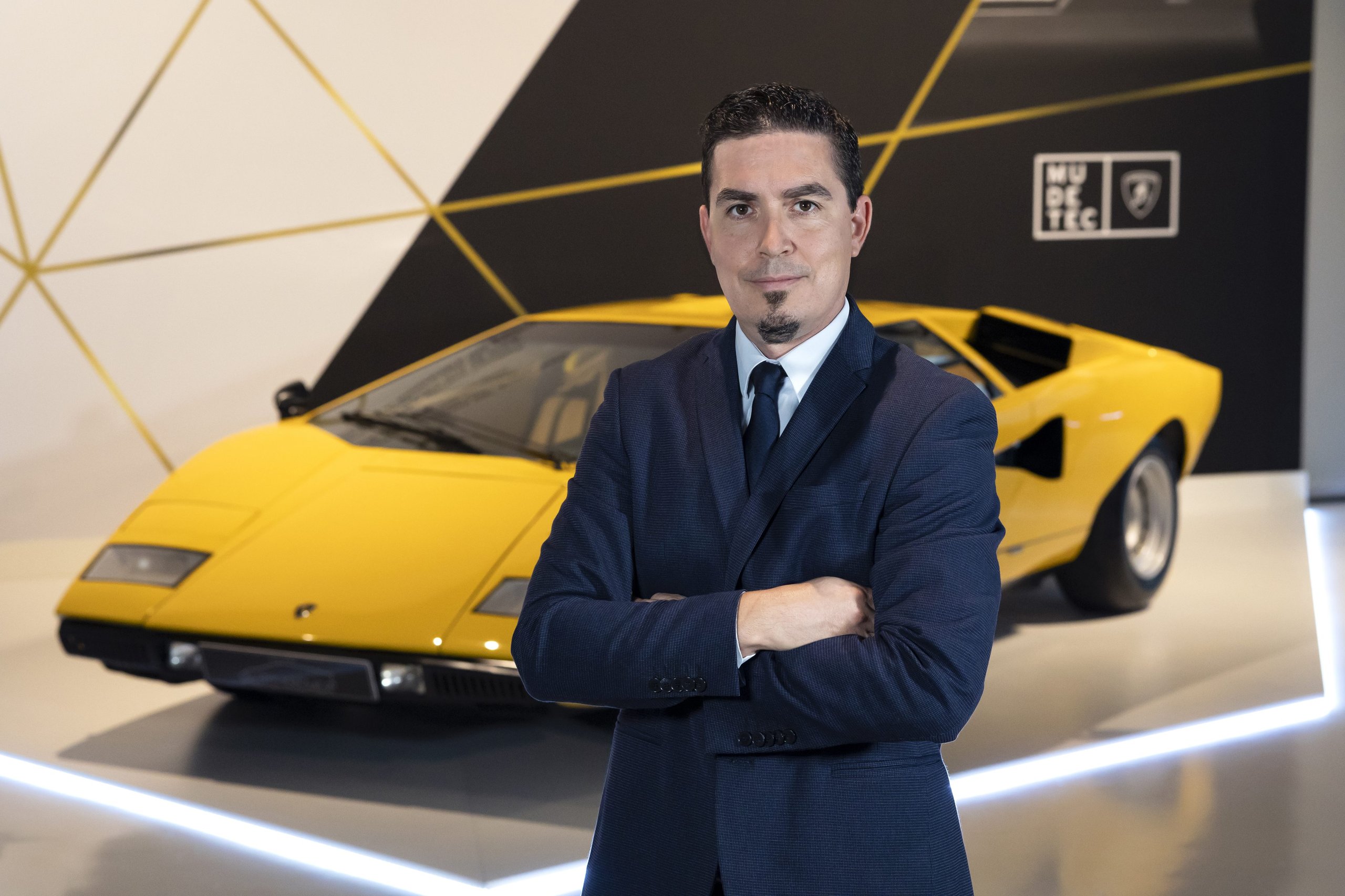
Silvano Michieli occupies a role that most Lamborghini enthusiasts never think about. As Chief Procurement Officer at Automobili Lamborghini and a member of the company’s Board of Management, he is responsible for ensuring that every carbon fiber panel, every semiconductor, and every meter of wiring arrives at Sant’Agata Bolognese on time and to specification. Between 2020 and 2022, that job became one of the most consequential in the entire company.
The sequence of disruptions was relentless. COVID-19 forced a 70-day manufacturing shutdown in 2020. Before the factory could fully recover its rhythm, the global semiconductor shortage began strangling automotive production worldwide. Then, in February 2022, Russia’s invasion of Ukraine threatened critical suppliers operating inside an active war zone. Lamborghini says it achieved record-breaking sales and financial results through all of it, a claim that sounds like corporate boilerplate until you consider what the company actually did behind the scenes.
Michieli, who joined Lamborghini in 2004 and returned as CPO in 2015 after a stint at Audi, describes a fundamental shift in how Sant’Agata relates to the companies that feed its production lines. The old model was transactional: supplier delivers parts, Lamborghini writes checks. The new model, forged under pressure, treats key suppliers as strategic partners with shared visibility into production planning, co-developed contingency protocols, and a procurement team that gets involved early enough to offer R&D genuine alternatives before a design is locked in. That philosophy of deep partnership, rather than any single logistical trick, is the thread running through every decision Michieli describes.

A confident man in a suit stands proudly before a classic yellow Lamborghini Countach LP400 in a sleek display.
Wiring Harnesses From a War Zone
The most vivid test of that partnership philosophy involves Leoni, a supplier that produces wiring harnesses for the Huracán from facilities in western Ukraine. When the war began, Leoni’s workers continued manufacturing between curfew periods, retreating to underground shelters when sirens sounded. Michieli describes their dedication in stark terms, and Lamborghini’s response was equally direct.
Rather than simply pulling production out of Ukraine and abandoning a committed partner, Lamborghini supported Leoni in duplicating its manufacturing capabilities at other European plants. The company calls this “dual production,” and the distinction from reallocation matters. Leoni keeps its Ukrainian operation running for as long as conditions permit while a mirror facility outside the conflict zone stands ready to absorb full volume if the Ukrainian plant goes dark. The relationship with the established supplier stays intact either way.
Maintaining redundant production lines is expensive, and for a manufacturer building roughly 10,700 cars per year rather than hundreds of thousands, the per-unit burden is proportionally heavier. Lamborghini does not disclose those figures, but the willingness to absorb that overhead rather than switching to a cheaper alternative reveals how the company values long-term supplier loyalty over short-term savings. For owners and prospective buyers, it also means the Huracán’s final production run, with deliveries continuing through 2025, is less likely to suffer the kind of quality compromises that rushed supplier transitions can introduce.

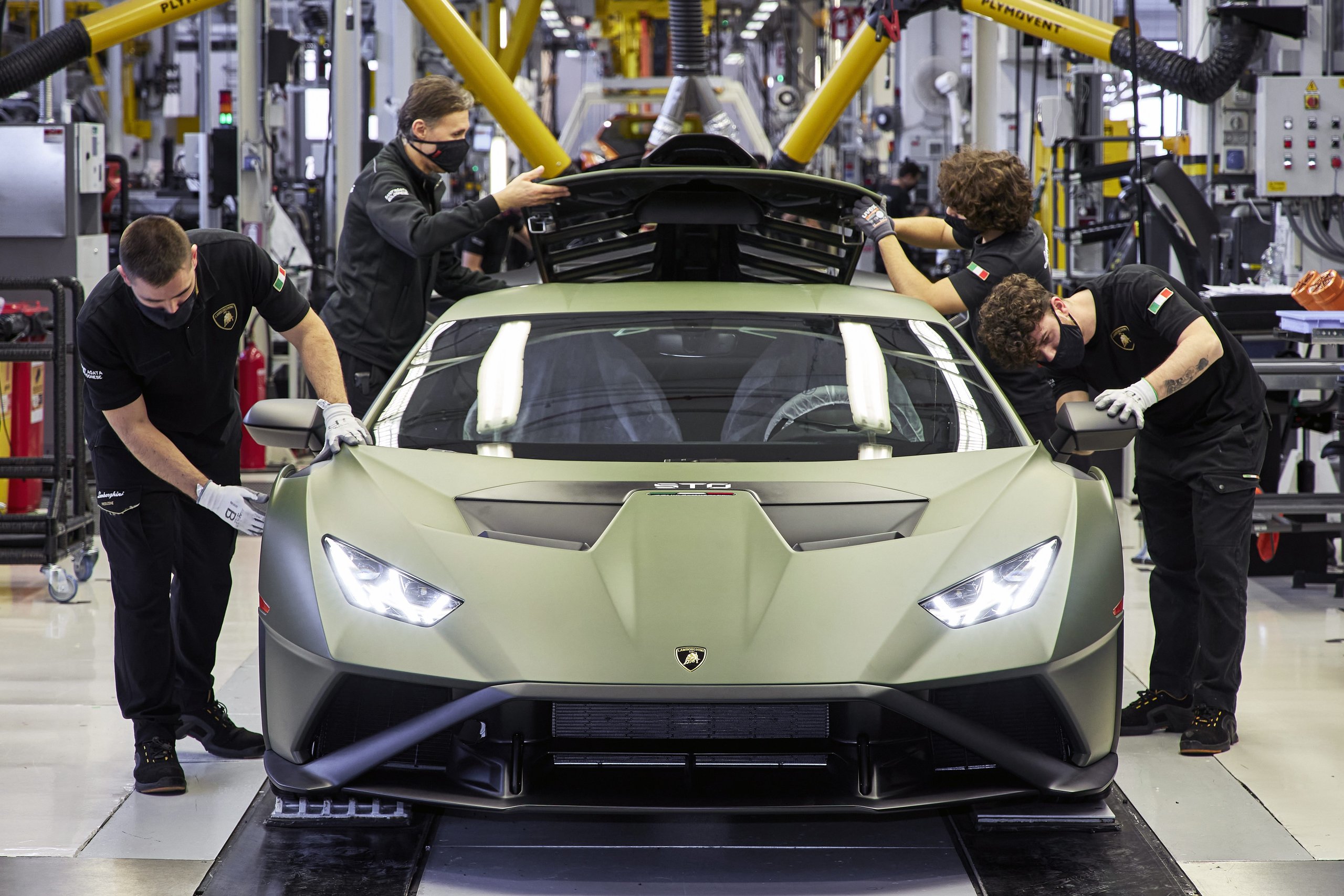
A skilled craftsman meticulously installs an interior component on a Lamborghini Huracan dashboard during the assembly process.
The Volkswagen Group Card That Rivals Cannot Play
Independent supercar manufacturers face a structural disadvantage when global supply chains seize up. A company building ten thousand cars competes for the same semiconductors, aluminum alloys, and specialty polymers as companies building ten million, and in that contest, volume buyers win. McLaren operates without a parent group’s purchasing leverage, and even Ferrari, despite its scale advantages over smaller marques, negotiates as a single entity.
Lamborghini plays a different game. As part of the Volkswagen Group, it benefits from the collective bargaining power of one of the world’s largest automotive conglomerates. Michieli says Lamborghini carries some of the highest contribution margins within the group, which translates into prioritization when scarce components need to be allocated across brands. When chips were being rationed across the industry, Lamborghini’s profitability per unit gave it a strong internal claim.
The technology access may matter even more over time. Lamborghini says the Volkswagen Group provides forms of technology that a company of its size could not develop or source independently. Michieli frames this as a competitive edge over rivals, though the company does not specify which technologies it means. The implication is clear enough for anyone following the brand’s electrification timeline: hybrid battery management systems, power electronics, and advanced driver-assistance architectures all benefit from shared development across Porsche, Audi, Bentley, and Lamborghini. The Revuelto’s hybrid powertrain and the upcoming Temerario’s plug-in architecture both sit on a foundation that would be enormously expensive for a standalone manufacturer to build from scratch.
For buyers, this translates into a practical advantage. The Revuelto V12 hybrid remains a top performer with orders reportedly extending to late 2026. The Urus SE plug-in hybrid completed Lamborghini’s transition to an entirely electrified portfolio, making it the first super sports car manufacturer to achieve that milestone. Keeping those production lines fed with advanced hybrid components requires exactly the kind of group-level supply chain muscle that Michieli describes.

Lamborghini technicians meticulously guide a powerful engine and chassis assembly into place on the factory floor.
How Suppliers Get Chosen, and Why It Shapes the Car You Receive
Lamborghini’s supplier selection criteria span financial reliability, sustainability credentials, development performance, innovation capacity, quality standards, and logistics for delivery security. What makes this list interesting for enthusiasts is the deliberate balance between large, VW Group-connected suppliers and smaller, highly specialized firms.
The big suppliers bring scale, financial stability, and access to group-wide technology platforms. The smaller ones provide bespoke components tailored to Lamborghini’s unique manufacturing processes, parts that cannot simply be pulled from a Volkswagen Group shelf. A carbon fiber body panel for a Huracán STO, for example, demands a supplier with specific layup expertise and autoclave capacity that a mass-market parts manufacturer would never maintain.
Anyone who has specced a Lamborghini through Ad Personam knows that the range of available materials, finishes, and custom options depends entirely on the flexibility and capability of these supplier networks. The stronger those partnerships, the more likely Lamborghini can say yes to an unusual leather color or a one-off stitching pattern without derailing a production schedule. Procurement, in other words, is not just about keeping the line moving. It shapes the breadth of personalization that defines the ownership experience, and that connection between supply chain depth and customer choice is the part of Michieli’s work that touches every car leaving Sant’Agata.

A vast, modern warehouse with towering blue and red shelving units showcases Lamborghini's organized supply chain.
One Car Less Than Required
Michieli articulates a production philosophy that Lamborghini enthusiasts already sense intuitively: the company aims to always offer “one car less than is required.” This is not a supply chain failure dressed up as strategy. It is a deliberate choice to protect exclusivity and, by extension, the residual values that matter enormously to owners.
The real-world consequences are visible across enthusiast forums. Prospective Temerario buyers report being quoted wait times ranging from several months to well over a year depending on the dealer, the market, and the spec. Revuelto allocations remain tight. Lamborghini wants that tension between demand and supply.
Building fewer cars than the market demands only works, though, if every single one of those cars actually gets built on schedule, with the right parts, to the right quality standard. A single missing wiring harness or a delayed semiconductor shipment does not just slow production; it breaks the promise of exclusivity by forcing customers to wait even longer than the carefully managed timeline already requires. That is why the partnership model Michieli has built matters so much. Dual production with Leoni, group-level leverage for semiconductors, early procurement involvement in R&D: each piece exists to guarantee that deliberate scarcity never becomes accidental shortage.
Michieli rejects the idea that deglobalization offers a viable alternative. He calls it short-sighted, arguing instead for rethinking existing processes rather than retreating from international supply networks. For a company that operates across 56 markets through 186 dealers and sources components from suppliers scattered across Europe, Asia, and beyond, the practical reality supports his view. Lamborghini’s future, from the Temerario’s hybrid V8 to whatever fully electric model eventually follows, depends on global supply chains functioning reliably. The job of procurement is to make sure they do, regardless of what the world throws at them next.

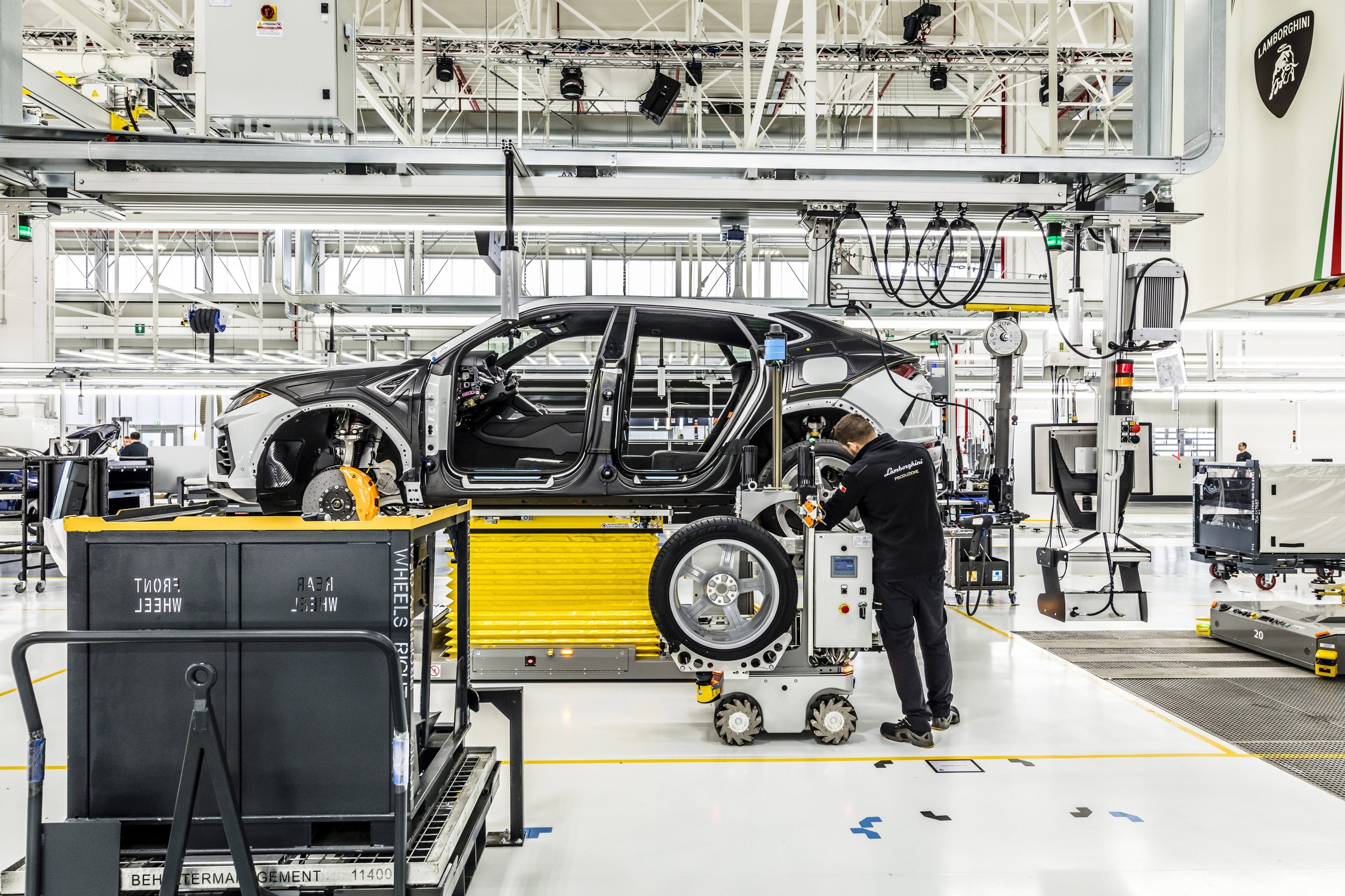
The expansive and brightly lit Lamborghini factory floor showcases a grey Urus SUV on its advanced assembly line.
Gallery